Anthropic Just Watermarked Every Word Claude Writes (Including Yours)
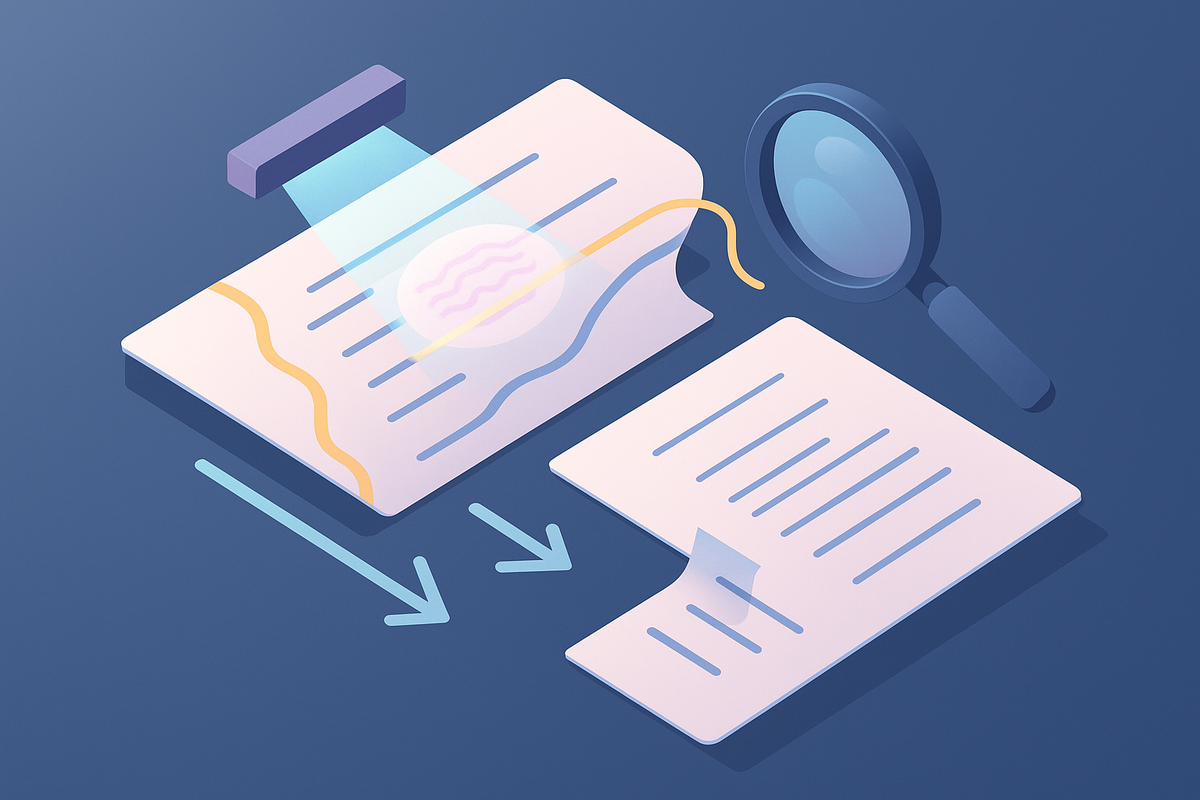
Anthropic started embedding invisible, machine-readable watermarks in text generated by Claude models launched on or after August 2, 2026. The marks apply worldwide, survive copy and paste, and may persist through light editing. Detection tools arrive later, which means Claude-drafted content published today becomes checkable after the fact, by whoever Anthropic hands the reader to.
The trigger is regulatory. Anthropic signed the transparency code under the EU AI Act's Article 50(2), which took effect August 2, and TechCrunch reports that Google, Meta, Microsoft, OpenAI, Black Forest Labs, and Synthesia have committed to the same code. What Anthropic did differently is scope. It could have marked EU traffic and left the rest of the world alone. Instead it flipped the switch globally, on every surface: claude.ai, the API, Claude Code, and Claude models running through AWS, Google Cloud, and Microsoft Foundry, per Search Engine Land's coverage. Generated images get signed C2PA provenance metadata on top, according to SiliconANGLE.
If Claude sits anywhere in your content pipeline, and for a lot of marketing teams it does, this is worth more than a skim.
The mark rides along in your paste buffer
The watermarking happens at the model level, not in the chat interface. That distinction matters because it means there is no surface you can route around. API calls, coding agents, cloud deployments: same mark. Anthropic says the watermark travels with text when it's copied and pasted elsewhere and "may persist through some editing." TechCrunch points out the part nobody outside Anthropic knows yet: how much editing it takes to strip the mark. Light trims probably don't do it. A full rewrite probably does. Everything between those two points is a guess right now.
Play that against a normal agency workflow. Draft in Claude, paste into a Google Doc, run an edit pass, drop it into the client's CMS. The mark plausibly rides that entire chain and lands on the published page. Anthropic is also retrofitting the marking to older models during the AI Act transition period, per its official documentation, so "we're still on the previous model" is a temporary answer at best.
The watermark is invisible. So is the list of people who can read it.
A detected mark proves less than you'd fear, and absence proves nothing
Anthropic's own documentation is unusually careful here, and the caveats are worth quoting rather than paraphrasing. A detected mark indicates content "may have been processed by Claude." It does not prove Claude authored the piece, because people edit, combine, and quote model output constantly. And the reverse is weaker still: absence of a mark confirms nothing, since older models, heavy edits, and stripped metadata all produce clean-looking text that started life in a model.
So this is asymmetric evidence. Present mark: strong signal Claude touched the words. Missing mark: no information at all. That asymmetry is still a big upgrade over the stylometry-based AI detectors floating around, which infer machine authorship from writing style and false-positive on real humans often enough that Substack shipped its detector with an off switch. A statistical watermark embedded at generation time is a different class of evidence. When it's there, arguing with it is going to be hard.
One thing I'd push back on: the fear that this outs everyone who ever pasted a paragraph. The mark says "a model was involved," which in 2026 describes most professional content operations and surprises no one. The risk isn't the fact. The risk is the gap between the fact and whatever you've been telling clients.
Who gets issued the UV light
A watermark is like the security strip in a banknote. Invisible in normal handling, obvious under the right light. The strip was never the interesting part of that system. The interesting part is who gets issued the light, and Anthropic has answered that question only halfway: it says it will support "users and other third parties" in detecting Claude's marks, with technical documentation to come.
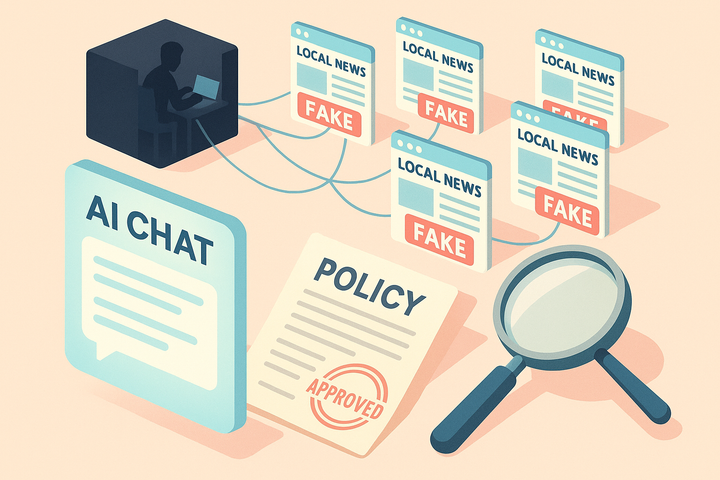
"Third parties" is doing a lot of work in that sentence. It could mean platforms checking uploads. It could mean enterprise procurement teams verifying vendor deliverables. It could mean regulators, or academic-integrity tools, or eventually search engines. Fortune frames the whole move as part of an industry scramble to police AI slop, and the policing metaphor is apt: enforcement depends entirely on who gets deputized.
My read on Google specifically: I don't think watermark detection shows up in ranking anytime soon. Google's public position has been that it rewards helpful content regardless of how it's produced, and reversing that would indict half the web plus its own Gemini output. But Google also signed the same EU transparency code, and I wouldn't bet the same way about spam classification, where "mass-produced, unedited model output" is exactly the pattern they already chase. From what I've seen of how these systems get used, the near-term readers are more boring and closer to home: your client's procurement department, and platforms with AI-content policies they currently can't enforce. Every "no AI-generated content" clause sitting in a services agreement just went from unenforceable to checkable, at least in one direction.
I'll put a number on it: within 12 months, at least one major platform or procurement tool runs Claude watermark checks on submitted content as a standard step. The detection tooling is coming either way; someone will wire it into an intake form.
Three questions to answer before the detection tools ship
The audit takes about 30 minutes and none of it requires touching your actual workflow yet.
First: map where Claude touches production words. Ideation, outlining, and research assistance leave no marks, because the published words are yours. Verbatim drafting does. Be honest about which one your team actually does. A useful benchmark: if more than roughly a third of a deliverable's final words came out of a Claude window with only trims and swaps, assume the piece carries marks. Below that, with real rewriting, it seems much less likely to survive, though nobody can promise that until the detection docs land.
Second: reread what you've promised. Client contracts, editorial policies, marketplace terms. Concrete version: a 2,000-word white paper where 1,400 words are lightly edited Claude output, delivered under a services agreement with a no-AI clause. Six months ago that clause was decorative because nobody could verify it. Now the client can, or will be able to. That conversation is much better had voluntarily, this quarter, than defensively after someone runs a check.
Third: pick a disclosure posture before you're asked. The teams that handle this well will have a one-paragraph answer ready: here's where models sit in our process, here's what humans do after, here's why the work is good. The teams that handle it badly will improvise that answer on a client call. (On paper this sounds like overpreparation. It did for cookie deprecation too, right up until the deadlines started mattering.)
The workflow nobody wrote down
And to be fair, the awkward part here isn't really Anthropic's mark. It's that most content teams have an AI workflow that grew organically over three years and was never documented anywhere, including internally. Ask five people on the same team how much of last month's output started in a model and you'll get five different numbers. The watermark doesn't change what good content is. It changes who has to answer for how the content got made, and makes "we're not totally sure ourselves" an answer that no longer holds.
I don't think the winners here are the teams that quietly purge models from their stack. It's probably the ones who can describe their process out loud without flinching, because they took the 30 minutes to find out what it actually is.
Notice Me Senpai Editorial