DoorDash's $17B Instacart Deal Won't Touch Your Ad Rates Until 2028 (Probably)
DoorDash agreed to buy Instacart for about $17 billion, or $65 a share, with closing expected at the end of 2027 or the first half of 2028. Instacart's advertising and other revenue hit $331 million last quarter, up 23%, so CPG brands have roughly 14 to 20 months to measure both platforms separately before one owner controls the numbers.
The obvious read this week is that grocery retail media just lost a bidder, and brands are about to get squeezed. I think that's half right, and the wrong half is the timing. DoorDash's own filing needs a Hart-Scott-Rodino clearance plus approvals in Canada and Israel, and nothing suggests a rate card changes next quarter. Your 2027 plan will probably be negotiated with two separate companies.
Which is exactly why 2027 is the year to do the boring work. Once the two businesses sit under one roof, the clean comparison between them may simply stop existing.
The press release version, and the part it skips
The official pitch to advertisers is short. The announcement says "brands would gain a scaled alternative for reaching customers online." CFO Ravi Inukonda said that "CPG advertisers will now have more consumers to reach," and argued spend and returns would both rise. More reach, more spend, everybody wins. It's a nice sentence for the people receiving the spend.
The word "alternative" is doing real work there, and to be fair it isn't crazy. Amazon booked $19.8 billion in ad revenue in Q2 2026 alone (a quarter flattered by Prime Day moving into it). Annualize Instacart's $331 million and you get about $1.3 billion. Add DoorDash's $1 billion-plus run rate, a mid-2025 figure that includes plenty of restaurant ads, and the combined business is maybe 3% of Amazon's annualized ad revenue. Back-of-envelope, stale on one side, but the order of magnitude isn't in question.
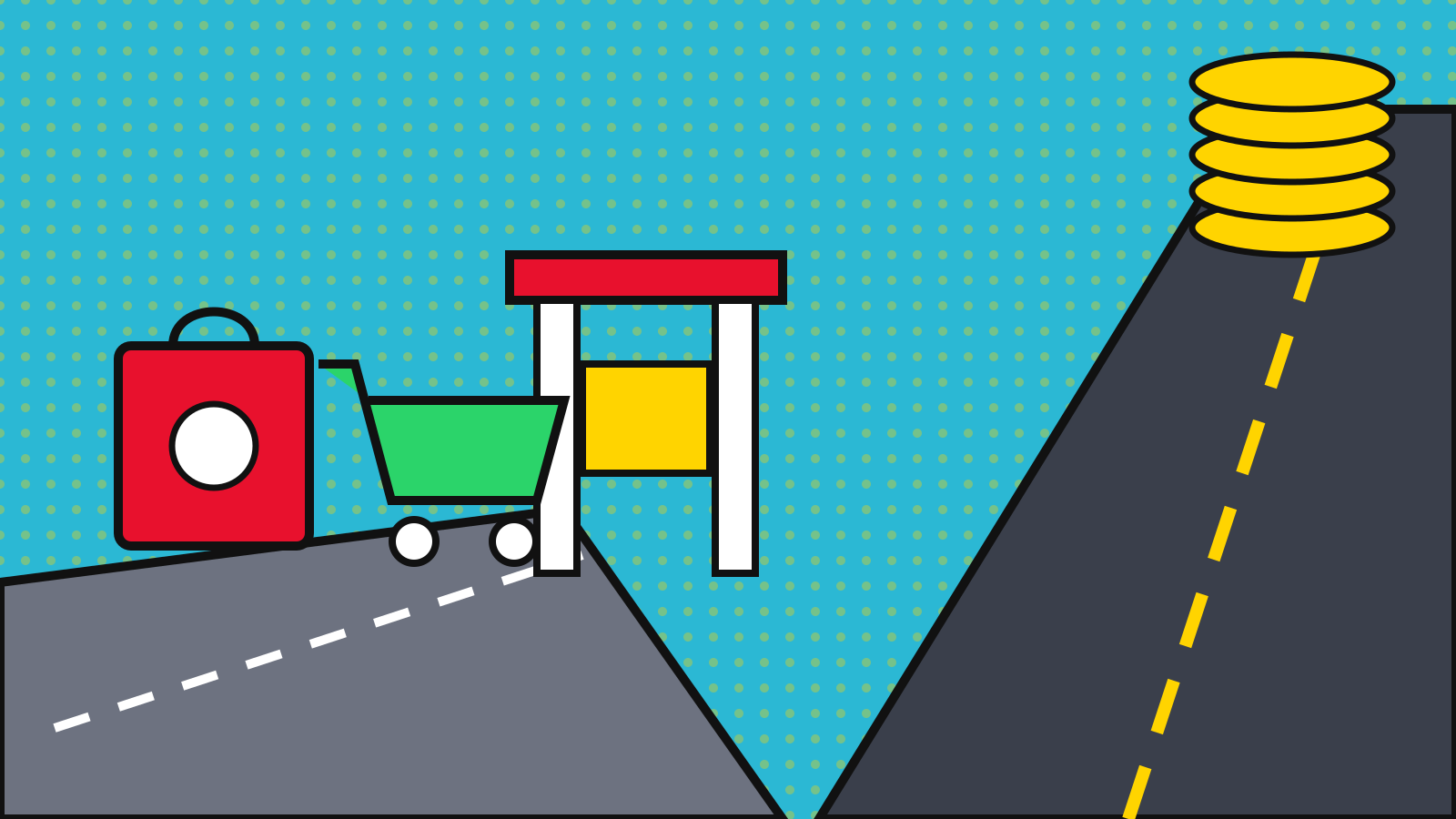
So no, your pricing power across retail media as a whole isn't vanishing. Think of it as two toll booths merging on a side road while the interstate charges more than thirty times as much. If you can reroute, you shrug.
The catch is that a lot of grocery brands can't really reroute that spend, because the delivery shopper in a given metro isn't always reachable on the interstate. And those two booths have been the obvious places to compare against each other in a planning meeting.
Ad load is already climbing, merger or no merger
This is the number I'd actually bring to your next budget review. Instacart's Q3 release shows gross transaction value (GTV, the dollar value of goods sold through the platform) up 15% to $10.5 billion, while advertising and other revenue grew 23%. That line is now 3.1% of GTV, up from 2.9% in Q2 2026 and 2.8% in Q2 2025.
Put plainly, brands are already paying more per dollar of groceries sold, and that happened with two competitors in the market. "Other" is mixed into that line, so don't read it as a pure ad metric, but the direction seems pretty clear to me.
Instacart also suspended its guidance and cancelled its November 5 earnings call, which is normal for a company being acquired. It does mean you'll get less public detail on this business from here. The numbers you collect yourself start to matter more.
The cheapest time to measure two platforms is while they still have a reason to look different.
Three things I'd pull before your 2027 plan locks
The first one takes about ten minutes. Export the last four quarters of spend and attributed sales from both Instacart Ads and DoorDash Ads, then calculate ad spend as a share of your brand's sales on each. Don't panic if you're well above Instacart's 3.1%, since that average includes all the sales nobody advertised against. Watch the trend. If your ratio rose over four quarters while your sales share on the platform stayed flat, you've been funding that ad load increase without getting anything back.
The second takes longer. Schedule a geo holdout on each platform for Q1 2027, once holiday noise clears: pause ads in about 20% of matched markets for four weeks, then compare retail sales against the markets that kept running. Do them separately. My rule of thumb (mine, not an industry standard) is that if incremental return comes back under half of what the platform reports, that budget is up for negotiation. You'll want those two separate baselines on file, since I wouldn't count on the same breakdown being available after reporting gets folded together.
The third is contract language, and honestly it's the one most teams will skip because it requires talking to legal. For any 2027 commitment on either side, I'd ask for:
- Annual terms instead of multi-year, with no prepayment past the expected close window
- A change-of-control clause that lets you exit or renegotiate after the deal closes
- Written export rights for your campaign and SKU-level data, in a usable format, for the full contract period
- Measurement continuity: if an attribution method or report changes, you get notice and a parallel run
Will a sales rep agree to all of that? Probably not. But asking this quarter costs nothing, and the answers will tell you something about how each side is thinking about 2028.
The awkward bit nobody's pricing in: Carrot Ads and Criteo
Most coverage stops at the two consumer apps. The stranger question sits in the plumbing.
Instacart's Carrot Ads runs retail media networks for other grocers, including Hy-Vee's RedMedia, and that same March 2025 release counted more than 220 retail banners on the product. Sprouts launched its network on it in 2023. The new pitch is that more grocers could run retail media on Instacart's technology, and the release stresses that local grocers can work with any delivery platform. Still, some of those grocers will be sitting across the table from a company that also owns the biggest delivery app, per the order data below. I'd want to know if they stay.
If you buy across several regional grocers through Carrot Ads, list which of your retailer partners depend on it. Should even one or two leave for another ad tech vendor, your neat cross-retailer campaign turns back into separate buys and separate reports.
Then there's Criteo. In October 2025, DoorDash signed a multi-year deal making Criteo an extension of its US ad sales team for grocery, convenience and other retail. Meanwhile DoorDash bought Symbiosys for its off-site ad tech in 2025, for $175 million. Add Instacart's sales team and tooling, and that's a lot of overlapping ways to buy the same shopper. Nobody has said what happens to any of it. Ask your reps directly who your contact will be after close. They likely don't know yet, which is an answer of sorts.
This deal could still die, and I'd plan for both outcomes
I keep going back and forth on the odds here. The YipitData figures reported by Reuters put DoorDash at 65.1% of 2025 delivery orders, Uber Eats at 25.8% and Instacart at 9.1%. That's share of orders across restaurant, grocery and retail, based on email receipts, so it's neither ad share nor grocery share. Emarketer's Zak Stambor told Reuters there's "meaningful overlap between the companies, especially in grocery delivery." The same piece notes the FTC just launched a study into whether companies including DoorDash and Instacart use individual shopper data to set prices, which is not ideal timing if you're asking that agency to bless a merger.
DoorDash, for its part, can point to Walmart, Amazon, Target and Gopuff as same-day grocery rivals, and it'll be a real argument. My guess is around 60% this closes in something close to its current form. Treat that as an opinion rather than a forecast with a model behind it.
If it closes, I'd bet Instacart's ad line passes 3.5% of GTV by the end of 2028. If it doesn't, you've still got cleaner incrementality data and a better contract, which were worth having anyway. That asymmetry is most of why I'd do this work now.
We looked at a similar problem with Amazon's auction surcharge, where the charges buyers should care about are the ones they can't easily see. Consolidation tends to make more of those, not fewer. Anyway, the export takes ten minutes, and it might be the only part of this you can finish before lunch.