The Product Page Is Dying. Fenty Beauty Just Showed Where Conversions Are Moving.
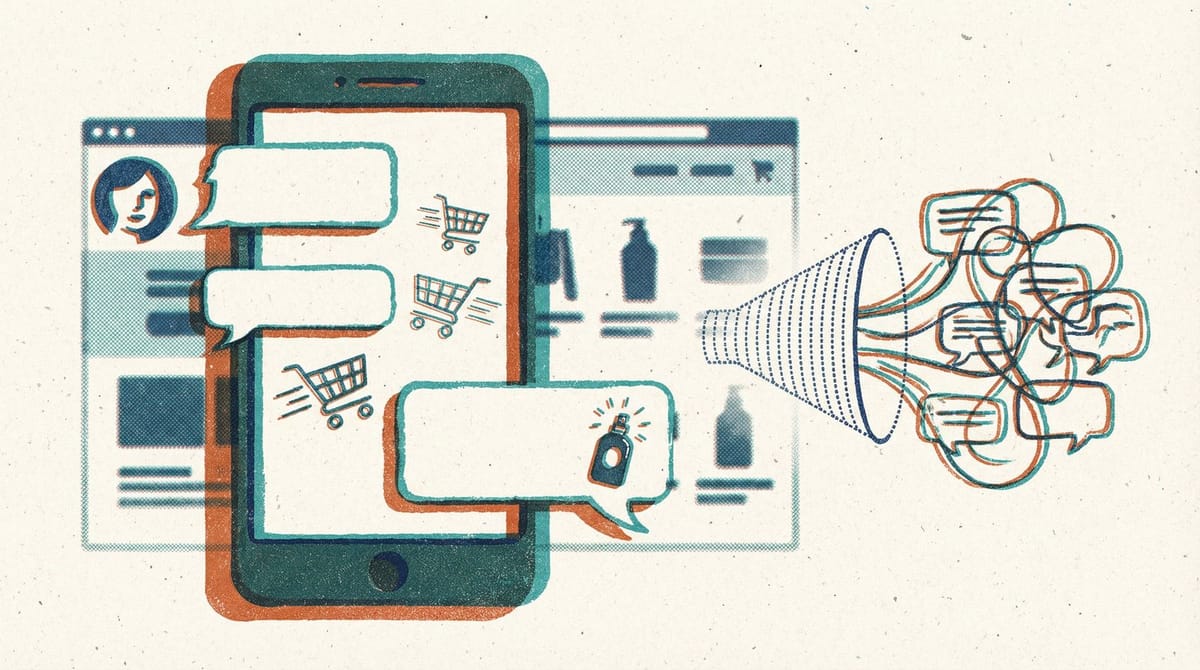
Fenty Beauty launched an AI beauty advisor on WhatsApp this week called "Rose Amber." Users text it like a friend, get shade recommendations, take product discovery quizzes, and shop across Fenty Beauty, Fenty Skin, and Fenty Hair. It is the first formal Fenty x WhatsApp partnership in the U.S., and most of the coverage has focused on the beauty angle.
I think the beauty angle is the least interesting part of this.
What Fenty just did, whether they intended to frame it this way or not, is move the conversion point from a product page to a conversation. And they are not the only ones. L'Oreal's Beauty Genius ran 480,000+ beta conversations on WhatsApp. OpenAI launched Instant Checkout inside ChatGPT back in February. Sephora built a ChatGPT app. Glossier is integrating ChatGPT checkout. This is not one company doing something cute. It is a pattern, and it has implications for anyone running paid acquisition, not just beauty brands.
Your product page is becoming a backup plan
Right now, Rose Amber sends users to Fenty's website to complete the purchase. That part is temporary. In-app purchasing on WhatsApp is already live in several markets, and the trajectory is pretty obvious. Meta has been building commerce infrastructure into WhatsApp for three years. WhatsApp paid messaging just crossed $2 billion in annualized revenue. Click-to-message ads in the U.S. grew over 50% year-over-year. They are not investing that kind of money to send people to someone else's checkout page.
L'Oreal Brazil already runs 20%+ of its DTC sales through WhatsApp. Not through a website that WhatsApp links to. Through WhatsApp. The entire funnel, from product discovery to payment, happens inside a chat thread. And the conversion numbers from that setup are hard to ignore. Across various case studies, WhatsApp commerce conversion rates land somewhere in the 45-60% range. That is roughly 12x higher than traditional e-commerce channels, depending on whose numbers you trust. (I would be slightly skeptical of the high end, but even the conservative estimates are striking.)
The product page was built for an era where you drove traffic to a destination and hoped enough people converted before bouncing. Conversational commerce flips that. There is no bounce. The customer is already in a 1:1 thread. The AI advisor already knows what they want. The recommendation is personalized. And, crucially, leaving the conversation feels more like hanging up on someone than closing a browser tab. The psychological friction of abandonment is just different.
The cart recovery numbers are what should actually get your attention
Here is where this stops being a "nice future trend" and starts being something you probably need to think about this quarter.
Clarins France reported a 90% open rate on WhatsApp messages, which is 4.5x higher than their email open rates. Their conversion rate through WhatsApp was 7x higher than email. Clarins Mexico saw a 20x increase in sales through the channel. Those are big numbers from a brand that is not exactly a scrappy startup experimenting on a whim.
The abandoned cart data is where I would focus if I were running e-commerce or lead gen in any vertical. WhatsApp abandoned cart recovery rates run 15-35% compared to the 2-5% email industry average. That is roughly 6x more effective at the low end. And honestly, it makes intuitive sense. Nobody opens their email. Everyone opens their WhatsApp. The message arrives in the same thread where the person was already shopping. There is a continuity to it that a "You left something in your cart!" email, sitting between a password reset notification and a Substack digest, just cannot replicate.
This is not limited to beauty. If you sell anything online and you are relying on email sequences for cart recovery, those sequences are competing against a channel that gets 90% open rates. I am not saying kill your email flows tomorrow. But I would want to be testing WhatsApp cart recovery alongside them, at minimum, to see how the numbers compare for your specific vertical.
The attribution problem nobody is ready for
Here is the part that I keep coming back to, and that I do not think enough people are talking about yet.
Picture this path: a consumer sees your Instagram ad, taps a click-to-WhatsApp button, has three conversations with your AI advisor over five days, and then buys on your website. Where does that conversion attribute? The Instagram ad gets last-click credit if you are lucky. More likely, the WhatsApp conversations do not show up anywhere in your attribution model. Your Meta Ads Manager shows a click. Your website shows a direct-or-organic purchase five days later. The three conversations that actually closed the sale are invisible to your measurement stack.
This is going to be a real problem, and not a theoretical one. Meta reported that WhatsApp messaging crossed $2 billion in annualized revenue with over 1 billion active business threads daily across Meta's messaging platforms. Roughly 284 million businesses are active on WhatsApp, up 42% year-over-year. And about 80% of people globally message a business at least once a week. The volume is already there. The measurement infrastructure is not.
If your attribution model is already something you privately consider more fiction than fact (and, from what I have seen, most marketers' models are), adding a conversational layer in the middle of the funnel makes it worse. Meta's recent push toward natural language audience targeting is part of the same trend. The platform is getting better at finding buyers. It is getting harder to prove which touchpoint did the work.
And to be fair, this is not entirely a new problem. Multi-touch attribution has always been a polite fiction. But conversations make the fiction more expensive, because now you are potentially over-investing in channels that look like they are converting (last click on a product page) and under-investing in the channel that actually did the persuading (three WhatsApp exchanges where the AI advisor addressed every objection). The delta between what you measure and what actually happened just got wider.
The $45 billion question and what to do about it
Estimated global sales via WhatsApp commerce in 2026: $45 billion. That is not a rounding error. And it probably undercounts the influence, since a lot of purchase decisions that start in WhatsApp end on a website and get attributed to something else entirely.
If I were running paid social or e-commerce right now, here is what I would actually do. First, look at your click-to-message ad performance. If you are running Meta ads and have not tested click-to-WhatsApp as a destination, run a small test. Even a few hundred dollars. Compare the cost-per-conversation to your cost-per-landing-page-visit, and more importantly, compare downstream conversion rates. The early data from brands doing this suggests the economics are favorable, but your vertical might be different.
Second, audit your abandoned cart recovery stack. If it is email-only, you are leaving money on the table. The gap between 2-5% recovery (email) and 15-35% recovery (WhatsApp) is large enough that even a modest test should show signal quickly. You do not need an AI advisor to start. A simple automated WhatsApp message with a cart link and a human-sounding nudge will get you data.
Third, and this is the longer-term play, start thinking about how you will measure conversational touchpoints. Because right now, most analytics stacks treat messaging as a black box. You know a conversation happened. You rarely know what was said, what objections were addressed, or how directly the conversation led to a purchase. ChatGPT is already becoming a search and discovery channel, and the same measurement gaps apply there. The brands that figure out conversational attribution first will have a structural advantage, because they will know where their money is actually working.
Personally, I think we are about 18 months away from the product page being a secondary conversion path for most DTC brands. Not dead. Secondary. The primary conversion will happen in conversations, whether that is WhatsApp, ChatGPT, Instagram DMs, or whatever Meta builds next. Fenty's launch with Rose Amber is a beauty play on the surface. Underneath, it is a preview of where e-commerce goes when the funnel becomes a dialogue instead of a destination.
The brands measuring this shift right now are going to understand their own economics. Everyone else is going to wonder why their ROAS keeps getting harder to calculate.
By Notice Me Senpai Editorial