Google Will Stop Beating Your CPA Targets on August 17 (On Purpose)
Starting August 17, 2026, Google Ads will stop letting budget-limited campaigns beat their Target CPA and Target ROAS goals. Google's own example: a campaign with a $10 tCPA that has been delivering conversions at $5 will move back toward an actual $10 CPA. Search, Shopping, Performance Max, and Demand Gen campaigns are all in scope, and the audit window closes Monday.
Google announced the change in a quiet help center document, and it reads like housekeeping. It is not. For accounts running capped budgets with loose targets, which covers a big share of lead gen and a fair amount of ecommerce, this is the most consequential Smart Bidding behavior change of the year. It ships in five days.
The overperformance you were bragging about is being repossessed
Until now, Smart Bidding treated a budget-limited campaign's daily budget as the hard wall and the bidding target as a soft goal. If the system could find conversions at half your stated CPA, it took them, and your reporting looked great. Hop Skip Media's explainer describes the old arrangement the same way: the budget was the hard ceiling, the target a soft goal. Google's announcement, as Search Engine Journal reports it, spells out the new behavior with unusual clarity: "If your campaign's Target CPA is $10, but your recent actual CPA performance is $5, your campaign will deliver more closely to a $10 actual CPA starting August 17, 2026."
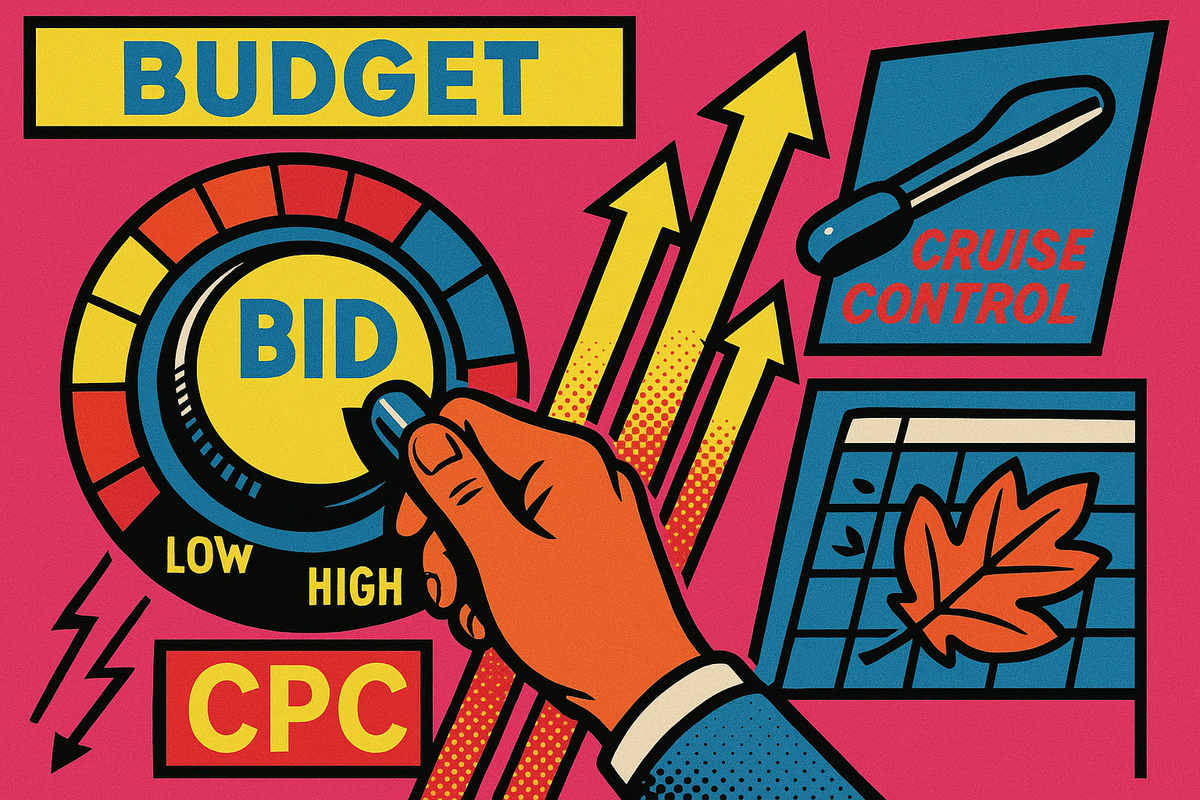
Read that twice. Same target, same budget, and Google will now deliberately spend up to the number you wrote down. Smart Bidding used to treat your target like a speed limit. From Monday it treats it like cruise control: you said 65, you get 65, even if the car was comfortably doing 40 downhill.
Your target is becoming an instruction, not a ceiling.
Google frames this as consistency, and there is a fair argument buried in there. Jyll Saskin Gales made it bluntly in the practitioner reactions SEJ collected: Target CPA and Target ROAS "should do exactly what their names imply." Hard to argue with the dictionary. The problem is that a lot of experienced buyers built deliberate strategies on the old behavior, and those strategies stop working this weekend.
Who actually gets hit, and why the smart money sandbagged on purpose
The change only touches campaigns that are both "Limited by budget" and running a target-based bid strategy. If your budgets are uncapped, or you run Maximize Conversions with no target attached, Monday is a non-event for you. Search, Shopping, Performance Max, Demand Gen, Travel, and Search Ads 360 are in scope per SEJ's rundown, while App campaigns and most video formats keep the old behavior. Location3's coverage and Google's own FAQ in the help center carry the compatibility details, and I'd check your specific mix there, because trade coverage has been slightly inconsistent about the edge cases.
So why would anyone set a $10 target when they'd happily pay $5? Because loose targets gave the algorithm room to move. Joey Bidner's line in the SEJ piece: several high-performing accounts "INTENTIONALLY run with low tROAS or high tCPA targets," capitals his, because the headroom lets Smart Bidding chase efficient traffic without strangling itself on a tight constraint. The budget cap was the real control. Sandbag the target, cap the spend, collect conversions below the number you told Google. That combination worked for years, and it stops working Monday.
Barry Schwartz flagged the announcement over at Search Engine Roundtable when it dropped, and the reaction has split roughly into "finally, targets mean something" and "you are about to repossess my efficiency." Both camps are right, which is what makes this one annoying.
Google shipped a fix-it tool, and the right answer is still "it depends"
Google rolled out a Bid Target Adjustment Tool on July 6 to soften the landing. Optmyzr's breakdown covers the mechanics: the tool flags campaigns the change will touch and recommends new targets based on recent actual performance. If you want to keep delivering at today's numbers, you review the suggestion, hit Apply, and your trailing actuals get written in as the new target.
On paper, that sounds like the whole audit done for you. And sometimes it is. But the SEJ piece lands on the point I'd underline twice: changing the bidding target should be one option in the evaluation, not the automatic answer. Kirk Williams made a similar case, that agencies have spent years learning how Smart Bidding actually behaves versus how the documentation says it behaves, and this deserves campaign-by-campaign judgment rather than a bulk Apply. Nils Rooijmans went further and warned about decreasing efficiency of spend for accounts that just let it ride.
Two concrete ways a blind Apply goes wrong. First, the recommendation is built on recent performance, so if your last 30 days were unusually good, you just locked your best case in as the permanent mandate, and the campaign starts "missing" a number it never really promised. Second, in the other direction, a tightened tROAS can throttle volume you were quietly counting on. From what I've seen, targets moved in big jumps take a week or two to stabilize either way, sometimes messily.
I'd also note, gently, that Google's recommendation engine has a long history of optimizing for Google. This is the company that priced its Q2 at $63.27 billion while rounding your clicks to "billions". Treat the tool's suggested target as a data point, not a verdict.
The 20-minute audit to run before Monday
You need a list, a gap calculation, and a decision per campaign. In that order.
Minutes 1 to 5: In Google Ads, filter campaigns by status "Limited by budget," then by bid strategy type Target CPA or Target ROAS. That is your entire exposure list. If it comes back empty, close the tab and go do something else; this change is not your problem.
Minutes 5 to 15: For each exposed campaign, pull the last 30 days of actual CPA or ROAS against the stated target. Use a longer window if your conversion lag runs more than a week. Flag anything where actual CPA sits 20% or more below target, or actual ROAS runs 20% or more above. Those are the campaigns that will visibly move after Monday.
Minutes 15 to 20: Sort the flagged campaigns into two piles. Pile one: the target was sandbagged on purpose and the actual number is the real goal. Tighten the target toward trailing actuals, using the tool's recommendation as a starting point and your own seasonality knowledge as the edit. Pile two: the target genuinely reflects your unit economics and the overperformance was a bonus. Leave it, and expect more volume at worse efficiency, which might honestly be fine. If extra volume at your stated target is welcome, this is also the moment to raise the budget instead of touching the target at all.
Then set a benchmark for the two weeks after the switch: if actual CPA climbs more than 15% in the first week without a matching gain in conversion volume, pull the target down about 10% and reassess. Don't wait for a full month of damage to accumulate before you look.
The part where I admit Google has a point
My prediction, and I'll put a number on it: at least a third of budget-capped tCPA campaigns that nobody touches before Monday will see actual CPAs drift 20% or more toward their stated targets by early September. Most of those advertisers will read it as performance decay and start rebuilding creative or audiences, when the actual cause was a number in a settings field that stopped being decorative.
And to be fair, the old behavior was strange when you say it out loud. Google spent years telling everyone to trust the black box, and the black box quietly delivered under the sticker price. Consistency is a reasonable thing for a bidding product to want. I don't love losing the discount, but I'd rather run bidding that does what the label says. As long as I'm the one who writes the label before August 17, and not the autofill.
Notice Me Senpai Editorial