Google Expanded AI Mode Ads the Same Day It Admitted They Earn Less
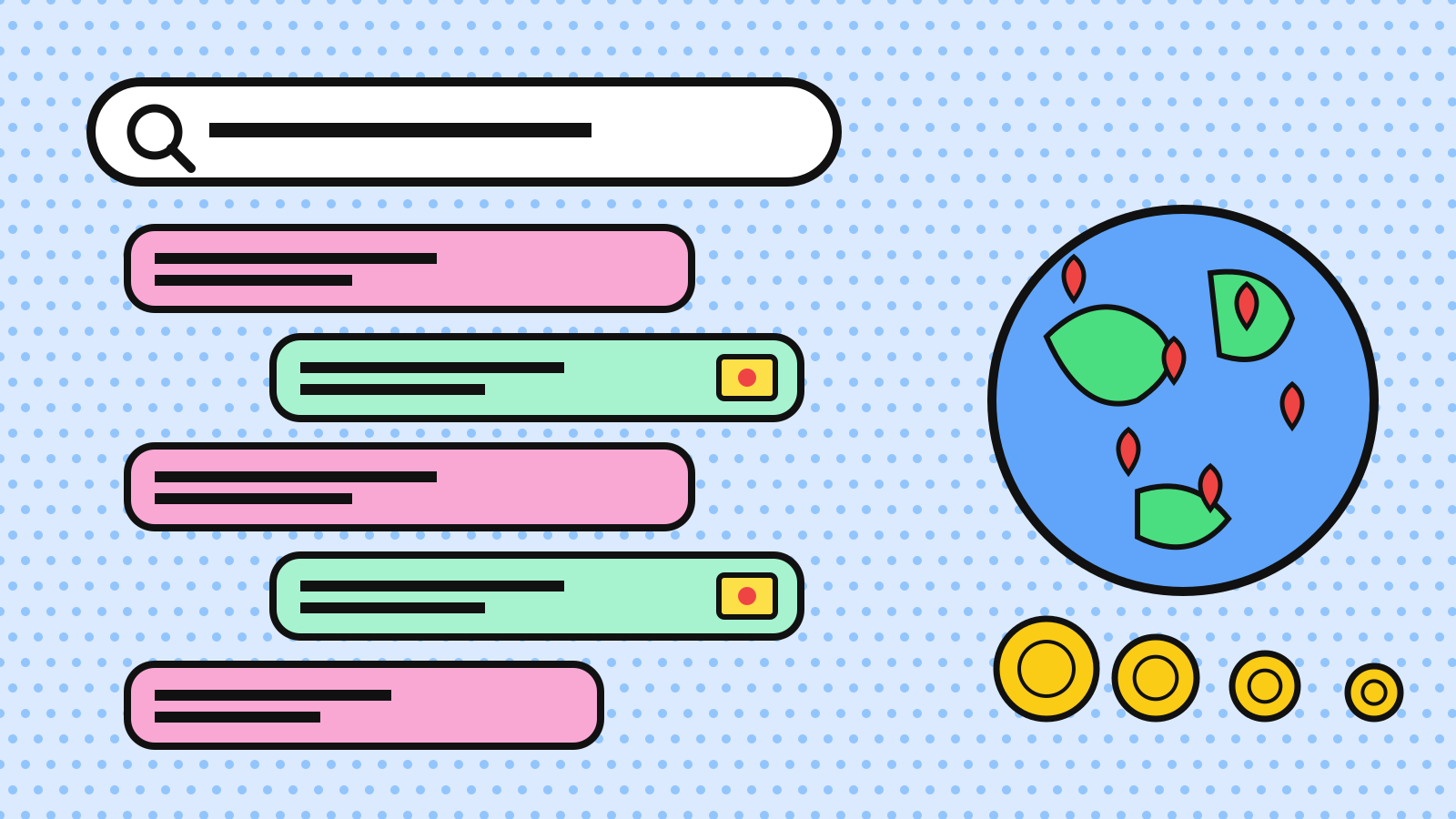
Google expanded ads in AI Mode to 10 new countries such as Canada and India on October 28, 2026, and launched multiturn ads on follow-up questions in the U.S. On the same day, Google's chief business officer told investors that AI Mode's growth weighed on Search revenue "because of the lower monetization we were seeing in AI Mode." Advertisers can't opt out or see it in separate reporting.
So the fastest-growing slice of Google Search is also, by Google's own account, the slice that earns less per query. And it's going to show up in your account as part of your normal Search numbers, with no label on it.
I don't think that's automatically bad news for advertisers. Lower monetization for Google can mean cheaper clicks for you. But it can also mean traffic that converts worse, and right now you have no clean way to tell which one you're getting.
What Google announced (and what it said to Wall Street)
The official Google Ads & Commerce post from Shashi Thakur lists the new markets: Australia, Canada, India, Kenya, Malaysia, New Zealand, Nigeria, Pakistan, the Philippines and Singapore. Brazil, Mexico and the United Kingdom are slated for later in Q4. The same post says AI Mode queries run about three times longer than traditional searches, and that click-through rates on sponsored and organic product listings inside AI Mode are "already similar."
Barry Schwartz at Search Engine Roundtable had the right reaction to that CTR line: "I would hope so, but I am not sure." Similar CTR between a sponsored listing and an organic one sitting next to it tells you the ad isn't being ignored. It doesn't tell you anything about what those clicks are worth.
Multiturn ads are the newer piece. A Google spokesperson told Search Engine Roundtable they "show up on responses to follow-up user queries," so your ad can now appear on the third or fourth question in a conversation, not just the first one. Google first started showing ads in AI Mode back in May 2025, and more recently pushed them into AI Mode with personal intelligence too, which we covered when Google carved out its Gmail ad exception.
Then came the earnings call. Per the Q3 2026 call transcript, JPMorgan's Doug Anmuth pointed out that query growth was the fastest in five years while Search revenue growth slowed. Philipp Schindler listed FX first, then a few retail and media factors, and then this: "the strong growth in AI Mode queries had an impact because of the lower monetization we were seeing in AI Mode." Alphabet's Q3 earnings release puts Search and other revenue at $63.35 billion, up 12% year over year.
Schindler also said "many of these queries are upper funnel queries." Keep that phrase in mind. It's carrying a lot of weight.
The part your reports won't tell you
Google's help page on ads in AI experiences spells out the mechanics pretty plainly. Existing Search, Shopping and Performance Max campaigns are automatically eligible. AI Max, broad match, Shopping and PMax can match to both direct queries and "contextual" ones, meaning the broader exploratory questions. Exact and phrase match only qualify when the query expresses direct commercial intent. You can't target AI Mode exclusively, you can't opt out of it, and the performance is rolled into your standard campaign reports and search terms report.
Put those together and you get a fairly specific risk profile:
- The inventory skews upper funnel, according to Google's own CBO.
- The match types most likely to land there are broad and AI Max, which is exactly where contextual matching happens.
- The results blend into the same averages you use to set bids and judge campaigns.
It's a bit like a coffee shop adding a cheaper drive-through window and then only reporting the average ticket. If the average slips, you know something changed. You just can't see which window did it.
In the 10 new markets, this starts more or less now. If you run Canadian or Australian campaigns on broad match, your November baseline may already include a mix that your October baseline didn't. Which is, honestly, terrible timing with Black Friday a month out.
Where these ads actually show up so far
The best third-party data I found is an SE Ranking study of 50,032 U.S. commercial keywords, summarized by TechWyse. Text ads appeared in AI Mode on 29.45% of those keywords. CPC was the strongest predictor: 53.56% of keywords with CPCs of $10 or more triggered an AI Mode ad, versus 24.33% under $2. Pets led at 72.38% ad presence, healthcare trailed at 2.64%.
That CPC pattern surprised me a little. If AI Mode monetizes worse overall, you might expect Google to be shy about putting ads on expensive keywords there. Instead it seems to be doing the opposite, placing ads where commercial value is already proven. My read (and this is a guess) is that the lower monetization comes mostly from volume: lots of long, exploratory queries with no ad at all, rather than cheap ads on valuable ones.
If that's right, the advertisers most exposed are the ones in high-CPC lead-gen categories running broad match or AI Max. Which, from what I've seen, describes a lot of legal, home services and insurance accounts.
A 30-minute proxy audit, since Google won't give you a segment
You can't isolate AI Mode traffic. You can get reasonably close with query length, because Google itself says AI Mode queries average three times longer than standard searches.
- Pull 30 days of search terms for every campaign on broad match, AI Max or PMax (PMax search term insights work too, though they're coarser).
- Add a word-count column in Sheets:
=COUNTA(SPLIT(A2," ")). Bucket into 1-4 words and 7+ words. The 7+ bucket isn't all AI Mode, obviously, but it's where AI Mode traffic would land. - Compare cost per conversion and conversion rate between the two buckets. My rough threshold: if the 7+ word bucket runs 30% or more above your account CPA with meaningful spend behind it, that's your signal to act.
- Repeat it in two weeks for any campaign targeting the 10 new countries, so you have a before-and-after across the rollout.
If the long-query bucket is underperforming, the levers are boring but real. Set a tCPA or tROAS ceiling on broad and AI Max campaigns if you haven't, so upper-funnel clicks can't drag bids up. Add negatives for the exploratory patterns you see repeating (comparison phrasing, "how to," "is it worth"). And consider splitting your highest-value keywords into exact-match campaigns, since exact and phrase are only eligible on queries with direct commercial intent anyway. That doesn't keep you out of AI Mode. It just keeps you out of the contextual, meandering version of it.
If the long-query bucket performs fine or better? Great. Leave it alone and maybe push a bit more budget at it. Not every Google change is a trap. Some are just opaque.
And this connects to a broader pattern, to be fair. Search campaigns already take 71% of budget for 41% of clicks in Brainlabs data, and Google keeps adding inventory to Search that behaves differently from classic Search. AI Mode is just the largest example so far.
Google will probably fix the reporting gap, eventually
Google has a pattern here. It launched PMax with almost no transparency, then slowly added channel reporting and search term insights after advertiser pressure. I'd put it at roughly 60% odds that Google Ads ships some form of AI Mode segment or placement breakdown before the end of Q2 2027, mostly because agencies will start reporting blended Search CPA drift and Google will want a better answer than "trust us."
Until then, the 12% Search growth number and the "lower monetization" line are the most honest description of AI Mode we're likely to get from Google. They told investors the traffic earns less. They told advertisers the CTR looks similar.
Both can be true. You just want to know which one shows up in your own account before December decides for you.