Google Handed 54 Publishers Discover Profile Control. 95% Forgot to Add UTMs.
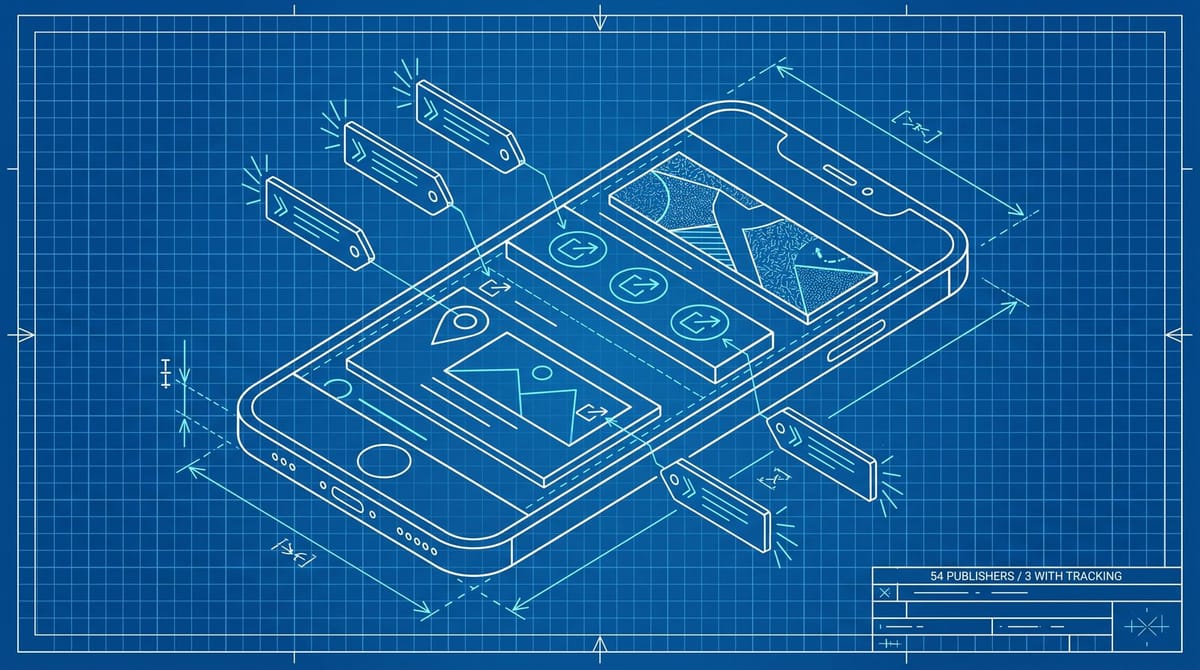
Google quietly gave 54 US publishers control over their Discover profile pages between March and May 2026, adding banners, links shelves, and pinned posts to a surface that used to be algorithm-only. 41 of the 54 uploaded custom banners and 33 enabled the links shelf. Only 3 publishers added UTM parameters to any of the 65 configured links, which means 95% of the pilot has no way to measure whether the profile sends traffic at all.
The pilot was first surfaced by Search Engine Land's analysis of profile snapshots taken across spring 2026. If you missed the original rollout, the base Follow button and entity pages went live in September 2025 alongside the Discover revamp. What changed this year is the enhanced layer: the cosmetic controls Google reserved for an invited group, and the data on how the invited group actually used them.
What the 54 publishers actually got
The cohort skewed wide on purpose. 15 national outlets (Wall Street Journal, Fox News, NY Post, Newsweek), 13 regional papers (Boston Globe, SFGate), 14 local TV stations (KTLA, PIX11), 6 lifestyle brands (Delish, The Dodo), and 6 specialty publishers including Pew Research and The Athletic. All US-based, all English-language. Google was clearly looking for spread across publisher archetypes before deciding what the next 540 invites look like.
The new controls themselves are modest. A banner image at the top of the profile, a links shelf you can populate with up to five outbound URLs, pinned posts pulled from your own RSS, and ordering control for your social tabs. Standard profiles still sort social links algorithmically by follower count, which makes most major outlets default to Facebook even when their X or TikTok account drives more reach. The enhanced version lets you reorder. That is it. No new ranking signal, no different surface treatment in the feed itself, no algorithmic boost.
The 95% UTM problem nobody is talking about
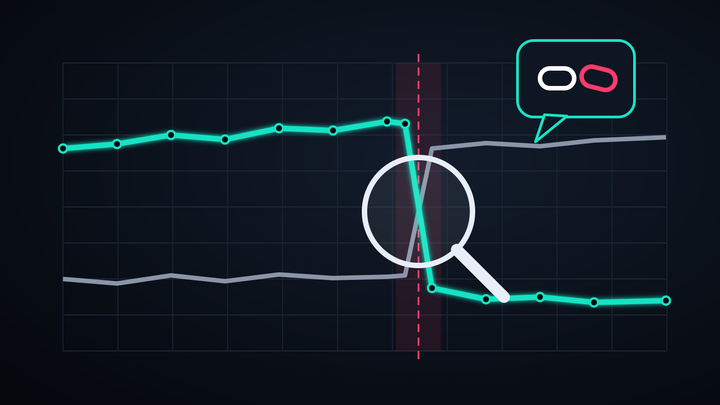
This is the part that surprised me. Across 65 configured links from 31 publishers, exactly 3 had tracking parameters attached. The rest pointed to /weather, /live, /app-download, and section indexes with no UTM string at all. Which means inside GA4, traffic from a tapped profile link looks like organic google.com referral and gets bundled with everything else from search.
If I were running a publisher Discover team and Google handed me this, the first thing I would do is wrap every outbound link in a ?utm_source=discover_profile&utm_medium=google&utm_campaign=[link_label] tag. Twelve minutes of work. Maximum. The pilot publishers had two full months to do it and most of them shipped the profile without measurement. Some of that is probably the dev queue. Some of it is the SEO and analytics teams sitting on different Slack channels. Either way, the lesson here is pretty brutal: when Google hands you something new, the audit defaults you walk in with are the difference between a case study and a guess.
Profile adoption did not correlate with Discover visibility
The harder finding in the SEL data: publishers who fully decked out their profile (banner, all five link slots used, pinned posts active, custom About text) showed no measurable improvement in Discover impressions compared to publishers who did the minimum. That tracks with what Google has been signaling for over a year. Discover ranking is driven by content quality, freshness, and entity-topic affinity. Not by how nicely you have dressed your source overview page.
From what I have seen across the post-February core update period, this lines up with the larger 2026 pattern. ALM Corp's analysis of the February 2026 Discover core update found that the number of unique US domains appearing in the Top 1000 Discover placements dropped from 172 to 158, an 8.1% concentration. Discover is rewarding fewer publishers more heavily. A profile banner does not move you onto the list. It just makes the page look a little better once you are already there. The TurboQuant changes to RankBrain are doing the actual rearranging on the back end.
Why this matters when Discover traffic just collapsed
The context behind all of this: referrals from Google Discover to more than 2,500 publisher sites dropped 21% year over year in 2025 globally, and Press Gazette's 2026 trends report shows the US specifically was down 29%. So for most publishers, Discover is now the channel that lost roughly a third of its volume, and where you suddenly have a settings panel you did not have before.
The temptation is to assume the panel can claw something back. The pilot data says no. It is a branding surface. The recovery levers are elsewhere, in content depth, geographic relevance, and editorial entity strength. I think most publisher teams are going to spend three meetings deciding what to put on the banner and zero meetings deciding what they would measure. That is backwards. The thing the panel gives you that the algorithm does not is a way to land first-party signal into your analytics: which Discover users tap through to the profile (vs. straight to the article), what they tap once they are there, whether the "Follow" button actually creates a measurable downstream cohort. None of that data exists today unless you instrument the links yourself.
The two-hour checklist if Google offers you a profile next
Assuming the next 540 invites go out in Q3 (which seems likely given Google's pilot-then-expand pattern with most publisher products), here is what I would have ready before the panel goes live.
UTM template (15 minutes). One naming convention, applied to every link on the shelf. Source: discover_profile. Medium: google_owned. Campaign: the link label. Save it as a snippet so the social or SEO ops person can paste it without thinking.
Banner spec (30 minutes). Pick one of the five archetypes the pilot surfaced: wordmark, editorial photo, local landmark, brand statement, or front-page archive. 41 of 54 publishers picked one of those five, which means Google's display tolerance is already calibrated for them. Avoid anything heavily textual. Mobile thumbnails compress the banner aggressively and from what I have seen, text-on-image gets shredded.
Links shelf priority (20 minutes). Local TV publishers averaged 2.2 links per profile and led with weather, live stream, and app download. National outlets averaged 0.6 and mostly linked to topic sections. The pilot showed a meaningful intent split: local users want utility, national users want depth. Pick a side. Do not split the difference.
Pinned post calendar (45 minutes). 52 of 54 publishers turned pinned posts on; only 13 actually used the feature. The empty pin is a wasted asset, especially during news cycles when Discover impressions spike. Build a once-weekly rotation that updates the pin and stamps the URL with a tracked UTM.
None of this is going to save your Discover traffic on its own. The February core update and the steady concentration trend are doing the heavy lifting on the back end. But if your team gets the next invite, the cost of being measurement-ready is roughly two hours of work, and the cost of not being measurement-ready is that you spend Q4 telling your CMO you cannot tell whether the panel did anything at all. I would rather have the data and shrug than not have it and guess.
That feels like the real lesson from the pilot. Google handed publishers a cosmetic upgrade, and 95% of the invited group treated it cosmetically. The handful who instrumented it now have data nobody else has, on a channel where everyone else just lost roughly a quarter of their traffic.
Notice Me Senpai Editorial