Google Doesn't Forgive Programmatic SEO Just Because You Deleted the Pages

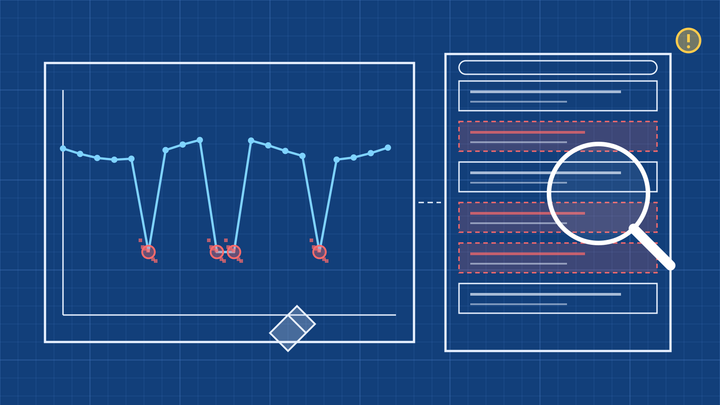
Google's John Mueller told a site owner on Bluesky this week that Google's systems have "possibly lost faith in your site providing good value to users based on the old pages." The owner had already removed the low-value programmatic pages and seen no recovery. The trust judgment is site-level, not page-level, and Mueller said resolving it "tends to take time and significant effort." Plan for months, not a recrawl.
The full exchange, reported by Barry Schwartz at Search Engine Roundtable, is short and worth reading in the original. Mueller's Bluesky reply runs four sentences. "Programmatic SEO can often lead to a site that's either spam, borderline spam, or low quality. It's easy to spin something up with many pages, it's hard to provide real value to users." Then the line that matters, about the systems losing faith based on the old pages. Then the part nobody wants to hear, that fixing it looks a lot like recovering from a spam or core update issue.
I've read a lot of Mueller replies over the years and most of them are carefully non-committal. This one is about as direct as he gets. And the practical implication is uncomfortable for anyone who built a few thousand templated pages in 2024 and quietly noindexed them in 2025.
The pages are gone. The verdict isn't.
The mental model most SEOs still carry is page-level: bad page gets filtered, delete the bad page, problem solved. That model was roughly true for a long time. It stopped being true somewhere around March 2024, when Google folded its helpful content system into the core ranking systems and published the scaled content abuse policy, which defines the violation as "many pages generated for the primary purpose of manipulating search rankings and not helping users," regardless of whether a human, a script, or an LLM produced them.
What Mueller is describing is the site-level consequence of that. Google's systems seem to form an opinion about the whole domain from the aggregate of what it published, and that opinion persists after the offending URLs 404. The templated pages taught the classifier what kind of site this is. Removing them stops the bleeding, but it doesn't reteach anything, because there's nothing new to learn from.
Think of it like a restaurant that failed a health inspection. Throwing out the bad batch is necessary. It does not get the rating back. The rating comes back when the inspector returns, on their schedule, and finds a different kitchen.
Google's own traffic-drop debugging guide says this in the flattest possible language: "some changes can take effect in a few days, while others could take several months," and for a wide-ranging drop you should "self-assess your whole website overall (not just individual pages)." The whole-website part is the tell. If the assessment were per-URL, they wouldn't need to say it.
Mueller has been saying this since 2023, just more politely
None of this is new, which is sort of the point. In July 2023 Mueller posted on X that "programmatic SEO is often a fancy banner for spam." In May 2025 he pushed back on lumping it in with technical SEO, which is the trick pSEO vendors use to make it sound like infrastructure work rather than content work. This week's reply closes the loop. The pages might get filtered, and the site carries the mark afterward.
The word "often" is doing real work in all three statements, and I want to be fair about that. Google does not ban templated pages. A directory with verified listings, a comparison tool pulling live prices, a travel site with actual inventory: those are programmatic and they rank fine. The violation is about intent and value density, not the fact that a script touched the page. The trouble is that "we added value" is what every pSEO project says about itself, and the classifier doesn't take your word for it.
The audit: count your templated URLs against your original ones
If you have ever run a programmatic section, this is what I'd do this week, and it takes about twenty minutes with Search Console and a crawler export.
Pull every indexed URL on the domain. Tag each one as templated (generated from a data source or a pattern, including "best X in Y" and "X vs Y" pages) or original (a human, or at minimum a human-directed process, wrote it for a specific reason). Then compute the ratio.
My rough read, and I want to stress it's a read rather than anything Google has published, is that the line where a site starts getting treated as a content farm sits somewhere around 70 to 80 percent templated. Below roughly a third templated, the original content seems to carry the domain. Treat those as guardrails, not a formula. Google has never published a threshold and I doubt one exists in that clean a form.
Then a second check, and this is the one people skip: look at your currently indexed mix, not your published mix. If you noindexed the templated section but Google still has 4,000 of those URLs in the index and 200 originals, the ratio Google is looking at hasn't moved. Search Console's page indexing report will show you what's actually still in. That number is the one to fix first.
Deleting pages changes what Google sees tomorrow. It does not change what Google concluded yesterday.
We got hit by the same classifier, so here's the timeline I'm using
I'll be transparent about something because it's more useful than pretending otherwise. This site lost most of its Google indexing at the start of May 2026. No manual action, nothing in Search Console except pages quietly going to "crawled, currently not indexed." We had been publishing up to 20 AI-assisted articles a day on a domain that was six weeks old. That's a scaled-content profile whether or not the individual articles were any good, and honestly, some of them weren't.
We cut cadence to five a day, pruned the thinnest posts, fixed a duplicated schema problem, and rebuilt the editorial layer. I wrote up part of that thinking in the piece on scaling AI content without sounding like the rest of the internet. Four months later, indexing is recovering slowly, and I mean slowly. Mueller's "time and significant effort" is not a figure of speech.
The March 2026 core update rolled out over two to three weeks because, per Mueller, the changes "have to work step-by-step, rather than all at one time." That rollout structure matters for your planning. Site-level reassessments appear to land with core updates, and Google ships those roughly every three to four months. So the realistic recovery window is: fix things, wait for the next core update, see partial movement, wait for the one after that. Two update cycles is six to eight months. I'd budget for that and be pleasantly surprised if it's faster.
What actually rebuilds the signal (and what doesn't)
Deleting is table stakes. The reteaching part is where most recovery plans go soft, because it requires publishing, and publishing is what got you in trouble.
What seems to work, based on the recovery cases that actually get documented rather than the ones vendors advertise: a sustained run of pages that are obviously not templated. Real author bylines with a history. Original data or original reporting. Pages that a human would link to on purpose. The volume should be low enough that each page gets an editor, and high enough that the classifier has a new sample to learn from. For a mid-sized site I'd say two to five genuinely original pieces a week, kept up for at least two core update cycles.
What doesn't work: rewriting the templated pages with more words. Adding an FAQ block to each one. Swapping the template. All of that is scaled content with a fresh coat of paint, and the policy language about "automated transformations like synonymizing" is aimed at exactly that move.
The other thing that doesn't work is waiting for a fresh domain to solve it. Google's spam policies flag "creating multiple sites with the intent of hiding the scaled nature of the content" as its own violation. Moving the same operation to a new domain seems to buy a few months before the pattern recognition catches up, and now you have two damaged properties.
Anyway, the reason I think this story matters more than the coverage suggests is timing. USA TODAY just reorganized its whole audience team around the fact that publishing more stopped working. That's a legacy publisher with real reporters. If volume-as-strategy is dead for them, the pSEO shop with 40,000 city pages was never going to make it through the next classifier pass.
The clock started when you published, not when you deleted
My prediction, and I'll put a number on it: by the end of the next core update after this one, at least half the sites that removed a programmatic section in 2025 and did nothing else will still be sitting where they are now. Not because Google is vindictive, but because they gave the systems nothing new to evaluate.
I don't think the sites that recover are going to be the ones with the best cleanup. They're probably the ones that treated the deletion as the start of a publishing plan rather than the end of a problem. That's a less satisfying answer than "remove the bad pages," and it's the one Mueller just gave.
Notice Me Senpai Editorial