
Google Added a 30-Day Limit to Sale Badges Five Days Before Black Friday
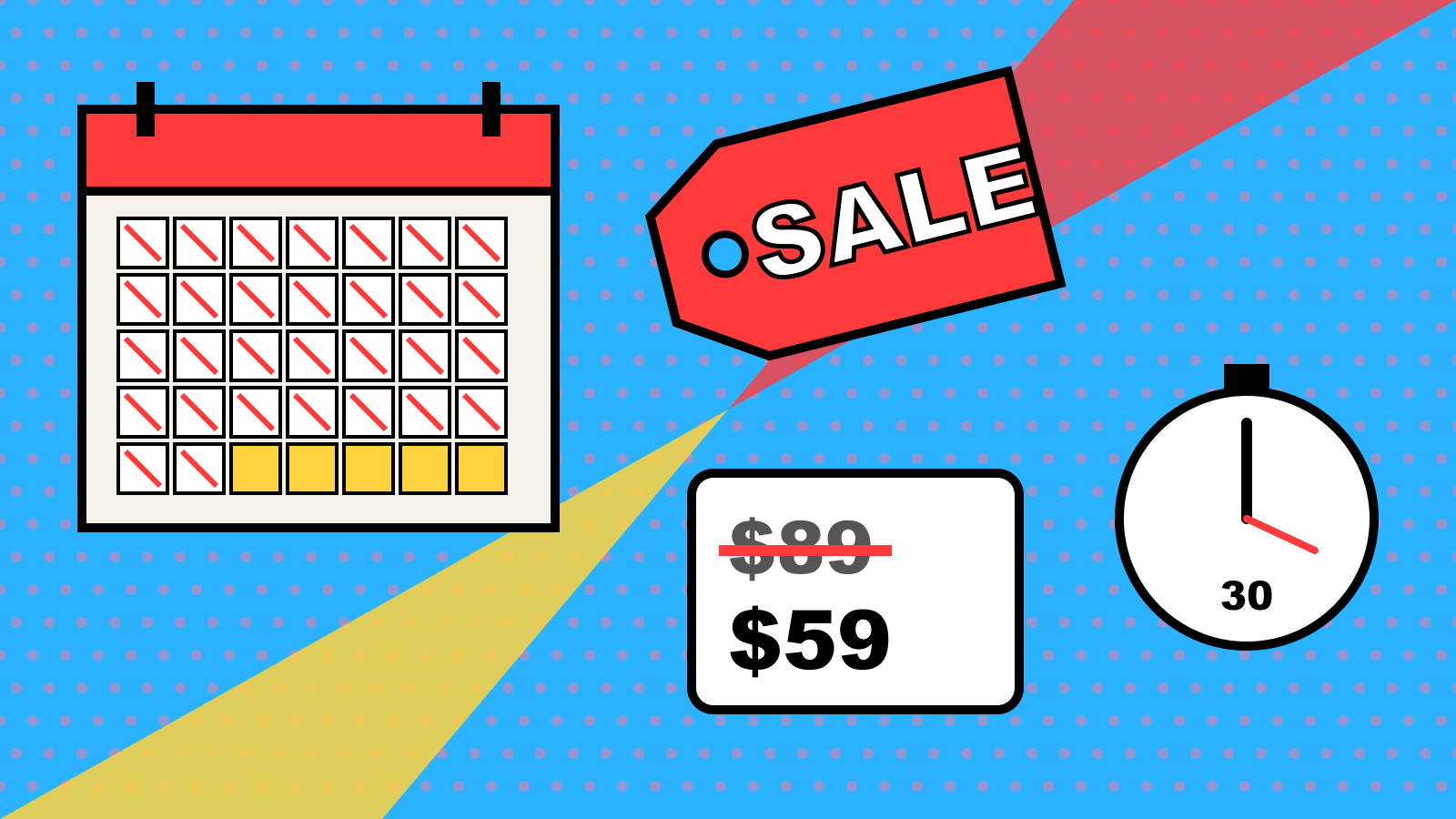
Google's sale price annotations help page now says a sale price "should not exceed 30 days" to count as a temporary reduction, a note first spotted on November 17, 2026. Retailers running month-long "Black November" sales into Cyber Week risk losing the struck-through price and sale badge on Shopping ads right as Black Friday traffic peaks on November 27.
The note sits at the top of the Requirements section, above all the country lists, so it reads as global. PPC News Feed reported it on November 17 and credited Hana Kobzová with catching the change. Five days later, PPC Land did the more careful read, and it found some odd gaps: the help page carries no update date, and as of November 22 the British English and Latvian versions of the same page did not show the note at all.
So Google changed the guidance for the most important retail week of the year, didn't date it, and didn't roll it out to every language. Pretty normal Merchant Center behavior, honestly.
Google wrote "should" where every other rule says "must"
The new language comes in two parts. The base price "should ideally be the sole active price at times," and the sale price duration "should not exceed 30 days." Every older requirement on that page uses "must." The discount must be greater than 5% and less than 90%. The sale price must be lower than the base price. The new note is softer, and Google doesn't say what happens on day 31.
There are three plausible readings. The badge drops automatically. The listing gets reviewed. Or the sale just becomes less likely to be recognized, which is the kind of fuzzy outcome you can't really debug. Google also hasn't said when the 30 days start counting, whether the sale_price_effective_date attribute is the reference point, or whether a day back at full price resets the clock. The attribute spec itself still sets no maximum sale length, and it says a sale price with no date range applies immediately.
I think the softness is the point. Google gets a stated policy it can enforce whenever its systems decide a "sale" is actually just the new price, without committing to a hard cutoff merchants could plan around.
And to be fair, this idea isn't new. Channable's guide to sale price annotations was already telling merchants that a sale should last 30 days or less, because otherwise Google may treat the lower price as the standard one and stop showing the Sale annotation. The feed tools seem to have been working from that assumption for months. What changed is that Google wrote it down.
Two 30-day numbers that are easy to confuse
This is where I expect a lot of teams to get tangled. Google's page already had a 30-day figure, and it measures something different.
The old rule is about base price history: how often the full price was actually charged before the sale. In the US, Shopping ads need the base price to have been charged for 5 days within the past 30, or 15 days within the past 200, and neither has to be consecutive. In the 12 other Shopping ads markets, including the UK, Germany, Canada and Australia, it's 30 days within the past 200. Store-specific local inventory ads need 60 days within the past 200.
The new note is about sale duration: how long the reduced price stays live. PPC News Feed framed the change as a once-regional requirement becoming universal. PPC Land disputes that reading, and I think PPC Land has it right. The country-specific history rule didn't expand. A separate duration cap got added on top.
The history rule asks whether your full price was real. The duration rule asks whether your sale is.
For US merchants the history rule is fairly lenient, since 15 days out of 200 is a low bar. The duration rule is the one that collides with how retail calendars actually work now.
Black November is roughly 30 days, and that's the problem
Run the calendar. Black Friday is November 27 and Cyber Monday is November 30. A sale that launched November 1 and ends Cyber Monday runs exactly 30 days, right on the line. Anything that started in late October, or that rolls into a "Cyber Week" ending in December, is over it. A sale running from early November through Christmas lands around seven or eight weeks.
The stakes are not small. PPC Land cites the NRF's forecast of $1.013 trillion in US November and December retail sales, up 4.2%. Google is also pushing more deal surfaces this season, from the Shopping tab's Deals feed to the "Deal Ends" annotation, which PPC Land says lost its experimental label on November 21. Common Thread's breakdown of Deal Ends says that badge depends on both sale_price and sale_price_effective_date being present, with the end date close. I haven't seen Google confirm every detail there, but if it's accurate, sale_price_effective_date just became the most important column in your holiday feed.
Think of it like a "Closing Down Sale" sign on a shop that has been closing down since 2019. Shoppers stopped believing it years ago. Google is now, slowly, deciding it doesn't believe it either.
Regulators are reading the same strikethrough
The Google rule is only a display policy, but it lines up with where enforcement is heading. PPC Land has tracked a run of reference price cases this year: Emma Sleep was ordered to pay $15 million after 58 of 74 products were never offered at the struck-through price, and Brooks Brothers lost a bid to end a class action over a $39.99 polo shown against an $89.50 strikethrough. We covered a similar gap when a third of Amazon's Black Friday deals saved nothing against the 30-day low.
In the EU, the Omnibus rules already require a price reduction to show the lowest price of the previous 30 days. Different math from Google's, same direction. A permanent "sale" is getting harder to defend anywhere.
A 20-minute feed audit before Thursday
None of this needs a rebuild. It does need someone to open Merchant Center today, not on Black Friday morning.
- Get your baseline. In Merchant Center go to Products, then All products, open the filter, and set "Has sale badge" to Yes. Write down the count. Then count products that have any sale_price at all. PPC Land notes this filter doesn't accurately reflect store-specific local inventory ads, so treat it as an online-only check.
- Find the long runners. Export the feed and flag every item where the sale_price_effective_date start is before October 31, or where sale_price is set with no date range. If your sale ends November 30, the start date needs to be November 1 or later to stay inside 30 days.
- Check the discount band. Anything at 5% or less, or 90% or more, won't get the badge no matter how long it runs. Doorbusters at 90% off are the usual offender.
- Watch the gap daily through December 2. My rule of thumb: if the share of sale-priced products carrying the badge drops more than 10 to 15 points from your baseline, assume the duration rule (or price validation) is biting and look at the oldest sales first.
The cleanest structure, judging by how Google describes temporary reductions, is to end any long-running November promo before Thanksgiving and launch the Black Friday price as its own distinct sale with fresh dates. Whether that fully resets Google's clock, nobody outside Google knows yet. It at least gives you a sale your landing page, your feed and your legal team can all describe the same way.
Google is grading the discounts now
The sale badge has always been a bit of a trust exercise, with Google lending its UI to your discount and shoppers assuming the struck-through number meant something. The 30-day note reads to me like Google tightening that loan without saying how hard it will enforce it.
Most retailers probably won't notice anything this week. Some will see fewer badges on their best-selling SKUs on Black Friday and spend December blaming the bidding. If that's you, check the start dates first.