
Google's November Update Hit the Pages You Could Build With Find-and-Replace
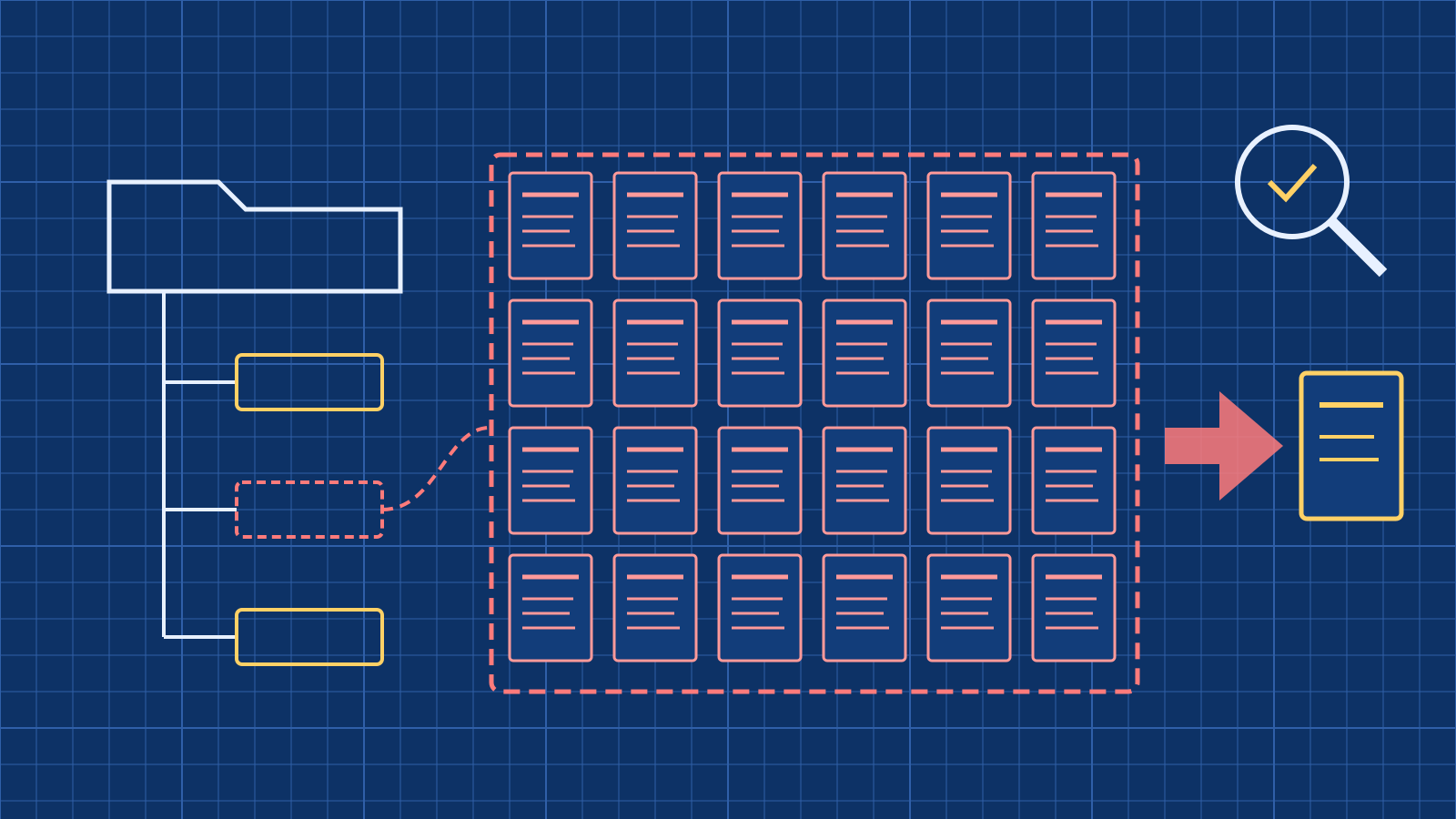
Early loser readings from Google's November 2026 core update, which ran from November 10 to November 24, point at templated subfolders: one page per area code, per glossary term, per "X vs Y" pairing, often AI-written. Lily Ray reported blogs and resource folders falling hard while brand and product pages held. So the unit to audit is the subfolder, not the domain.
That's the short version, and it comes with a caveat I'll get to. The longer version is that the November loser list reads less like a quality verdict on individual pages and more like a verdict on a production method. If a page could be made by taking another page and swapping one noun, it seems to have been in the blast radius.
Who actually said what
The clearest roundup so far is PPC Land's write-up of episode 1,241 of The Edward Show, where SEO podcaster Edward Sturm reads through what practitioners posted on X after the rollout finished. You can watch the episode itself if you want the tone as well as the claims.
The structure comes from a seven-point list by Ira Bodnar, posted November 24. Bodnar's read: "The main target was mass AI generated pages," and folders "built from one template got hit the hardest." Examples given were a page per word, a page per area code, and a page per comparison. Bodnar also cited UK Sistrix data saying the biggest losers were sites publishing informational articles mainly to collect leads, in finance, health and law. No site names, no sample size. Keep that in mind.
Lily Ray's November 23 post got more specific about folder types. Her list of six:
- A-to-Z dictionary entries
- One page per area code
- "X versus Y" pages
- One translation page per language
- One glossary term per page
- "Best X templates" pages
Ray said content sections, blogs and resource hubs fell "hard while the main product/brand pages stay strong," and that the damage seemed "mostly isolated to the subfolder." That last bit is the part I'd tape to my monitor if I were running a content program right now.
Sturm's own examples were the kind everyone in SEO has seen pitched: a software company publishing comparison pages about tools unrelated to its product, and a web design agency running 10,000 near-identical city pages. He was careful to say AI as an assistant is "totally fine." The problem, in his framing, was AI content nobody reviewed.
Earlier in the rollout, Search Engine Roundtable's November 16 volatility roundup quoted Glenn Gabe saying two domains that dropped heavily "were scaling heavily via AI-generated content." So the pattern was visible mid-rollout, not just in hindsight.
The caveat, before anyone starts deleting folders
None of this comes from Google. The Search Status Dashboard entry says the update "applies globally and to all languages" and was complete as of November 24. That's it. No page types, no targets.
What we have is a handful of well-known consultants pattern-matching from the sites they look at. In most cases I've seen, that kind of early read ends up directionally right and fuzzy on the details. Consultants see the sites that call them, and sites with 10,000 city pages tend to call when they lose half their traffic. Sites that held steady don't write threads.
Still, the pattern lines up almost word for word with Google's own spam policies. Doorway abuse is defined as pages "created to rank for specific, similar search queries." Scaled content abuse is "when many pages are generated for the primary purpose of manipulating search rankings," and it applies "no matter how it's created." Google added that second policy back in March 2024. On paper, a core update and a spam action are separate systems. In practice, the November losers look a lot like what those policies describe.
And Google told everyone on October 1 that it is "critical to manually factcheck and review all AI-generated content" before publishing, as PPC Land reported at the time. Six weeks later, the unreviewed stuff is what fell. Maybe coincidence. I wouldn't bet on it.
The find-and-replace test
The cleanest way I can put the pattern: if you can generate page B from page A with find-and-replace, Google seems to have treated the whole folder as one page with a thousand URLs.
Think of it like a restaurant that prints 400 menus, one for each street in town, with the street name swapped in at the top. The food is the same. Nobody walking in needs 400 menus. And once an inspector notices, they don't grade menu number 237 on its own merits.
That's also why the brand pages held. A pricing page, a product page, the about page: none of those has 900 siblings. Bodnar's line on winners matches this: "official sites and original data sources," brands people search for by name, and sites that own the data they publish.
A subfolder audit you can finish before lunch
This is roughly what I'd do Monday. It takes maybe 45 minutes for a site with a few dozen folders.
1. Split Search Console by folder. In the Pages report, filter with a regex on the path (something like ^https://example\.com/(glossary|compare|locations)/) and export each top-level folder separately. Do brand and product pages as their own group. That group is your control.
2. Compare year over year, not week over week. The week after the update was Thanksgiving and Black Friday, so a week-on-week read mostly measures turkey. We covered the mechanics in our piece on grading November before December lands. One wrinkle: Bodnar argues the real impact started November 13, three days after the announcement, so use that as your before-and-after line if your own data shows the same kink.
3. Score the gap, not the drop. The benchmark I'd use: if a folder's YoY clicks fell more than 25 percentage points further than your brand-page control group, treat it as a November casualty. Inside 10 points, it's probably noise or seasonality. Between 10 and 25, look closer.
4. Run the find-and-replace test on the casualties. Open five random URLs from each flagged folder. If the H1 and the first paragraph differ by one variable and the rest is boilerplate, you've found it.
Honestly, step four is where most teams already know the answer before they open the pages. Somebody approved that folder.
Merge, noindex, or wait (the awkward part)
This is where it gets uncomfortable. Google's core updates guidance says "Deleting content is a last resort," and warns against "quick fix" changes. It also says removing unhelpful sections built for search engines "can help the good content on your site perform better," and that recovery "could take several months." So it reads less like a hard no and more like "be sure."
Google has also pre-announced a December 2026 core update with no start date. Our earlier advice was not to ship a November fix blind before December lands, and I still think that's right for sites that took a broad, unexplained hit. A templated folder that tanked while the brand pages held is a different situation. You can see exactly what happened there.
For those folders, my order of preference:
- Merge where the pages answer the same intent. Fifty "best X template" pages probably want to be three good ones, with 301s.
- Noindex where the pages serve users (a glossary your product links to, say) but don't deserve to rank individually.
- Rebuild only where you have original data per variant. A page per area code with local pricing data you actually own is a different animal from one with a swapped city name.
I'm a bit torn on timing, to be fair. Two weeks isn't long, and Google's systems may take months to notice anything you change. But a folder you've cleaned up before December is at least not handing the next update a fresh reason to look at it.
My December bet on comparison pages
Prediction, with the usual hedge: I'd put the odds around 60% that early December loser threads name the same folder types again, plus "alternatives to X" pages, which seemed to get off relatively lightly this round. If that's right, the sites that pruned in the last week of November will be the ones posting recovery screenshots in March.
If you're wondering how deep this goes, our look at Facebook's AI answer pages is a useful counterexample. Scale alone clearly isn't punished everywhere. It seems to depend on whether the domain has anything behind the scale.
I keep thinking about Sturm's 10,000 city pages. Somebody built those because it worked, and for a while it did. The folder didn't change in November. Google's patience did.