Google's 10-Hour Sign-In Wall May Be Hiding in Your Core Update Report
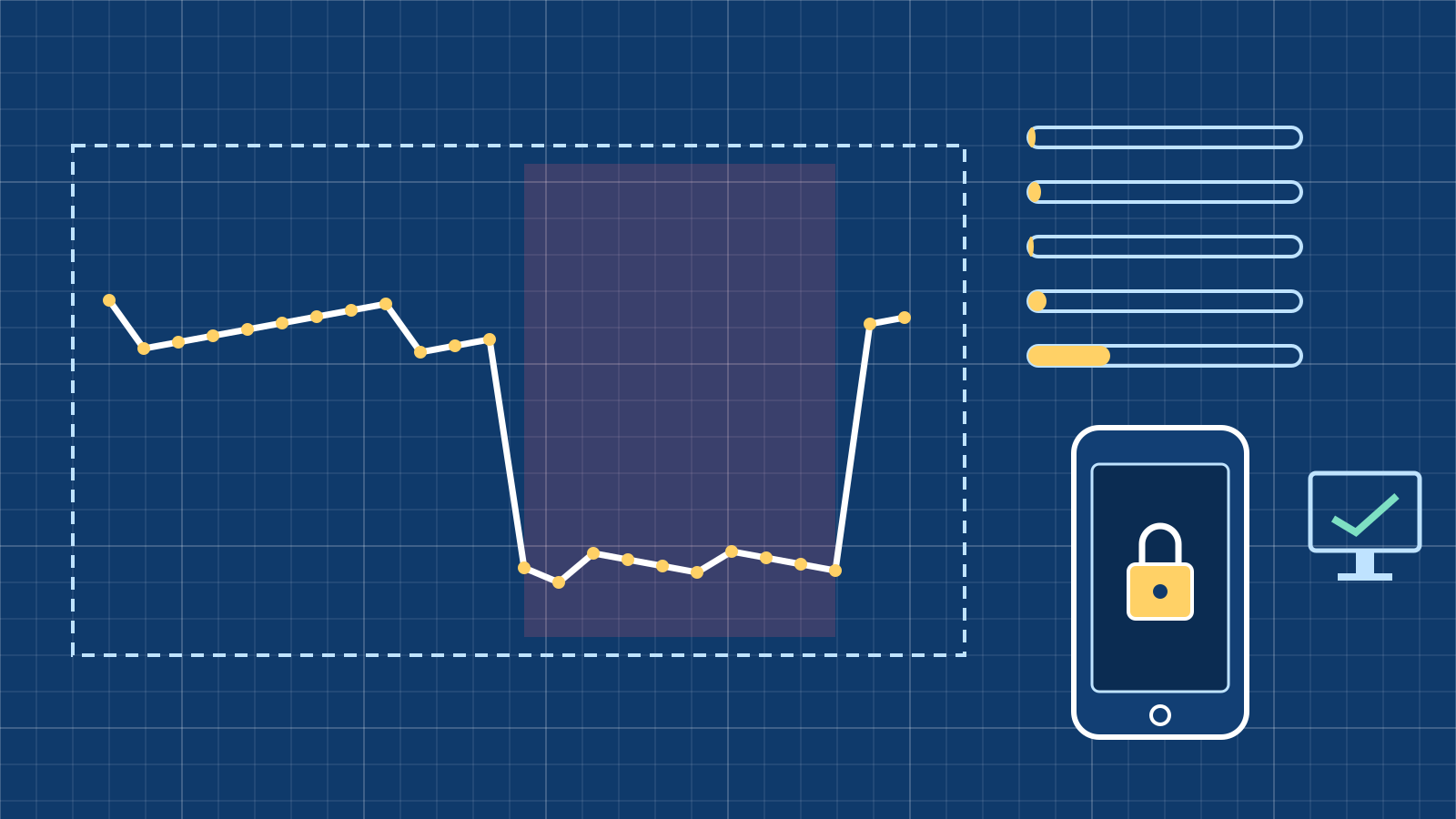
On November 18, rank tracker Nozzle received only 11.6% of its normal Google results between 8 a.m. and 6 p.m. ET, after Google blocked logged-out mobile searches with a sign-in wall. Any Nov. 18 ranking drop in this week's core update reports may be a missing-data artifact, not lost positions. Annotate the date and check it against Search Console before a client sees it.
The timing is awkward. Google's November core update started rolling out on Nov. 10, and when Search Engine Journal last checked, Google's status dashboard still had no completion entry. So the week everyone is building "how did the update treat us" decks happens to be the same week one of the busiest data days had a ten-hour hole in it. Matt G. Southern laid out the problem in SEJ this morning, and I think it deserves more attention than a Monday news post usually gets.
What actually broke on Nov. 18
Derek Perkins at Nozzle published the full breakdown the same day. Nozzle pulls SERPs from five separate data providers, and all five fell off a cliff at once. Each provider hit 2% or less of its normal hourly volume in its worst hour. Four of the five delivered under 8% of normal across the whole ten-hour window. The low point, per Nozzle's chart, was 1.6% of a normal hour.
The mechanism matters here. One provider told Nozzle its iPhone CAPTCHA rate jumped from about 19% of requests to about 90%. And in a sample of that provider's blocked attempts, 31% ended on a page reading "Sign in to verify you're a human and see more results." The rest hit a CAPTCHA.
A CAPTCHA can be solved. A delay page can be waited out. A sign-in wall can't really be gotten around by a scraper, which is why this one was different from the usual cat-and-mouse. Perkins put it as "nothing to wait out and nothing to solve."
Desktop, oddly, was barely touched. That detail is the most useful thing in the whole story for anyone auditing their own data, and I'll come back to it.
None of this came out of nowhere, either. Barry Schwartz reported on Nov. 17 that Google seemed to be testing a sign-in requirement right after the first search, where earlier versions only kicked in after several queries. Brodie Clark of SERPalerts had posted a video of it happening in incognito, and Google's Rajan Patel replied: "I don't believe it's meant to happen on the first page of results like this but we may be testing something here." That's about as close to confirmation as you get from Google on a Tuesday.
The phantom drop, and why it looks so convincing
Here's what I'd worry about. A rank tracker that can't fetch a SERP has to record something. Depending on the tool, that could be "not ranked," a carried-forward position from the day before, a retry later in the day, or just a gap in the chart. Nozzle's data can't tell us how every vendor handled it, and SEJ was careful to say the same thing.
The "not ranked" version is the dangerous one. It produces exactly the shape people expect from a core update: a cluster of keywords falling out of the top 100 on a single day, mid-rollout. If your tool happened to retry those keywords later that evening, you might see weird half-day positions instead. Either way, a chart with a Nov. 18 cliff and a Nov. 19 recovery is going to look like volatility to most people, and honestly, it's a very easy thing to write a paragraph of analysis about.
A rank drop that only shows up on mobile, only on Nov. 18, and recovers by Nov. 19 is almost certainly a data gap, not a ranking change.
To be fair to the trackers, this isn't entirely new. We covered Google feeding rank trackers fake SERPs back in October, and SEJ has written about Google throttling "goto" result links earlier this month. The difference is scale. A few percent of poisoned results is noise. Losing roughly 90% of mobile data for ten hours is a hole you can drive a client report through.
A 10-minute check before anything goes out
This is the part you can do before lunch.
- Split your Nov. 18 data by device. Pull the share of tracked keywords marked "not ranked" or "not in top 100" on mobile for Nov. 17, 18 and 19. Do the same for desktop. If mobile spikes on the 18th and desktop doesn't, you're looking at the sign-in wall. As a rough benchmark, if the Nov. 18 mobile unranked share is more than double the Nov. 17 figure while desktop moves by a couple of points or less, I'd treat the whole day as unusable.
- Check your tool's fetch timestamps if it exposes them. The blackout ran roughly 13:00 to 23:00 UTC. Keywords checked before that window are probably fine. Ones checked during it are suspect.
- Open Search Console and compare. Search Console reports what Google actually showed real users, so it doesn't have this problem. If clicks and average position for those same queries are flat across Nov. 17 to 19, the tracker drop wasn't real.
- Annotate Nov. 18 in whatever dashboard or Looker Studio report the client sees, with a one-line note. Future-you will thank present-you in February when someone asks about the dip.
If you already sent a report that blamed a Nov. 18 drop on the core update, I'd just send a short correction. It's a little embarrassing, but it's a lot less embarrassing than a client noticing the recovery on their own.
You're probably reading the core update too early anyway
Slightly separate point, but it's related. Google's own core update guidance says to wait "at least a full week after a core update completes before analyzing your site in Search Console," and then compare that week with a week before the rollout started. The rollout was announced as taking up to two weeks from Nov. 10, which puts completion somewhere around today or tomorrow if it's on schedule (and it isn't confirmed yet).
So by Google's own standard, the earliest clean read lands around Dec. 1, and the baseline should be Nov. 3 to 9. That's right in the middle of Black Friday and Cyber Monday traffic, which will make the comparison messier still. We wrote about how the update could still be rolling on Black Friday, and this is the practical downside of that overlap: seasonal demand and algorithmic movement land in the same week, and you'll need year-over-year query data to separate them.
Personally, I'd tell clients now that the real assessment comes in early December, and that anything sent before then is a progress note. It buys you time and it happens to be what Google recommends.
Where this probably goes next
Perkins's read is that Google is mostly aiming at AI assistants that scrape results, and that the Nov. 18 test may have been Google measuring what a login requirement would cost it. That's his opinion, labeled as such, but it seems plausible to me. He also says the wall "could come back to stay by the end of the year," and predicts fewer rank trackers and fewer SERP providers a year from now.
My guess: we see at least one more multi-hour mobile blackout of six hours or longer before the end of January, and at least one mid-size rank tracker quietly drops daily mobile tracking to every few days for some keyword tiers, maybe framed as a "plan change." I'd put that at better than even odds. The economics just get worse every time Google adds friction.
The broader shift is that third-party rank tracking is becoming a sampled estimate rather than a census, a bit like a weather station that sometimes goes offline in exactly the storm you wanted to measure. It's still useful. It just can't be the only thing you look at, and Search Console has to move from "the thing we check monthly" to the primary record.
The Nov. 18 footnote worth adding today
I don't think anyone did anything wrong here. The trackers didn't break; Google changed what it was willing to show a logged-out phone for ten hours. But the reports going out this week will be read by people who don't know any of that, and a single footnote on one date is probably the cheapest credibility you'll buy all quarter.
By Notice Me Senpai Editorial