Leaving AI Overviews Cost One Site Impressions, Not Clicks. Zyppy Lost More.
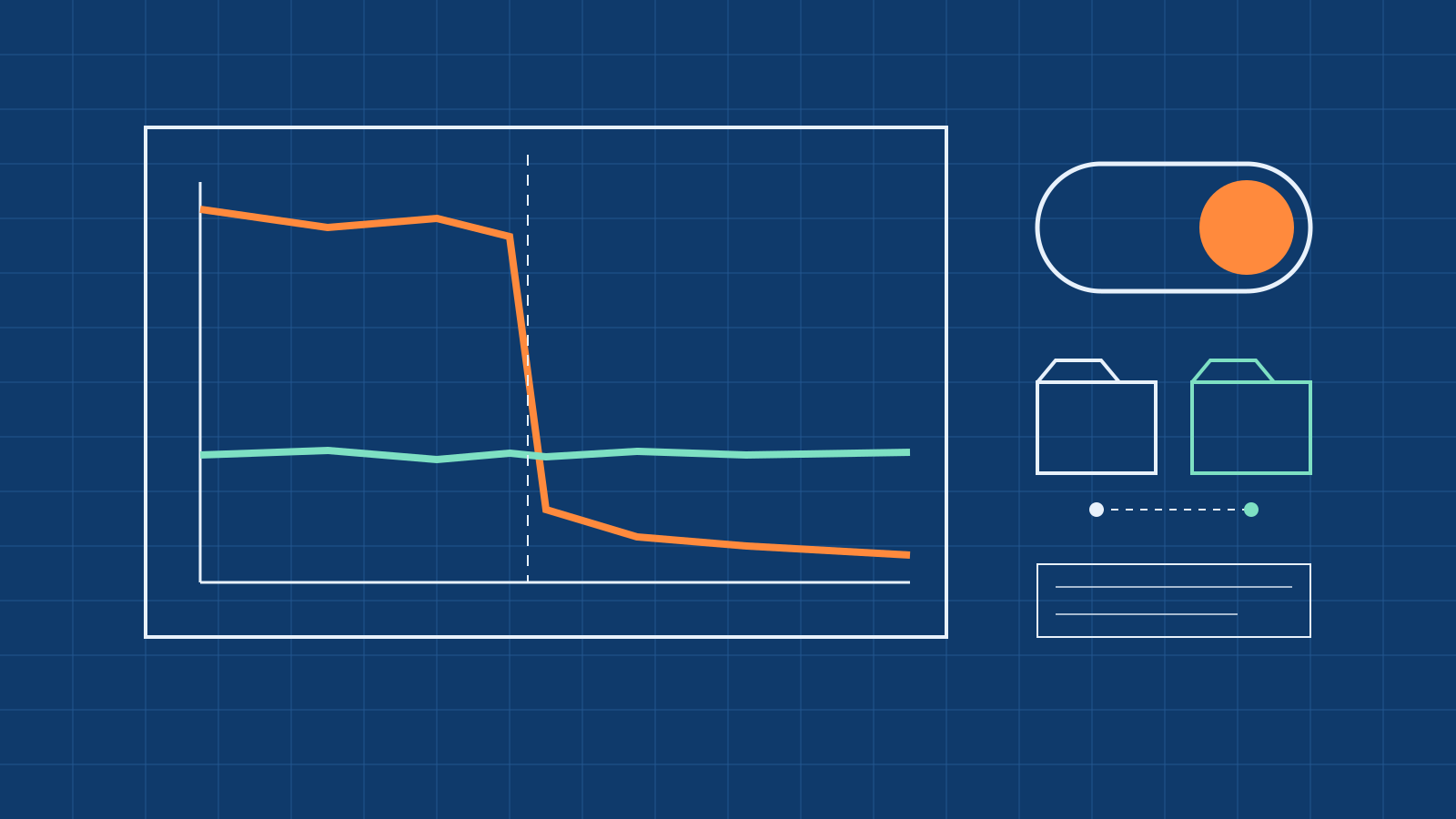
On November 22, 2026, SEO consultant Brodie Clark reported that a site using Google Search Console's "Exclude" setting for generative AI lost hundreds of thousands of daily impressions from AI Overviews and AI Mode, while clicks were "barely even noticeable." A September test by Cyrus Shepard estimated AI features drove about 21% of his site's clicks. The gap means opting out is a per-site experiment, not an industry answer.
Clark posted the observation on LinkedIn, and PPC Land wrote it up the same day. The details are thin, and I want to be upfront about that. No site name, no sector, no switch date, no click figures. Just a Search Console screenshot with the banner "Your property is excluded from generative AI features on Google Search" and Clark's line that "hundreds of thousands of daily impressions are gone."
Still, it's the second public data point on a toggle almost nobody has touched, and it points in the opposite direction from the first one. That's worth sitting with for a minute.
Two opt-outs, two different answers
We covered the first test back in October, when AI Overviews earned one site a 0.9% CTR and leaving still cost it clicks. The fuller write-up from Search Engine Journal has the cleanest numbers, so here they are:
- Shepard excluded Zyppy's own site on September 1 and opted back in on September 29. Twenty-eight days out.
- Before the switch, AI Overviews and AI Mode delivered 500 to 1,000 impressions a day, roughly 10% of the site's Google impressions.
- He estimated those AI impressions converted to clicks at about 0.9% (he gives 0.7% to 1.1% as a reasonable range), against a sitewide Google CTR of about 0.4%.
- Put together, AI features accounted for an estimated 21% of search clicks, or about 23% once you add a small halo lift on regular listings.
Shepard's own post, "We opted out of Google AI search", treats the figures as a directional yardstick, and Zyppy stayed opted in.
Now run Shepard's CTR against Clark's site. If even 200,000 of those lost daily impressions had earned 0.9%, that's 1,800 clicks a day walking out the door. Hard to call that barely noticeable, unless the site is so large that 1,800 clicks is a rounding error (possible, honestly, since we don't know its size). The more likely read is that the impressions Clark's site lost were worth a lot less, per impression, than Zyppy's were.
Why an AI impression isn't one unit
This is where I think the comparison gets useful instead of just confusing.
Since AI Mode started counting toward Search Console totals, an "impression" can cover a lot of different situations. A cited link sitting in the first visible lines of an AI Overview is one thing. A source buried in an expanded AI Mode panel the user never scrolls to is something else, and both register the same way in your report. In the comments on Clark's post, one commenter argued most of the lost impressions "were just AI Mode fanout and scrapers anyway," while another pushed back that fan-outs don't generate impressions, only real citations do. I don't know who's right. Nobody outside Google really does.
What I'd bet on: a niche SEO blog like Zyppy gets cited prominently for a small number of queries it actually owns, so its AI impressions are few but valuable. A big site pulling hundreds of thousands of daily AI impressions is probably showing up as one of many sources on huge volumes of broad queries. Think of it like a billboard versus a name in the end credits of a movie. Both count as "exposure." Only one gets you calls.
And all of this sits against a pile of research saying AI Overviews hurt clicks in general. PPC Land's summary of the Ahrefs data showing 58% lower CTR for top-ranking pages, a study where AI Overviews cut outbound organic clicks by 39.8%, and Seer Interactive's CTR tracking all measure what happens to your blue link when an AI Overview sits on top of it. None of them answer the question the toggle asks, which is whether being cited inside the AI answer earns back more than it costs. Clark's case and Shepard's case are, so far, the only two public attempts at that question, and they disagree.
The toggle is property-level, but your test doesn't have to be
The control lives under Settings in Search Console. Per Google's help page for the Search generative AI control, Exclude removes your links and content from AI Overviews, AI Mode, and generative AI features in Google Discover. Google says the setting isn't used as a ranking signal for the rest of Search, and that exclusion takes effect within 1 to 2 days (Shepard saw his AI impressions vanish in under an hour).
The detail most people miss: there's no page-level switch, but URL-prefix child properties can set their own value and override the parent. So you can verify something like example.com/guides/ as its own property, set it to Exclude, and leave the rest of the site on Include. That gives you a test group and a control group on the same domain, in the same weeks, which is a lot cleaner than comparing September to October and hoping nothing else changed.
The setup I'd use, start to finish:
- Open the Generative AI performance report and export AI impressions by page for the last 3 months.
- Pick two subfolders with similar traffic and query types. The test folder should have AI impressions above roughly 10% of its total impressions (about Zyppy's share). Below that, the test probably won't tell you much.
- Create a URL-prefix property for the test folder and set it to Exclude. Leave the control folder alone.
- Run 28 days, then compare the change in clicks for test versus control, not raw clicks.
- Decide the threshold before you start. My suggestion: if the test folder loses more than 10% of clicks relative to control, opt back in. If it loses under 3%, you've learned your AI impressions are mostly decorative.
Timing matters too. I wouldn't start this before December. Black Friday distorts everything, and Google's November core update could still be rolling, which would swamp any signal from the toggle.
Where this probably goes (and where I'm unsure)
Clark guessed back in June that even 1% of sites wouldn't use the opt-out. I think he's right for now, and I'd go a bit further: I'd put it at under 2% of sites with meaningful traffic flipping the toggle before mid-2027, mostly because nobody wants to be the person explaining to a CFO why they turned off a Google feature on purpose.
What could change that is better data. The UK regulator is requiring Google to report AI clicks and CTR, and we wrote about how Google has until December 3 to deliver those UK metrics. If that report shows a lot of sites with Clark-style numbers, lots of impressions and almost no clicks, the toggle stops looking reckless.
One messy thought I keep coming back to. Clark's site lost impressions and kept clicks, which sounds like a free win, but citations in AI answers may also be doing brand work that never shows up as a Google click. Someone sees your name cited, searches for you directly two days later, and that visit gets credited to branded search. Neither test could measure that, and I'm not sure anyone can yet.
So I'd treat both results as stories about two specific sites. Run the subfolder test, set the threshold in advance, and let your own numbers decide. It's a little more work than reading a LinkedIn post, but it's your traffic on the line, not Brodie Clark's.