Google Has 29 Days to Report AI Clicks to the UK, and Nothing to Announce
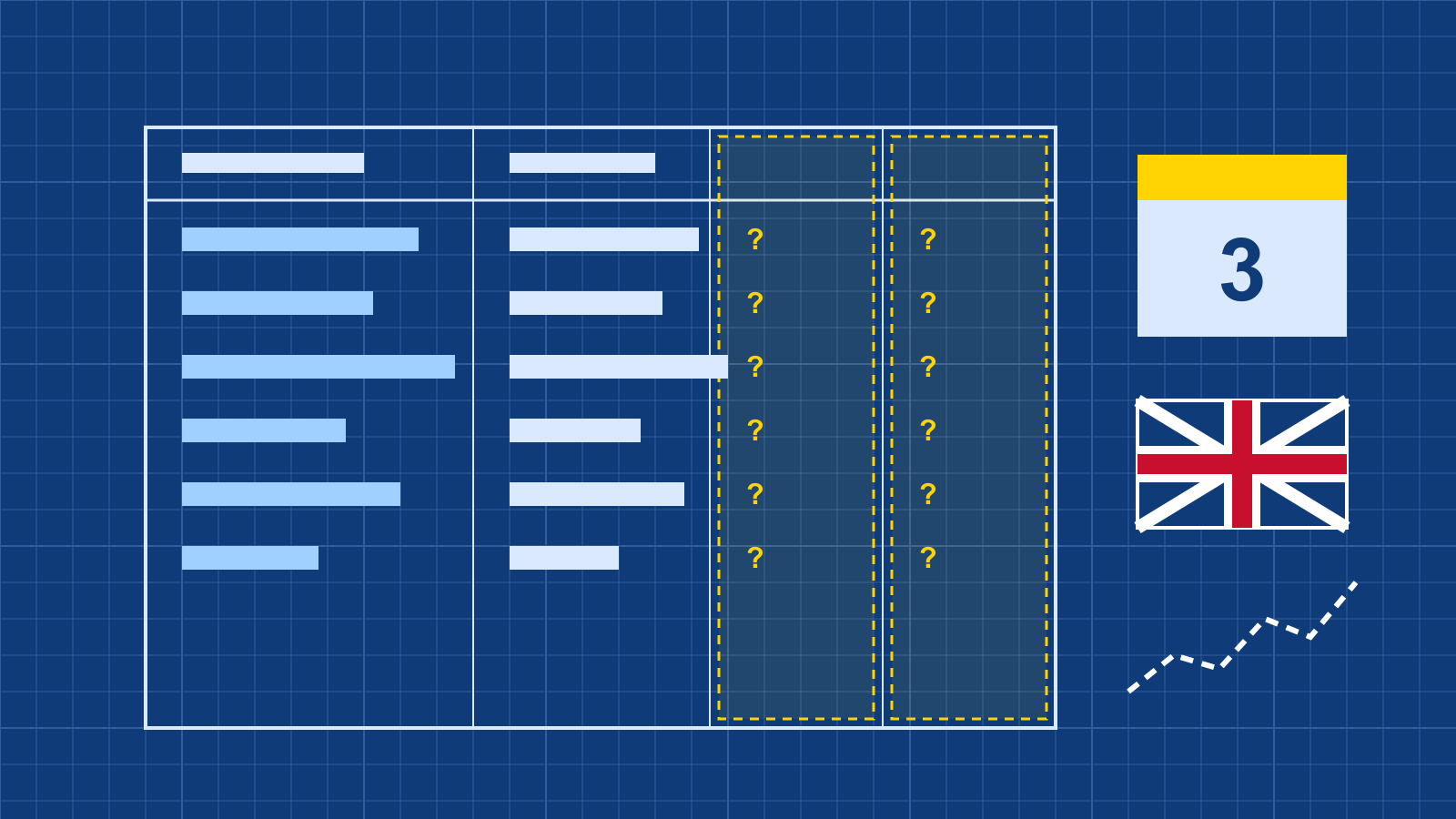
Google has 29 days to give UK publishers clicks and click-through rate for AI Overviews and AI Mode, and on November 2 Gary Illyes said the Search Console team has "nothing to announce yet." Search Console still reports AI impressions with no clicks, CTR, or queries. Until that changes, the only AI click number you will get is the one you build yourself from query-level CTR.
The quote came from a LinkedIn comment thread, of all places. As Search Engine Journal reported, an SEO named Rajeev Lekhwar posted that unnamed Google staff at Search Central Live Bengaluru had called clicks and queries "the most requested data set by website owners and SEOs." Illyes replied that the team is "super interested in giving more data, data that makes sense," but that there's nothing to announce, and that he didn't think Google had phrased it the way the post did.
John Mueller added on Bluesky that there is "lots of helpful data which isn't currently in Search Console," and that what counts as helpful changes over time. Which is true. It's also the kind of sentence you write when you can't say anything.
The regulator wrote the spec. Google hasn't shipped it.
And the ask is unusually specific. The UK Competition and Markets Authority's publisher conduct requirement summary says Google must provide "transparency metrics for search AI features, including impressions, clicks, and click-through rate," aggregated across features such as AI Overviews and AI Mode, plus referral data so publishers can judge the quality of that traffic. The compliance date is December 3, 2026. Page-level opt-out controls get an extra three months.
The CMA's interpretive notes go further, per SEJ's read: the data should be broken down per publisher and should separate AI feature appearances from regular organic results. Search Console is suggested as the delivery platform, but Google can comply another way if it shows the CMA how. And there's a paper trail coming. The compliance reporting notice sets up a first report covering June 3 to December 3, due January 3, 2027.
So, on paper, something has to appear in roughly four weeks. In practice, I'd read the fine print carefully before getting excited.
Why "aggregated" and "UK" are the two words to watch
The requirement covers AI features shown to UK users. Nothing in the summary obliges Google to give a US site its US AI click data. Google could build a global report anyway (it rolled the impression-only Generative AI performance report out worldwide on August 31), but the regulatory floor is a UK number.
And "aggregated across features" seems to leave room for a single blended figure: AI Overviews and AI Mode lumped together, possibly without query-level detail. That is roughly what the impression report already looks like. It breaks down by page, country, device, and date. No queries.
My prediction, for what it's worth: there's maybe a 60% chance Google ships something by December 3 that technically satisfies the CMA, and under a 25% chance it includes query-level AI clicks. If you're a US-focused site waiting on this to explain a traffic drop to your CFO, I wouldn't plan Q1 around it.
Waiting for Google to tell you how much AI search costs you is a strategy with no deadline Google has to meet for you.
The clicks are already in your data (just blended)
The slightly absurd part of all this waiting: AI clicks aren't missing from Search Console. Per Google's own help page on how clicks are counted, a click on a link inside an AI Overview or AI Mode counts as a regular click in the standard Performance report, and a follow-up question in AI Mode counts as a new query. They're in there. You just can't filter them out, because no Search Appearance type covers AI features.
So the problem is separating them out, and that part you can approximate.
The benchmark worth anchoring to is Seer Interactive's tracking of 3,119 informational queries across 42 client organizations. In September 2025, organic CTR on queries with an AI Overview was 0.61%, against 1.62% on queries without one. That's a gap of about 1 percentage point, or roughly 62% lower CTR when an AI Overview sits on top. Seer also found that being cited inside the Overview correlated with about 35% higher organic CTR than not being cited (0.70% vs 0.52% in Q3 2025), though they're upfront that stronger brands may simply be more likely to get cited.
Those numbers aren't your numbers. But they give you a shape to look for.
A rough AI click proxy you can build in an afternoon
None of this is precise, and honestly, it doesn't need to be. You want a directional number you can defend in a meeting, not a forensic audit.
1. Find the pages AI search actually touches. Export the Generative AI report by page for the last 3 months. Divide each page's AI impressions by its total impressions from the standard Performance report. Pages above roughly 30% AI impression share are your exposure list. My guess is that for most sites this ends up concentrated in a handful of informational pages, which is helpful.
2. Pull query-level data for those pages. Compare the last 90 days with the same 90 days a year ago. Keep queries where average position moved less than 1 spot. If ranking didn't change but CTR did, something on the SERP changed.
3. Flag the suspicious drops. Any query with stable position and CTR down 40% or more is a likely AI Overview casualty. That threshold sits a bit below Seer's 62% gap on purpose, to catch partial cases. Spot-check 10 of them in an incognito window (or your rank tracker's SERP feature column) to confirm an Overview actually shows.
4. Estimate the lost clicks. For flagged queries, multiply current impressions by the old CTR, subtract current clicks. Sum it. That's your rough "AI tax" in clicks per month. Label it as an estimate everywhere it appears, because it is one.
5. Annotate and freeze the baseline. Save the export with today's date. When Google does ship UK or global AI click data, you'll want a before-and-after, and you won't be able to rebuild this period later.
One caveat. If your October data includes the weird Halloween weekend, exclude October 31 to November 3 from the comparison. Search Console showed a 10x click spike that probably wasn't people, and it will wreck any CTR math that touches it.
Bing went first, which is a little embarrassing for Google
Microsoft already previewed AI citation share data in Bing Webmaster Tools, which is the closest thing to the report the CMA is asking for. It's not the same metric and Bing's volume is smaller, but it shows the data is buildable. From the outside, Google's hesitation looks more like a question of what the number would reveal than whether it can be counted.
And to be fair to Google, this has always been messy. A click from an AI Overview that lands on page two of your site, after the user already got the answer, is a strange click to value. Some of the "data that makes sense" hedging from Illyes is probably genuine. It just also happens to be convenient.
If you want context on how much the opt-out route costs, one site that tried leaving AI Overviews still lost clicks after earning a 0.9% CTR inside them. Leaving isn't a free exit either.
What I'd tell a CFO on December 4
If Google ships a UK-only aggregated number, use it as a sanity check against your proxy rather than a replacement for it. If your estimated AI tax lands within shouting distance of whatever Google reports for UK traffic, your method is probably good enough to extend to other markets. If it's wildly off, you've learned something about where AI Overviews actually show up for your queries.
And if Google ships nothing, or ships something that technically counts as compliance and tells you very little, you'll already have three months of baseline that the teams still refreshing Search Console won't. I don't think the proxy will ever be perfect. It just has to be better than a blank column, and right now that's a pretty low bar.