You Can Rank First on Google for Everything and Still Be Invisible to ChatGPT

A post on r/ecommerce this week captured something a lot of brands are quietly experiencing but nobody's really talking about. An ecommerce brand owner, six years into building their business, described ranking on page one of Google for every major product category they compete in. Strong domain authority, consistent content, the whole traditional SEO playbook executed well.
ChatGPT barely mentions them. Their competitors, some with objectively weaker Google rankings, show up consistently in ChatGPT's product recommendations. The frustration in the post was obvious. So were the comments, which mostly amounted to "yeah, same here, nobody knows what to do about this."
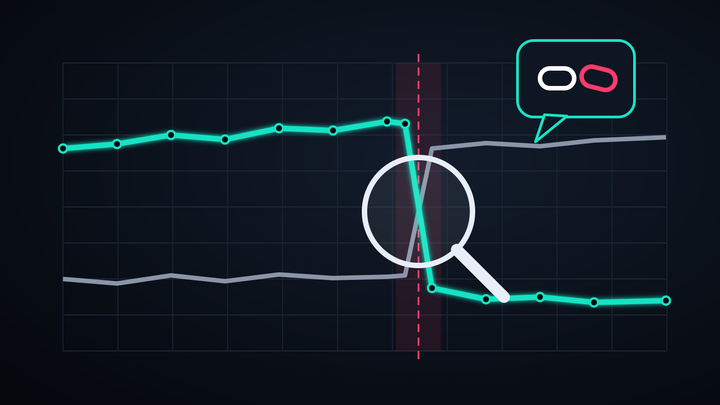
The disconnect between Google rankings and AI visibility is one of the more quietly significant shifts happening in ecommerce right now. And the data suggests it's not a fluke. According to research from Onely, 28% of ChatGPT's most-cited pages rank zero in Google organic search. A separate analysis found that 80% of URLs cited by AI tools don't even appear in Google's top 100 for the original query. Google rankings and AI recommendations are, in practice, measuring fundamentally different things.
ChatGPT doesn't read your SERP position
The natural assumption is that if you rank well on Google, AI tools will pick up on that authority signal. Makes intuitive sense. It's also mostly wrong.
Onely's research into how ChatGPT selects brands to recommend found a three-tier signal hierarchy. Authoritative list mentions carry roughly 41% of the weight. Think "best [product] for [use case]" roundups from trusted publications. Awards and accreditations contribute about 18%. Online reviews add another 16%. Notice what's missing from that list: backlinks, domain authority, keyword optimization. The traditional SEO signals that drive Google rankings barely register.
ChatGPT also recommends only 3 to 4 brands per response. That's a much smaller field than a Google results page. The winner-take-all dynamics are intense, and a Wellows study of 485,000 ChatGPT citations found that the top 50 domains receive 48% of all citations. If you're not in those slots, you're functionally invisible to anyone using AI tools to shop.
And people are using AI tools to shop. G2's 2025 Buyer Behavior Report found that half of B2B buyers now start their purchasing journey in AI chatbots instead of Google Search. That's not a niche behavior anymore. Semrush data shows AI search traffic grew 527% year over year. The channel is real, and it's growing fast enough that ignoring it is starting to get expensive.
The signals that actually drive AI product recommendations
Semrush tested 100 product prompts in ChatGPT and found something interesting. The top recommended product appeared in Google Shopping's first three results 75% of the time. ChatGPT runs two separate query sets when recommending products: contextual searches that inform the written answer, and Google Shopping queries that populate product carousels. If your product feed isn't optimized for Google Shopping, you're missing one of the two inputs ChatGPT uses to build its recommendations.
But product feeds only explain the carousel. For the narrative answers, which is where brand trust actually gets built, the signals look different. Based on the available research, here's what seems to matter most:
Reviews matter more than you'd expect. The median review count for an AI-recommended product is 156, with a rating threshold around 4.8 stars. If you're sitting at 30 reviews and 4.2 stars, you're probably below the citation floor. That's fixable, but it takes time and it's not something you can shortcut.
Third-party mentions outweigh first-party claims by roughly 3 to 1. ChatGPT trusts what other people say about you more than what you say about yourself. The Reddit commenter from the original post noticed this too: their competitors had more Reddit presence and more independent reviews, despite weaker Google rankings. That pattern is consistent with everything the research shows.
Content freshness is a real factor. Pages updated within 30 days get 3.2 times more citations. Within 60 days, it's 1.9 times. If your product pages haven't been meaningfully updated since launch, they're probably not getting cited regardless of how well they rank.
Structured data makes a bigger difference than most people realize. Schema markup boosts GPT-4's ability to accurately extract product information from 16% to 54%. That's one of the largest single improvements available, and most ecommerce sites still don't have comprehensive product schema beyond the basics.
FAQ sections boost citation probability 89%. It seems like AI models treat FAQ patterns as a strong signal that the page contains direct answers to purchase questions. Which, when you think about it, makes sense. That's exactly what the model is trying to provide to the person asking.
A practical scorecard for your product pages
Jeff Oxford from Visibility Labs published a useful scorecard on Search Engine Land this week. Six points, none of them revolutionary individually, but the combination matters:
1. Product specifications in structured format (not buried in paragraph text)
2. Unique selling points stated explicitly on the page
3. Use cases and target audience clearly defined
4. FAQ section addressing common purchase questions
5. Sufficient review volume and rating (156+ reviews, 4.8+ stars as the benchmark)
6. Complete JSON-LD product structured data
If I had to prioritize, I'd start with structured data and reviews. Those two have the highest measurable impact on AI citation rates, and they're also the most commonly missing on the ecommerce sites I've looked at. The structured data fix is a one-time technical project. The review volume is an ongoing effort, but it compounds over time.
For the off-page work, the play is getting mentioned in authoritative roundup content. "Best [product] for [use case]" posts on publications that AI models trust. That's where the 41% weight lives. Building review volume on independent platforms matters too. And being active in communities like Reddit, where AI models increasingly pull recommendations from, is probably worth more than another guest post built purely for backlinks.
We've seen similar patterns in our analysis of what llms.txt actually does for AI visibility (spoiler: not much). The technical shortcuts don't move the needle. The fundamentals of being genuinely recommended by third parties carry most of the weight.
This is a different game, and the stakes are higher than most teams realize
The ecommerce brand on Reddit did everything right by 2020 standards. Strong rankings, good domain authority, consistent content. The problem isn't that they're bad at SEO. The problem is that AI visibility runs on a different set of inputs, and most ecommerce teams haven't been told the rules changed.
ChatGPT sessions convert at roughly 15.9% compared to 1.8% for Google organic. The AI referral visitor is worth about 4.4 times a traditional organic visitor. So the stakes here aren't theoretical. The brands showing up in those 3 to 4 recommendation slots are capturing significantly more valuable traffic than what a page-one Google ranking sends.
I don't think this means traditional SEO is dead or irrelevant. It obviously isn't, and something like 85 to 90% of what works for Google still applies. But if your product pages are invisible to AI tools, you're leaving an increasingly important channel on the table. The uncomfortable part is that fixing it requires doing things (building genuine third-party advocacy, earning real reviews, showing up in communities) that don't produce a satisfying line in a Google Search Console report. Which is probably why so few ecommerce teams have started.