OpenAI Just Put ChatGPT Between Consumers and Their Bank Balances
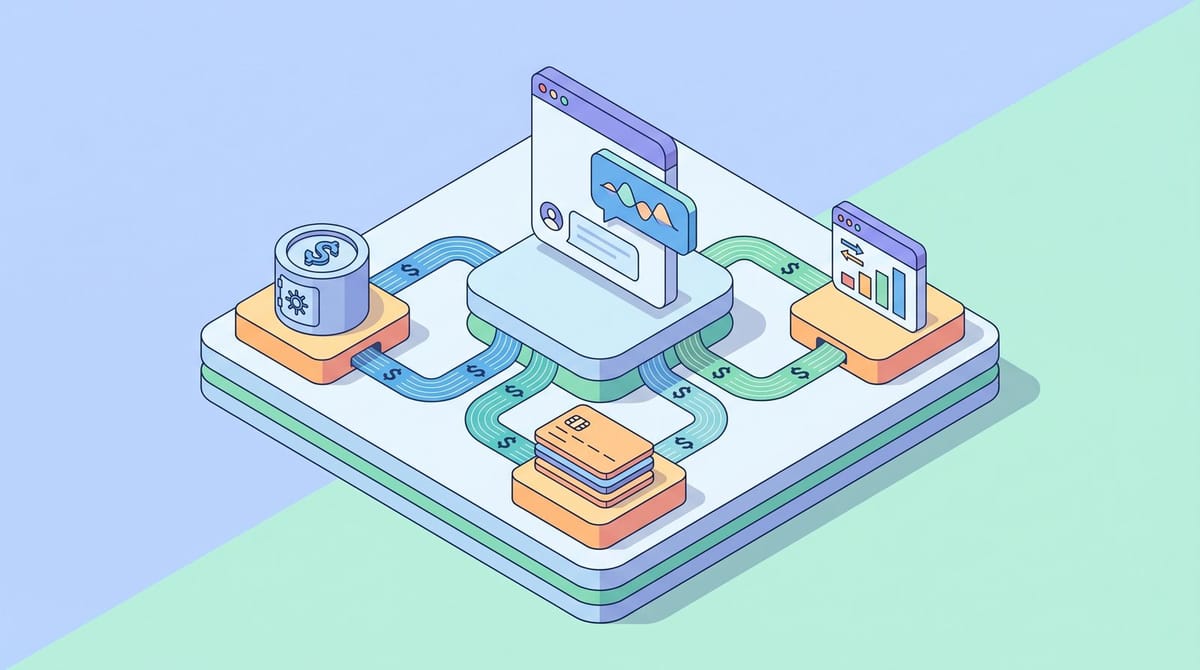
OpenAI launched a personal finance tab inside ChatGPT on May 15, 2026, letting Pro subscribers in the US connect bank, credit card, and investment accounts through Plaid across more than 12,000 institutions. ChatGPT now sees balances, transactions, subscriptions, and portfolio performance directly. For fintech marketers, the funnel between consumer intent and product choice just gained a new gatekeeper that nobody bids against yet.
What the Friday launch actually does
The OpenAI announcement describes a finance dashboard inside ChatGPT showing where money goes, what subscriptions are active, what payments are coming up, and how a portfolio is performing. The plumbing runs through Plaid, the same integration most fintech apps already use to read balances. ChatGPT can see what you spend on but not your full account numbers, and it cannot move money. Not yet, anyway.
It's Pro tier only, US only, web and iOS. 9to5Mac noted that Plus subscribers get nothing for now. Intuit support is "coming soon" per OpenAI, which would extend the picture to tax impact on stock sales and credit approval probability. That's where the data starts to get useful in ways that matter for ad targeting at the platform level, not yours.
Data retention: if a user disconnects, OpenAI says synced data is removed within 30 days. That's the kind of disclosure that tends to get walked back quietly once usage hits scale, so I wouldn't anchor any compliance argument to it.
The Mint comparison misses what just shifted
Most of the launch coverage framed this as a Mint replacement, which is true and also kind of beside the point. Mint was where you went when you wanted to look at your money. People opened the app, scanned the dashboard, sometimes did something about it, mostly didn't. The product had retention problems because most users don't actually enjoy looking at their finances. Intuit eventually shut it down for a reason.
ChatGPT is not a place you go to look at things. It's a place you ask a question and get an answer that sometimes includes a recommendation. That sits at a completely different layer of the funnel. Mint sat next to your money. ChatGPT now sits inside the moment when a user is deciding what to do about money. Those are very different surface areas.
The recommendation layer fintech marketers haven't priced
Fintech B2C customer acquisition costs are brutal. First Page Sage's 2026 benchmark puts fintech CAC near the top of all industries at roughly $1,450 per customer, with the underlying cost driven by compliance hoops, sign-up bonuses, and lengthy onboarding flows. The conventional acquisition channels are paid search ("best high-yield savings account"), Reddit personal finance communities, affiliate networks, and increasingly TikTok finance creators.
What ChatGPT now offers is a retrieval surface that already has account-level context. When a Pro subscriber asks "where should I park $30k for six months," the answer can be personalized to their balance sheet, their existing subscriptions, their portfolio composition. The brand that gets named in that answer didn't just win a click. It won the moment that costs every other acquisition channel four figures to reach.
Nobody is bidding against that placement yet because there's no auction. There may never be a paid auction the way Google's worked, honestly. What's more likely is the dynamic you saw when OpenAI plugged Shopify merchant feeds directly into ChatGPT Ads: structured data, partnership terms, and surface-level integrations where a few brands get visibility and most don't.
Hiro tells you what this is actually for
OpenAI bought the team behind Hiro one month before this launched, per TechCrunch. Hiro was a personal finance startup backed by Ribbit, General Catalyst, and Restive. Ribbit specifically funds fintech category builders, not "AI features." That's worth sitting with for a second.
The team that built personalized financial recommendation logic now sits inside OpenAI shipping a finance dashboard. The reasonable read is that the dashboard isn't really the product. The product is whatever recommendation engine sits on top of the dashboard six months from now, and the dashboard is the data acquisition layer. You're watching the foundations get poured in real time.
What I would do in the next 30 days
The Pro tier user base is probably under a few percent of ChatGPT's total. Plus expansion is gated on "feedback from these users" per OpenAI, which usually translates to a few months of preview before mass distribution. That window matters for fintech and adjacent categories.
Audit how ChatGPT currently talks about your brand. If you sell a high-yield savings product, a robo-advisor, a budgeting tool, or a credit card, run prompts in the voice of your ICP and check whether ChatGPT mentions you, names a generic competitor, or shrugs. HubSpot's AEO sensor works for this if you don't have an internal tracking setup. Repeat the same prompts weekly to track whether your name is rising or fading. From what I've seen of similar AI surface launches, brand presence at month two looks pretty different than it does at launch.
Check your Plaid integration too. If your app doesn't surface clean transaction categories, ChatGPT can't reason about what you actually do for users. The cleaner your structured data, the better your odds of being named inside a recommendation flow you don't control.
Don't move budget yet. The user base is genuinely too small to justify a reallocation. But map your competitor surface area now. The brands that get named in ChatGPT's finance answers during preview will probably compound through whatever recommendation engine ships next, because that's how every AI retrieval layer has worked so far. Late entrants pay a discoverability penalty.
The unsexy answer about partnerships
If you have an existing partnerships function, this is the week to send a note to OpenAI. Not because there's a published deal pipeline. There isn't. But the brands that show up in the first wave of structured fintech integrations are usually the ones that talked to OpenAI before there was a media kit. That conversation is much harder to start once the partnerships page goes live and a price sheet exists.
For everyone else: this isn't an emergency. It's a wedge that's going to widen for a year or two before it changes anyone's spend. I think most marketing teams will overcorrect on the timing in both directions, either pretending it's nothing or rushing to "optimize for ChatGPT" in ways that don't really move the needle. The real work is unflashy. Make sure your structured data is clean, monitor whether ChatGPT names you, and pay attention to the next two product updates.
OpenAI sliding between consumers and their bank balances is a category-shaping move. It's also going to take longer to matter than the launch coverage implied, and shorter to matter than most fintech CMOs are budgeting for.
Notice Me Senpai Editorial