HubSpot's Free AEO Sensor Goes Live (GenAI Just Lost 1 in 6 Outbound Clicks)

By Notice Me Senpai Editorial
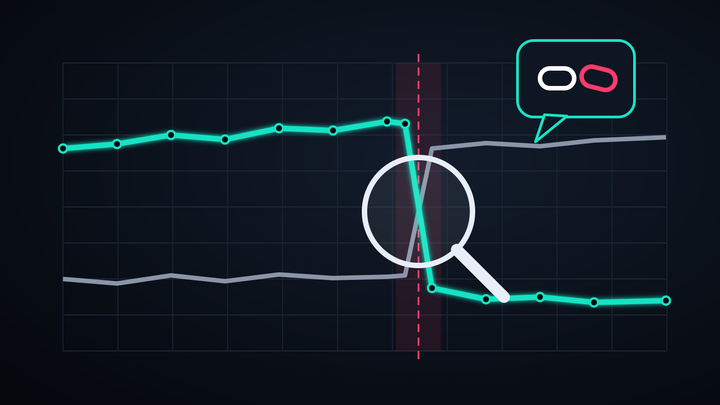
HubSpot launched AEO Sensor on May 14, 2026, a free public dashboard tracking how ChatGPT, Gemini and Perplexity cite domains across 12 industries. The same week, SimilarWeb data showed GenAI referrals fell from 267.4 million US visits in October 2025 to 226.8 million in January 2026: a 15% drop, or 1 in every 6 outbound clicks gone in three months. AEO tooling is shipping as the underlying traffic stream is visibly contracting.
That timing is the whole story. HubSpot's Spring Spotlight rolled out AEO Sensor as the free public layer under HubSpot AEO, a $50/month paid product that opened on April 14, 2026 to handle prompt tracking, competitor share of voice, and citation analysis for individual brands. Sensor is the marketing arm. Public, free, daily volatility readings. The paid tool needs the public dashboard to exist or nobody understands what the score actually measures.
What the dashboard actually shows
Three things, all updated daily. First, a 0 to 100 volatility score with bands (0 to 29 calm, 30 to 59 moderate, 60 to 89 elevated, 90+ extreme). On launch day the reading was 20, which means citation churn is currently low and probably won't stay there. Second, weekly AI-referred traffic by industry, charted back to February 16, 2026. Third, weekly visibility and citation movements across the three covered platforms.
What's missing from the dashboard matters more than what's in it. Copilot is not tracked. Claude is not tracked. Both are growing AI referral sources, and Anthropic reportedly crossed OpenAI in enterprise spend on Ramp data last month, which makes the omission look less like a data limitation and more like a product decision. The platforms HubSpot watches are the platforms HubSpot can sell against. If your category is heavy on Copilot citations (B2B IT, anything tied to Microsoft 365), Sensor is going to systematically under-read your volatility.
The 12-month low is not a one-off
This is where the launch starts looking strategically uncomfortable. ChatGPT.com web traffic dropped 3.84% month-over-month in April 2026 according to SimilarWeb, the lowest absolute volume the platform has shown in 12 months. That number isn't a market correction. It's part of a longer arc. GenAI outbound referral rate fell from 18.8% in October 2025 to 15.8% in January 2026, per SimilarWeb's generative AI stats writeup. Users staying inside the platform is the explicit strategic direction OpenAI, Google and Perplexity all chose.
Citations exist. Clicks don't follow them at the rate they used to.
That changes the AEO ROI math. The optimistic version sold by tool vendors is roughly "AI search is the next SEO, get your citation share now." The realistic version: citation share is a leading indicator of a referral channel that is shrinking, and the conversion rate from citation to click seems to be dropping with it. Both can be true at the same time. Neither makes a great launch slide.
The tool vendor problem
I think most marketing teams will read the AEO Sensor launch correctly as a HubSpot lead generation play and an AEO product funnel. That's fine. Tools have to do tool things. What's less fine is the framing where AEO becomes the new SEO with no acknowledgment that the underlying traffic numbers have started to crack. PPC Land's reporting on the launch bundled the 12-month low data into the same article as the launch announcement, which is unusual and probably the right editorial call.
Selling AEO trackers as the next SEO while the underlying click rate keeps dropping every quarter is a bit like selling fishing licenses while quietly draining the lake. The license still has value (entity recognition, brand prompts, share of voice) but it's no longer the same product the brochure described.
The honest read for a working marketer: AEO citation share is worth tracking because it's a leading indicator of how AI platforms see your brand entity. That signal matters even if the click volume per citation keeps falling, because the citation itself influences purchase consideration before any click happens. The weaker take is treating AEO tools as the new Search Console with a one-to-one traffic story. They aren't. Microsoft shipped its own free AEO layer the week before, when Clarity Citations went GA and absorbed the $499/month tier into the free product. When two enterprise platforms commoditize AEO tracking inside two weeks of each other, the standalone tracker category is already saturated.
How to actually use Sensor this month
Three uses that work, given the channel reality.
Bookmark the volatility score and check it once a week. When the reading crosses into elevated or extreme (60+), it's the signal to re-audit your brand prompts manually. Not for everyday tracking. For inflection moments where the citation set is churning faster than your editorial calendar can react.
Compare the industry-specific AI referral traffic chart against your own GA4 numbers. If your category line on Sensor is flat or rising but your own AI Assistants channel is sinking, the gap is a content audit problem, not a market problem. If both lines are sinking together, stop optimizing harder and start asking where the budget should actually move next.
Treat the citation analysis tab as the prompt seed for your own audit, not the audit itself. Sensor shows the industry. Your audit shows your brand. The free dashboard probably won't replace whatever you're running now, whether that's Profound, Otterly, or a spreadsheet of manual prompt checks. It might replace whatever your CMO is currently using to estimate the market.
The harder question Sensor can't answer
The thing AEO tooling can't measure is whether citations convert. HubSpot itself reports organic traffic for its customer base dropped 27% year-over-year, the trend the AEO product is trying to compensate for. Whether the compensation actually works at scale is an open question, and one tool vendors are unlikely to answer publicly. AdExchanger's coverage of the AI search reckoning walks through how publishers are hitting this wall first; B2B SaaS sites are behind them on the curve, not exempt from it.
From what I've seen, the brands actually benefiting from AEO right now are the ones already overweight in earned mentions, third-party reviews, and structured data that predates the AEO boom. The tooling reveals which brands those are. It doesn't manufacture them. If your only AEO strategy is the optimization side of the tool, you're betting on a citation channel whose own clickout rate is dropping every quarter. The leading indicator is useful. The lagging conversion needs a backup plan.
Sensor reads 20 right now. That number was always going to move.
HubSpot's first public reading landed in the calm band, which is convenient launch optics. The May refresh will be the more honest data point, especially with ChatGPT volume at a 12-month low and SimilarWeb's referral curve still bending the wrong way. I'd watch the score weekly for the next month and ignore everything HubSpot publishes about how to act on it. The dashboard is a thermometer, not a thermostat. Confusing the two is how marketing teams end up over-investing in the wrong leading indicator.