Microsoft Just Folded $499/mo AI Citation Tracking Into a Free Clarity Tab
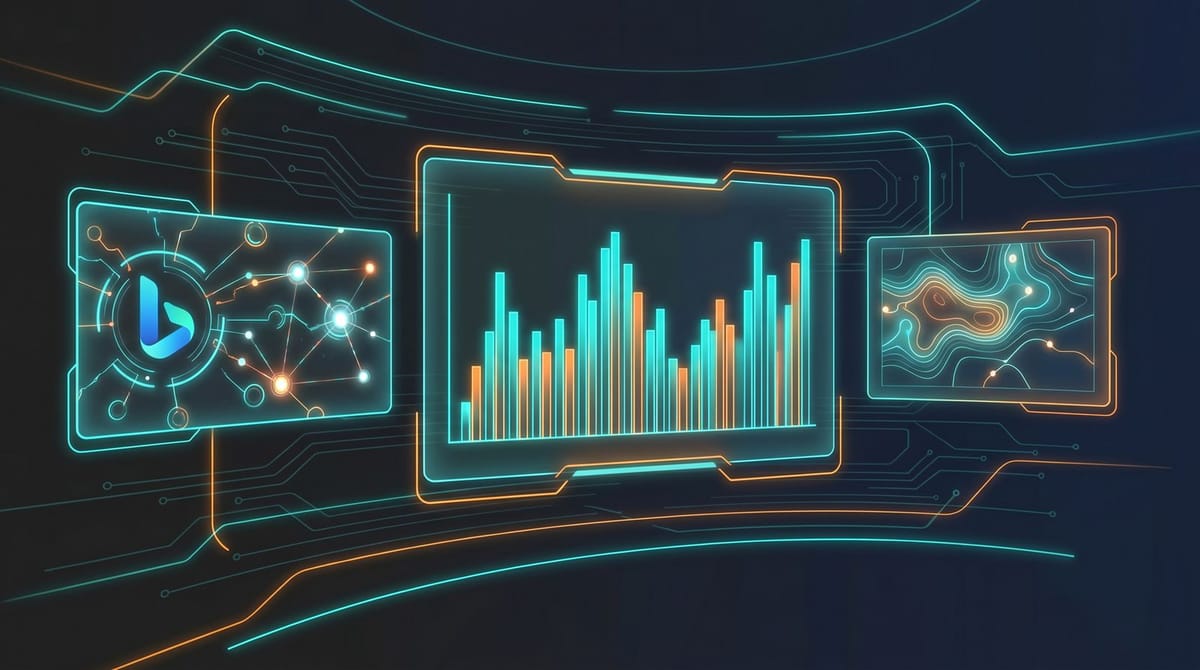
Microsoft moved AI Citations in Microsoft Clarity from limited preview to general availability on May 13, 2026. The dashboard tracks page citations, share of authority, AI referral traffic, and grounding queries for any site with the Clarity tag installed, with no traffic cap and no paid tier. That drops the entry price for AI citation tracking from $29 a month to zero.
What Microsoft actually shipped this week
The new dashboard sits under Dashboards > AI Visibility > Citations. Five things are now tracked at the page level. Page citations count how many times URLs on your domain were referenced inside AI-generated answers. Share of authority benchmarks those citations against every competing domain Bing has seen for the same grounding query. AI referral traffic shows the percentage of sessions coming in from AI assistants. Grounding queries surface the AI-generated retrieval strings the model actually used, which are almost never the same as the user-typed prompt. A cited-pages table breaks it down at the URL level so you can see which specific posts are getting picked up.
That grounding-queries metric is the one that matters most. Most teams have been guessing at what AI engines are passing to their retrieval step. Microsoft's announcement on the Clarity blog confirms Citations is powered by signals from Bing's own grounding stack, so the queries you see are the queries actually being run during retrieval, not a synthetic approximation built by a third-party tool.
I think a lot of teams are going to underestimate how useful grounding queries are. They tell you what a customer's AI prompt got rewritten into before content selection happened, which is the layer every AEO tool has been speculating about for the last 18 months.
The real-data positioning is doing most of the work
Microsoft's separate post on why real data matters for AI visibility makes the pitch directly. Most standalone tools, the post argues, generate large batches of synthetic prompts on a topic and scrape responses for domain mentions, which measures what AI systems could say rather than what they did say. Clarity is grounded in real interactions logged through the Bing retrieval layer.
This is the part of the news that hurts standalone tools more than the price drop. Otterly lists ChatGPT, Google AI Overviews, Google AI Mode, Gemini, Perplexity, and Microsoft Copilot. That's six engines, but each is a snapshot of prompts the tool itself synthesized. The simulated data goes stale the moment a model version updates or a session context shifts the answer.
Clarity sees fewer engines, but the engines it does see are real.
The catch: Clarity only sees what flows through Bing
This is where I would push back on framing the news as "AI citation tracking is now free, full stop." It isn't.
Clarity's grounding data is Bing-shaped. That covers Copilot, the Bing search calls ChatGPT makes when it decides to ground a response in live search, and the partner platforms Microsoft has named in its AI ecosystem. It does not cover Perplexity's own retrieval layer, Google AI Overviews, Google AI Mode, or Gemini's grounding. Those still run through pipelines Microsoft can't see into.
For most B2C marketing teams, the Bing-grounded slice is probably 40-60% of where AI citations are happening, though I haven't seen a clean published breakdown on this and the split shifts every quarter. If you sell into an audience heavy on Perplexity (developers, research workflows, anyone optimizing for the Comet browser), Clarity alone leaves a real blind spot. We covered something adjacent earlier this month: 48% of AI brand citations live off your own site, which is a reminder that one tool covering one slice of one ecosystem is not the same as a citation strategy.
So the honest take: Clarity covers the largest single slice of AI citations for free, but it is not a complete picture. If you were paying $189 a month for Otterly's Standard tier purely to monitor Bing-grounded engines, that line item is obviously redundant now. If you were paying $499 a month for Profound because you needed Perplexity and Google AIO coverage in the same dashboard, Clarity is not a like-for-like replacement.
The 11x conversion stat is the actual reason this is news
Earlier Clarity research published in December 2025 reported that AI-referred traffic converted to sign-ups at 1.66% versus 0.15% for organic search across 1,200 publisher and news sites. That's an eleven-fold multiplier on a channel that still represents under 1% of total traffic for most sites. AI referrals grew 155.6% over the eight-month measurement window, while organic search grew 24%.
That conversion delta is the reason citation tracking is worth setting up at all. A free analytics tab is interesting on its own. A free analytics tab tied to the channel converting eleven times better than organic search, and growing six times faster, is the thing that should change priorities this quarter.
The 15-minute setup most teams will skip anyway
The reason I'm flagging this hard is that most teams will see the announcement, agree it sounds useful, and not actually wire it up. Setup is genuinely short.
If Clarity is already installed on the site, open Dashboards > AI Visibility > Citations. If the dashboard is empty, verify the domain through Bing Webmaster Tools or Google Search Console (Microsoft accepts either as proof of ownership). If Clarity isn't installed yet, the tag is one script and an account signup. No server-side integration, no CDN work, no event configuration.
For teams running Profound or Otterly already: install Clarity in parallel for the next 30 days. Compare citation counts on the same URLs across both tools. The deltas will tell you exactly how much of your AI citation footprint is Bing-grounded versus everything else, and whether you can downgrade the standalone tool, swap it out, or genuinely need both.
For teams not yet tracking AI citations at all, this is the cleanest excuse to start that anyone has shipped this year. The previous floor was $29 a month for a tool that synthesized prompts. The new floor is a free tab on data Bing was already collecting about your site.
What this does to the standalone AEO category
The standalone AI visibility market is not dead. Perplexity coverage, Google AI Overviews coverage, and the workflow features (prompt libraries, share-of-voice trend lines, exportable reporting, alerting) are real reasons enterprise teams pay $499 a month. But the easy sale, the "you can't see what AI is doing with your content unless you buy a SaaS," just stopped being true for the Bing-grounded majority.
From what I've seen reading vendor positioning over the last few months, the response from Profound and Otterly is going to be twofold. Lean harder into Perplexity and Gemini coverage as the differentiator, and add more workflow features around alerting and reporting that Clarity's read-only dashboard doesn't replicate. That's a fine response. But the entry-level customer who was paying $29 a month because they wanted any AI citation data at all is the one who quietly cancels by the end of the quarter.
Honestly, that's probably the right outcome for the category. The cheapest tier was never going to do the job for anyone serious, and now the free thing exists for the curious. The people paying $499 will pay it for sharper reasons, which is how a category should mature.
If you do nothing else this week, install the Clarity tag on the three highest-traffic domains you run and check back in 14 days. The data starts populating within hours, and you'll have a real number on AI-driven sessions before the next planning meeting.
Notice Me Senpai Editorial