Social Beat Search at The Independent, and Publisher Rate Cards Haven't Caught Up
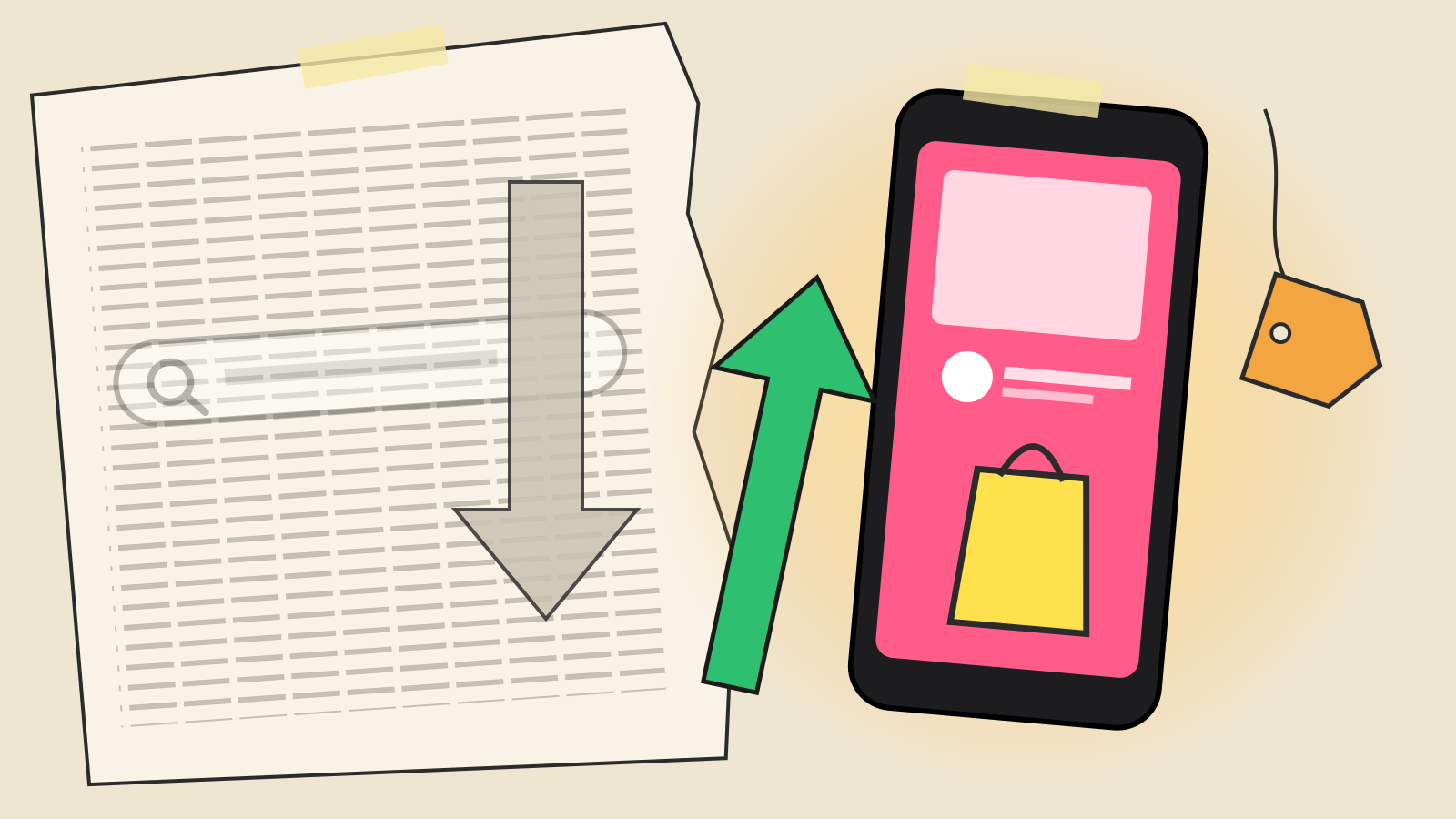
The Independent's social-commerce revenue passed its SEO-driven commerce revenue for the first time in September 2026, CEO Christian Broughton told Digiday on October 16. He called the gap "narrow." Still, a major UK publisher now earns more product revenue from social distribution than from Google rankings, so brands that price affiliate placements on search rank alone are paying for the weaker channel.
I want to be careful not to overread one publisher's one month. The Independent doesn't break these numbers out publicly, and "narrow" could mean a rounding error. But the direction matters more than the margin here, and the direction has been obvious for about two years. This is just the first time a big publisher has said the crossover out loud.
And if you run an affiliate or partnerships program, it probably means some of your publisher deals are priced off a traffic model that no longer exists.
Broughton called the old playbook dead, and he meant it literally
The social-commerce line was almost a throwaway in Broughton's talk. His bigger point was that the 2020s publishing model, built on traffic, social referrals and programmatic ads, is "dead." The Independent is betting on four things instead: AI, creator-led studio work, e-commerce and membership. Per Digiday, those four are expected to make up nearly half of Independent Media's 2026 revenue, growing close to 30% year over year.
For context, this isn't a struggling outlet grasping at straws. The company reported £55.1 million ($73 million) in 2025 revenue, up 4%, and its ninth straight year of profit. It has also been building out talent-led verticals under Independent Studios, which is the creator-shaped engine behind a lot of that social distribution.
So when a profitable publisher says its commerce desk now sells more through social than search, I read it as a forecast for everyone else's commerce desk.
Google quietly stopped being the shop window
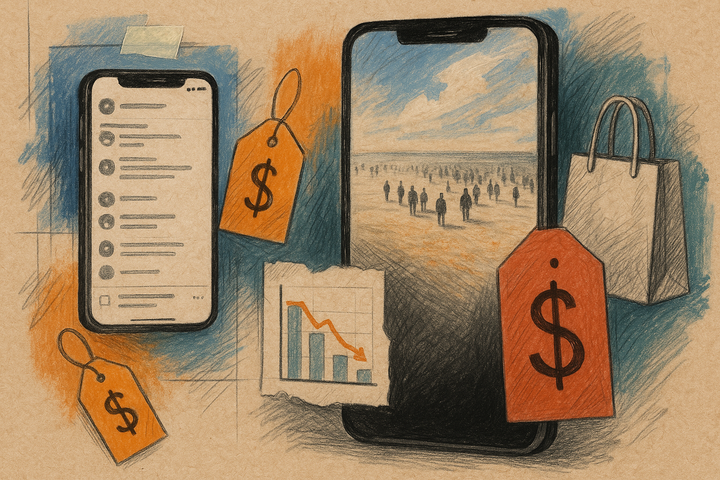
The numbers behind the crossover aren't subtle. Chartbeat data published in the Reuters Institute's 2026 trends report showed Google search referrals to publishers fell about a third globally in the year to November 2025. In the US, organic Google search referrals dropped 38% and Discover dropped 29%. Over the same period Facebook referrals rose 9% globally and 23% in the US. (Facebook is still 43% below where it was in May 2023, so nobody should call that a comeback.)
Commercial queries seem to be hit harder than the average. Digiday's reporting on Wirecutter cites a Semrush finding of a 71% rise in AI Overviews on commercial-intent queries between November 2025 and April 2026, plus an Advanced Web Ranking figure putting click-through on commercial Google searches at 11.91% overall versus 3.51% when an AI Overview appears. AWR's own CTR study also flags commercial and informational queries as the ones losing the most clicks at position one.
Think of it like a mall where the anchor store moved out. The shops are still open and the signs are still lit, but foot traffic comes in through the parking garage now, and the garage is Instagram.
Wirecutter's response is telling too. Its most successful social post ever was an Instagram post for its new Hall of Fame franchise, and its "hybrid deals" bundling display, licensing, brand partnerships and affiliate grew more than 300% year over year, according to a Times spokesperson. Even the most search-native commerce brand on the internet is rebuilding around social and sponsorship.
Your rate card is still buying 2023 traffic
Here's where it gets practical. In most cases, brand-side affiliate managers still evaluate publisher partners with some mix of domain authority, keyword rankings for "best [category]" terms, and historical conversion volume. That made sense when a top-three ranking for "best running shoes" was the asset. It makes less sense when the same article sits under an AI Overview that answers the question before anyone scrolls.
Flat placement fees are where this hurts most. If you paid a tenancy fee to be the #1 pick in a "best of" roundup, you were really paying for that article's Google traffic. If that traffic fell by a third and the publisher's commerce revenue held steady because social picked up the slack, then the article you paid for may be the least valuable surface they own. Your product might be selling through their Instagram Stories, TikTok, or newsletter, and you didn't negotiate for any of it.
On paper, CPA protects you, since you only pay when someone buys. And mostly it does. But commission rates and placement fees decide where publishers put your product on the surfaces that actually move volume, and right now a lot of that decision is happening on channels your contract doesn't mention.
Honestly, I think a lot of programs are going to find they've been subsidizing a publisher's shrinking SEO archive while a competitor quietly bought the social slots.
Five questions for your next publisher renewal
Q4 is when most of these deals get renewed or topped up for gifting season, which makes this a decent week to start asking. Before you sign the next tenancy or flat fee, ask each top-10 publisher partner:
- What share of commerce clicks to my brand came from social, newsletter and search over the last 90 days? Most networks can split by sub-ID or placement tag. If the publisher can't tell you, that's an answer too.
- Which surfaces does a flat fee actually cover? Get social posts, Stories, short video and newsletter mentions written into the deal by name, with a count.
- Will you tag social placements separately? Ask for distinct tracking links per channel so your network reports show which surface drove each sale.
- Who is the creator or talent behind the social account? At The Independent, that's increasingly a named person running a vertical. Personality-led distribution behaves more like an influencer deal than a listicle.
- What happens to my placement if the article loses its ranking? A make-good clause tied to traffic or clicks keeps you from paying 2023 prices for 2026 reach.
My rough benchmark: if a partner can show 30% or more of your attributed commerce clicks coming from non-search surfaces, price the deal like a creator partnership, with deliverables per channel, not like an SEO tenancy. If it's under 10%, you're mostly buying a search asset, and you should check how many of its money keywords now trigger an AI Overview before renewing at the same rate. That's a judgment call rather than an industry standard, but it gives you a number to argue from.
Worth doing alongside this: the creator side of your program probably needs the same scrutiny. We covered how Ruggable moved $1M from Meta into ShopMy creators, and the logic is similar. Social commerce rewards whoever owns the audience relationship, whether that's a publisher's vertical lead or an independent creator. And if you're paying an intermediary to manage those creators, check what they keep, because creator agency fees can eat 30% of the budget.
The parts I'd hold loosely
A few caveats, because the story is cleaner than reality usually is.
The Independent's numbers are undisclosed and the gap is narrow, so a strong Google month could flip it back. Social-commerce revenue also tends to be lumpier than search: one viral post can carry a month, and the next month nothing hits. Search traffic was boring but predictable, and some brands will reasonably prefer that.
There's also a measurement wrinkle I can't fully resolve. A lot of social-driven commerce gets attributed weirdly, through in-app browsers, link-in-bio tools, or last-click credit that lands on whoever happened to be last. So some of what looks like "social overtook SEO" might partly be social getting better credit than it used to. That doesn't change the advice much, though. If anything it's another reason to demand channel-level tracking in your contracts.
My prediction: by the end of 2027, at least half of the big US and UK commerce publishers will sell brands a packaged social-distribution tier alongside (or instead of) the classic "best of" placement fee, the way Wirecutter's hybrid deals already do. The brands that ask for channel splits now will have a year of data when those packages show up, and they'll know which ones are worth paying for.
I don't think the SEO roundup is dead. It's just not the whole storefront anymore, and it's probably time your contracts admitted that.