Wistia Caught B2B Video Migrating to LinkedIn at $38 CPMs and 121% ROAS
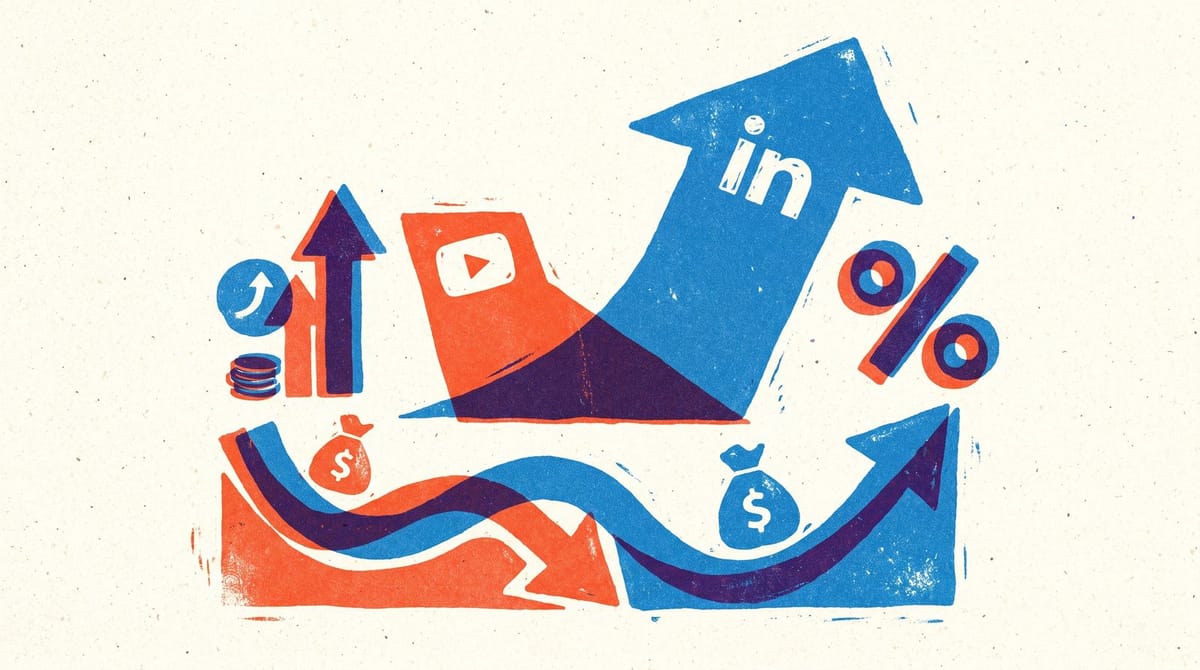
Wistia's 2026 State of Video Report found 81% of B2B businesses now name LinkedIn as their primary video channel, against 76% for YouTube. LinkedIn's share climbed 33 percentage points in two years. Most of the migration traces to where the B2B buying journey actually happens: roughly 220 days of self-education, almost none of it on YouTube.
The Wistia numbers most coverage skipped
The 2026 State of Video Report (which surveyed roughly 900 marketers and analyzed 13 million videos plus 79 million hours of viewing data) is mostly framed as "LinkedIn beat YouTube." That headline buries the more useful breakdown.
Two years ago the gap between the platforms was negligible. Today, LinkedIn pulls 81% of B2B teams citing it as primary, while PPC Land's coverage flags the supporting changes: 67% of teams use LinkedIn for repurposed clips, 62% for paid video ads. Social engagement jumped to 22% as the top success metric, up from 12% in 2024. Views as a primary indicator are sliding.
The other line in the report most B2B pages skipped: only 49% of teams plan to increase video spend, down from 57%. The market is making more videos with flat budgets, and reallocating distribution. About 48% are increasing distribution and promotion budgets specifically. Only 7% are cutting it.
What's actually happening: B2B teams are taking the same video assets and redirecting promotion dollars to where their buyers actually evaluate vendors. LinkedIn isn't gaining new attention so much as catching attention at the moment it converts to pipeline.
LinkedIn video is more expensive and less click-y
If you've never run B2B video on LinkedIn, the benchmarks are uglier than the share-of-voice numbers suggest.
Per Zen ABM's 2026 LinkedIn video ad benchmarks, median CTR on LinkedIn video sponsored content sits at roughly 0.24%. Median video CPM is $38.94, which is actually the cheapest CPM of any LinkedIn sponsored format (Single Image runs $59.15, Carousel $45.28). Median video CPC clears $15. By comparison, YouTube video CPMs typically run $3 to $7 with average CTRs near 0.65%.
That's a 5x CPM gap and roughly a third of the CTR. On every short-term performance dashboard a paid lead would inherit, YouTube wins.
This is where most B2B video conversations stop and someone says "LinkedIn doesn't work." It works. The dashboard just isn't built for the thing it's actually doing.
The Dreamdata data the Wistia report points at
Dreamdata's 2026 LinkedIn Ads Benchmarks Report is the more useful companion piece. It is built on aggregated data from thousands of B2B customers covering 66 million sessions and 3.5 million customer journeys.
The headline number from Dreamdata: LinkedIn delivered 121% return on ad spend in 2026, the only platform to land positive ROAS on revenue impact. Google Search came in at 67%. Meta at 51%. For the top quartile of Dreamdata customers, LinkedIn ROAS more than doubles to 279%. Meta tops out at 133%, Google Search at 138%.
LinkedIn now pulls 41% of B2B paid social budgets, the largest single platform allocation. Dreamdata also reports cost per influenced company on LinkedIn fell to €70 from €154 last year, which roughly halved. That's not "LinkedIn's CTR went up." It's Dreamdata's customers learning to keep more of the spend on the platform that the buyer journey actually passes through.
The 220-day window most YouTube media plans miss
The number that actually explains the migration: B2B buyers, per Dreamdata, now spend the first 220-ish days of a 272-day journey forming purchase decisions before entering the sales pipeline. Marketing now owns 81% of that full journey. Only the final ~50 days run through sales.
YouTube viewing context for most working professionals is recreational or how-to oriented. There's a real consideration audience on YouTube, and creators like Marques Brownlee own real pieces of it for hardware and consumer tools. For most B2B vendors though, the people watching your YouTube content during business hours are generally not the same humans who'll be sitting in a vendor evaluation seven months later.
LinkedIn's surface area, by contrast, is almost entirely a working-context feed. Lori Davidson, who runs LinkedIn's video research, frames it as "videos that gain real traction... people save, hold attention to end, share with note, or prompt genuine comment." That's slow signal, but it's the kind of signal Dreamdata can attribute to a closed-won deal 200 days later.
From what I've seen, on accounts that already have functioning attribution, LinkedIn's $38 CPM clears at a per-influenced-company cost most performance teams would book in a week. That doesn't mean the dashboard agrees on day three.
Where the YouTube budget should still sit
I want to be careful here. YouTube isn't dead for B2B, and I don't think the smart move is wholesale reallocation. A few specific use cases still make YouTube the right buy:
- Product education for late-stage buyers actively searching how-to terms. Search-intent overlap with commercial keywords is the part of YouTube that holds up.
- Creator partnerships in technical verticals where the audience already reads transcripts and follows specific personalities.
- Retargeting cohorts already touched by other channels, where the goal is reach at low CPM.
What's getting pushed out of YouTube is the upper-funnel awareness money that B2B teams default to YouTube simply because the CPM is low. Cheap impressions to people who aren't in market is just cheap noise. We've covered the broader pattern of B2B paid platforms over-promising signal in our breakdown of X's ad platform rebuild; LinkedIn is the rare platform where the signal narrative actually clears.
The first reallocation worth testing
If you're staring at a B2B video budget right now, here's the audit I'd actually run this quarter:
- Pull the last 90 days of YouTube spend. Tag each campaign by buyer-stage intent (awareness, consideration, late-funnel education).
- Take the awareness slice (typically the largest one if your media plan was built around CPM). Stage it for migration.
- Cap the LinkedIn test at 25% of that awareness slice for the first quarter. LinkedIn at $38 CPMs disciplines you toward fewer, sharper assets, which is fine.
- Set the success metric on Dreamdata-style influenced-account counts or pipeline-touched accounts, not CTR. CTR will look bad. The other number will look fine.
Most teams I see try this lose patience around week three and pull spend back. From what I've seen, LinkedIn signal seems to take roughly 60 to 90 days to show up in pipeline conversion, which is most of the way through a normal quarter and uncomfortable for any paid lead reading weekly dashboards.
The Wistia number nobody should overweight: 81% of B2B teams say LinkedIn is their primary video channel. That's a survey, not a budget proof. The Dreamdata number is the one I'd actually plan around. Anyway, consider the survey a tailwind, not a directive.
If your team isn't ready to migrate spend, the easier first move is repurposing. About 67% of Wistia respondents already do it: same shoot, multiple cuts, LinkedIn-native first instead of YouTube-first. Wistia's product-video and short-form clip data both suggest LinkedIn-formatted clips travel further inside buying committees than 16:9 YouTube uploads. It's a one-week edit project that gives you a reasonable LinkedIn portfolio without committing fresh budget.
The honest read on the migration: B2B video money was always weirdly placed on YouTube. Wistia and Dreamdata just published the numbers that finally let CFOs sign off on moving it.
Notice Me Senpai Editorial