Meta's GenRecs Ranks Ads by What They Look Like (and Its Real Lift Is 0.35%)
Meta said on October 28, 2026 that its ad system now runs GenRecs, an LLM-based model that reads each ad's text and images and describes it with shared semantic tokens such as brand, color, fit and style, alongside upgrades to Andromeda retrieval and the GEM foundation model. The practical effect: ads that look alike now get described alike, so creative variety does more of your targeting than audience settings do.
That's the short version. The longer version is more interesting, mostly because Meta published three different performance numbers for this stack in three weeks, and they tell three different stories.
Meta's three numbers don't add up to one story
According to AdExchanger's report on the announcement, Meta says its ranking improvements drove 8.3% more clicks and 15.7% more conversions on Facebook in Q2. The system now scores every eligible ad for every impression, at more than a billion ads per second.
Then there's GEM. Meta's October 13 engineering post on scaling GEM claims an 18.9% conversion improvement and a 12% CTR improvement across ad surfaces and objectives. Broken out over the past year, conversion uplift for targeted users was 5.8% on Facebook, 4.1% on Instagram and 1.6% for off-site conversions.
And then the GenRecs piece itself. Meta's October 19 post on GenRecs tokenization reports a +0.35% lift in conversions across surfaces, measured on internal data in February 2026, when paired with GEM and Meta's Adaptive Ranking Model.
Zero point three five percent. Honestly, that's the number I trust most, because nobody rounds a press-release figure down to 0.35.
The catch with all three: they compare Meta's new model to Meta's old model. None of them compare your ads to no ads. A ranker that gets better at finding people who were already going to buy will show up as a "conversion improvement" in Meta's math and as roughly nothing in your bank account. I'm not saying that's what's happening here. I'm saying you can't tell from these posts, and Meta isn't claiming you can. We made the same point when GEM's numbers first landed in our piece on Meta's 18.9% conversion lift claim, and nothing in today's announcement changes it.
What GenRecs actually reads (and why your 30 variants might count as one)
Meta's ranking models have traditionally leaned on identifiers: an ID for the advertiser, the campaign, the creative, the product. The problem, per AdExchanger, is that those labels churn constantly, so the models learn better from underlying concepts like "gardening" than from a specific ad ID.
GenRecs swaps the per-item ID for a small set of tokens from a stable vocabulary. Meta's engineering post says pre-trained multimodal models read each ad, product and page, text and images both, and encode them so that items with similar content share tokens. Their example is a new trail shoe that can borrow what the model already learned about last season's version.
On paper, that's great news for cold start. And sometimes it will be. But Meta's own exec was careful here: the system shortens the learning phase without removing it. "You still have to learn," Steiner, speaking for Meta, told AdExchanger.
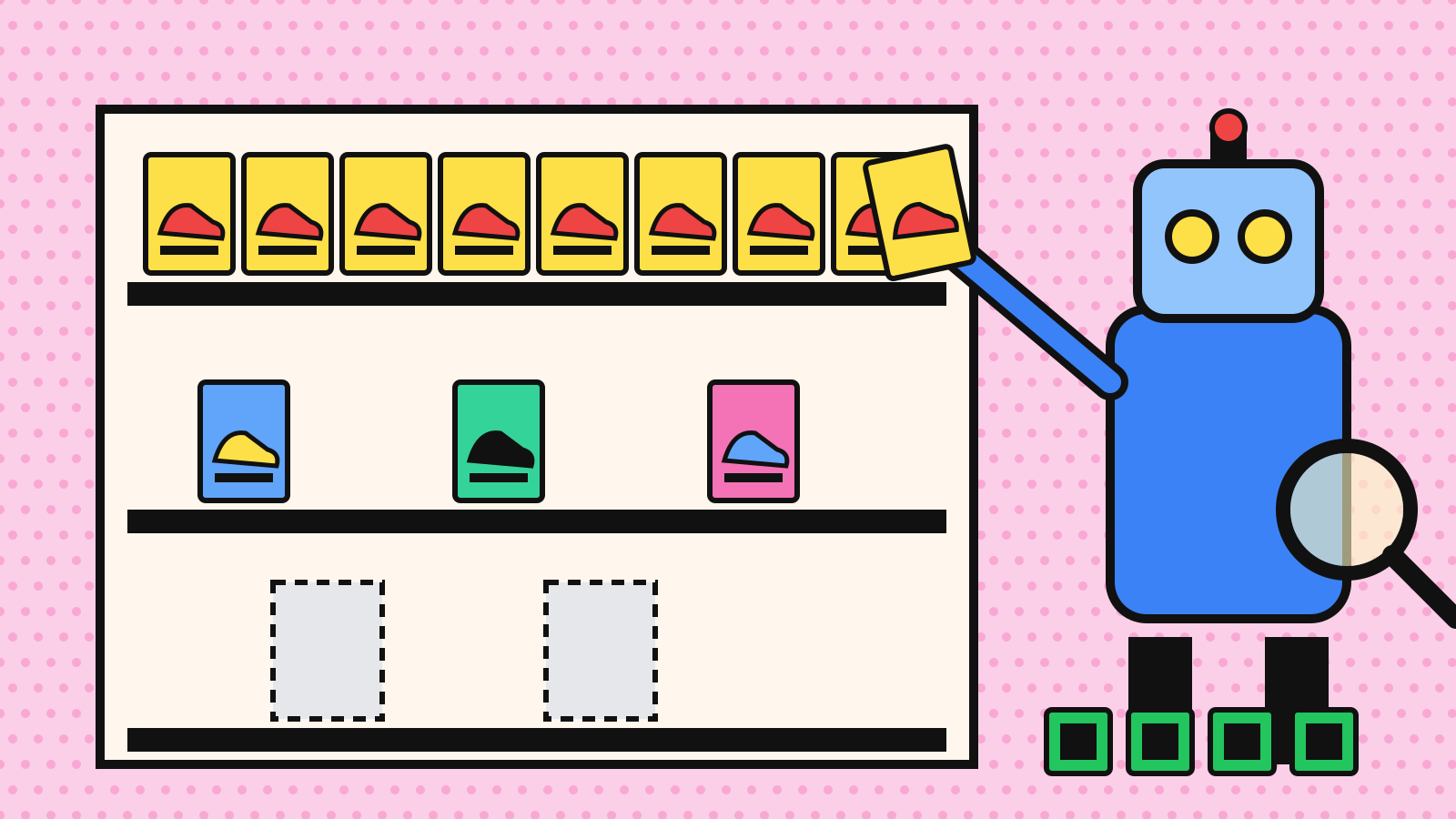
The less advertised side effect is the one I'd pay attention to. If the model describes ads by what's in them, then ten ads with the same product, the same studio, the same color palette and different headlines probably look like one ad wearing ten hats. Agencies have been calling this the "Creative Entity ID" for most of the year. Precis described Andromeda treating a red stiletto and a white sneaker shot in the same studio setup as effectively one creative. That was an interpretation, not Meta documentation, and I'd hold it loosely. But GenRecs points the same direction, and now it's in Meta's own engineering blog, which makes it harder to wave off as agency folklore.
Andromeda got new hardware, GEM got a longer memory
The infrastructure pieces matter less to your day-to-day but shape where decisions happen. Andromeda, the retrieval layer that narrows tens of millions of possible ads down to a shortlist, got a hardware and software overhaul through Meta's Nvidia partnership. More ad data now sits on the GPUs themselves, and each ad gets routed to specialized "expert" models.
There's also a new generative retrieval model, a small LLM built for retrieval that predicts relevant ads from a person's engagement with both ads and organic posts. It runs in parallel with the original retrieval model and adds candidates to its pool.
GEM, meanwhile, now reads twice as much user history. The engineering post says production GEM doubled its long engagement context length and that the team has tested infrastructure at 25 times that length. GEM doesn't pick ads directly; smaller surface-specific models for Feed, Reels and off-Meta conversions draw on it.
Put together, more of your delivery is decided before ranking ever happens, by systems reading your creative and the user's organic behavior. Your audience settings are a smaller and smaller input into that.
Steiner's targeting line is about half right
"The importance of targeting is diminishing over time," Steiner told AdExchanger. He also said advertisers shouldn't be "trying to outperform the machine at pulling mechanical levers."
I agree with the second part. Fiddling with interest stacks in late 2026 is mostly a way to feel busy. Where I'd push back is the implied conclusion that the remaining job is to hand Meta more automation and trust the output. The levers didn't disappear, they moved upstream, into the creative brief and into measurement.
Think of the new ranker as a librarian who shelves books by what's on the cover, not by the catalog number you stamped on the spine. If eight of your covers look the same, they end up on one shelf, competing with each other for the same reader.
If Meta can't tell your ads apart, neither can the auction.
A 30-minute creative audit before Black Friday
Here's what I'd do this week, before Q4 budgets lock.
Export the active ads in your three highest-spending ad sets. For each one, tag the attributes Meta itself named: brand, color, fit (or product form), and style. Add two of your own: setting and person on screen. A spreadsheet is fine. Don't overthink it.
Then count. My rough benchmark: if more than half of the active ads in an ad set share the same product, setting and style combination, you likely have a diversity problem rather than a volume problem. Adding more variants of that same combination probably won't help. Precis suggests starting with three genuinely distinct concepts when resources are tight and refreshing on something like a two-week rhythm, which lines up with what we saw when Andromeda cut creative lifespan to 14 days.
And to be fair, none of this is brand new advice. People have been saying "creative is targeting" since Andromeda launched. It just feels a lot less optional now that the mechanism is documented.
Make Meta prove the lift on your account
The other half is measurement. Meta's model-versus-model numbers can't tell you whether your Meta spend is incremental. A Conversion Lift study can, at least roughly. Hunch's breakdown of self-serve lift studies lists the prerequisites: a lower-funnel objective, Conversions API fully implemented, an Event Match Quality score above 5, and at least 50 to 100 weekly conversions per test cell. Most tests run two to four weeks.
The timing is awkward, which is sort of the point. Black Friday falls on November 27. A three-week test started this week wraps around November 18, before peak spend. Wait until next week and your holdout group overlaps BFCM, which most finance teams won't love.
If you can't reach 50 weekly conversions per cell, a lift study will probably come back inconclusive, and that's useful information too. It means Meta's dashboards are the only measurement you have, which is worth knowing before you scale budgets on them.
My prediction, for what it's worth: by mid-2027 Meta surfaces some kind of creative similarity or diversity signal inside Ads Manager, and fewer than one in three advertisers will have changed how they brief creative by then.
Where the humans still earn their fee
I don't think Meta is overstating what the models do. A system that reads creative semantics and twice as much user history is probably a better ranker. I just think "better than last year's model" and "better for your business" are different claims, and only one of them shows up on your P&L.
Meta handles the first one. The second one is still yours to measure, ideally before the holiday budgets go out.