Meta's Muse Will Inflate Your Cyber Week Sessions and Hide Its Orders
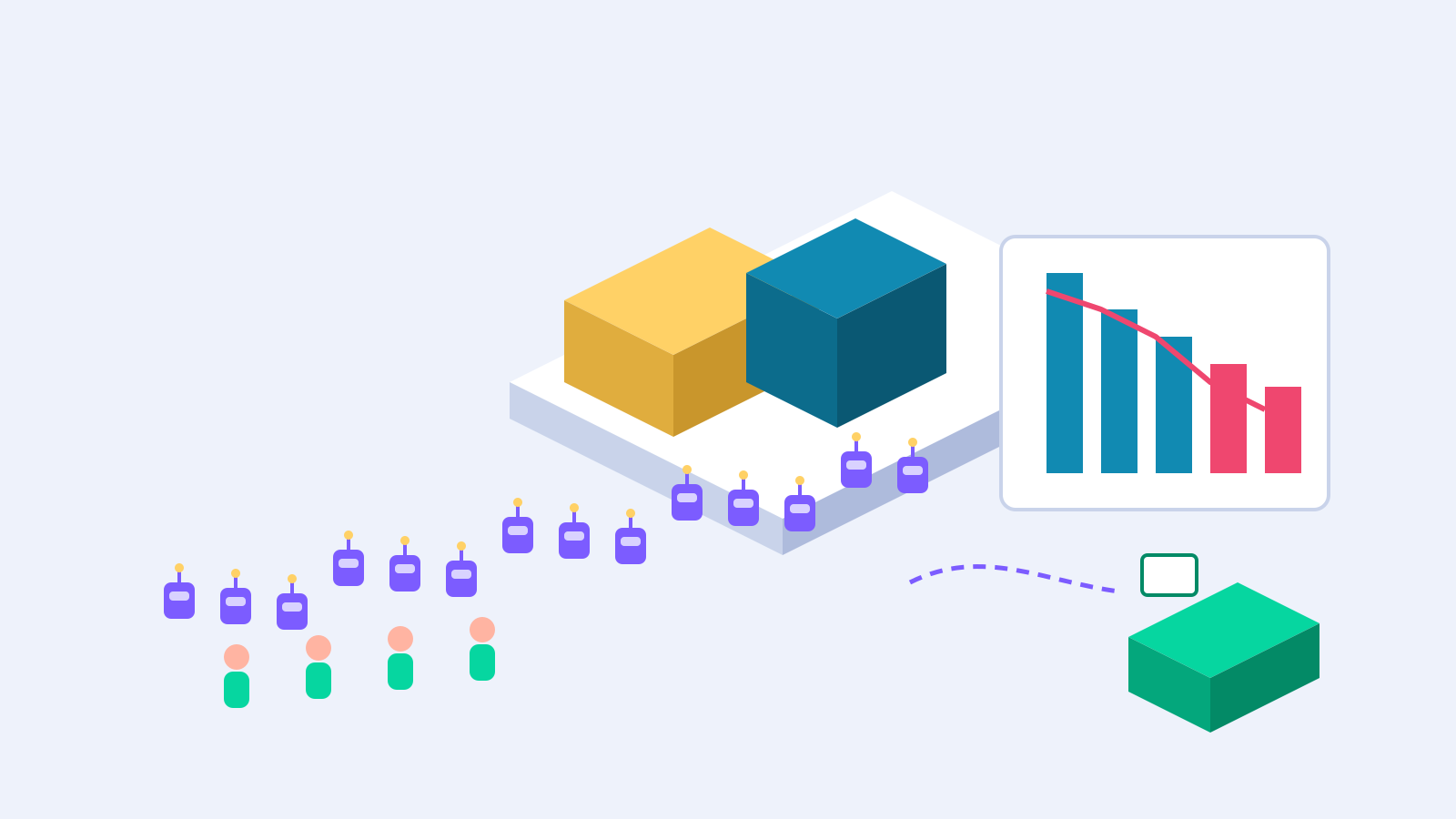
HUMAN Security expects AI agent traffic during Cyber Week (November 26 to 30) to hit 150 times last year's level, and Meta's Muse sends nearly 70% of it, according to Adweek. Muse mostly browses, looks human in analytics, and can complete purchases off your site entirely. That combination can lower your reported conversion rate on one side while hiding real orders on the other.
I keep seeing this framed as a security story. It is one, partly. But for anyone who has to explain Black Friday numbers to a CFO next Tuesday, it's mostly a measurement story, and the measurement problem shows up before anyone in IT notices a thing.
Muse went from launch to most of the agent web in about two months
Some quick context on how fast this happened. Meta launched Muse on September 8. By late September, HUMAN's early data showed Muse averaging 72% of daily AI agent requests, at 5.2 times the volume of ChatGPT Agent, with 84% of its requests landing on product and search pages. Digital Trends reported more than 10 million people in the US and Canada set up Muse agents in the first six weeks or so, while Amazon shut Muse out of purchasing on its platform and Walmart signed on.
That Amazon detail matters more than it looks. When the biggest store on the internet says no, the agent's browsing goes somewhere else. Probably to you. (We covered a related wrinkle yesterday: Amazon blocks OpenAI's crawlers while buying ChatGPT ads. Amazon is being very deliberate about which agents get in.)
One more number from the Adweek piece that I found genuinely surprising: Google's agents account for under 5% of agent traffic but nearly 20% of agent requests to checkout pages. Muse is the volume. Google, at least for now, seems to be the one closer to the register.
Why your dashboard can't tell Muse from a person
Profound tested Muse directly and found that Muse and Meta's Instinct agent "do not identify themselves by name when browsing websites". They route traffic through residential connections and present as ordinary visitors. No tidy user agent string to filter on. GA4's built-in bot filter is built around known bots and spiders, and a residential-IP browser session that scrolls through your product grid doesn't look like one.
We already have decent evidence of what that does. A joint study from Shero and Littledata across 787 ecommerce stores (late July to early October, so mostly before Muse scaled) found bots were a median 0.9% to 2.5% of GA4 sessions. But on stores where bots crossed 5% of sessions, the real conversion rate was 10% to 14% higher than GA4 reported. Every one of those bot sessions got past GA4's own filter, and around 95% of them landed in Direct.
Now multiply the agent share by whatever HUMAN's 150x turns out to be in practice. I'd be careful with that number, honestly. HUMAN sells agent detection, the baseline (last year's Cyber Week) was tiny, and a big multiple on a small base can still be a modest share of your sessions. Still, the direction isn't in doubt.
Your Cyber Week conversion rate is going to have a new denominator, and nobody is going to tell you which part of it is human.
The order that exists in Shopify and nowhere else
Here is the half of this most people miss. Muse doesn't only browse. On Shopify, Seer Interactive notes that agent checkout for Muse is switched on by default for eligible stores, and when a Muse purchase happens there, it completes off your domain. GA4 doesn't fire. Your browser pixel doesn't fire. Tag Manager doesn't fire. Seer's line is blunt: "The order exists in Shopify and nowhere else."
So think about what lands on a typical Black Friday report:
- More sessions, many of them agents that browse and leave (denominator goes up)
- Some real orders completed by Muse that never touch GA4 (numerator goes down)
- A Direct channel that looks oddly healthy in sessions and oddly weak in revenue
Both effects push GA4's conversion rate the same way. Down. It's a bit like grading a store's foot traffic by counting everyone who walked past the window, including the mannequins, while the online orders get rung up at a register in another building. On paper the store looks like it got worse at selling. It probably didn't.
And to be fair, none of this is entirely new. We wrote in October about one retailer whose GA4 saw only 32% of its Christmas orders. Capture-rate problems have always existed. Muse just adds a big, fast-growing source of them in the exact week everyone is staring hardest at the numbers.
A two-number check to run before Thursday
I don't think you need a new tool for this. I think you need two baselines from this week, so next week you can tell agents apart from a bad sale.
1. Capture rate. Pull orders from your order system (Shopify, BigCommerce, whatever) for November 16 to 22, and pull GA4 purchases for the same days. GA4 purchases divided by backend orders is your capture rate. Write it down. If it drops more than 5 points during Cyber Week, a chunk of that is likely off-site agent checkout, and you can check it directly in Shopify by filtering orders by sales channel.
2. Direct session share. Note what share of GA4 sessions sat in Direct last week. The Shero data suggests bot sessions pile up there. If Direct sessions jump more than 5 points while Direct revenue stays flat, that gap is your rough agent estimate. Not precise. Good enough to stop someone from killing a promo that actually worked.
A few smaller things worth doing this week, in rough order of effort:
- Check whether Muse checkout is on in Shopify (Seer says it lives under Sales channels > Agentic > Meta). Personally, I'd leave it on. Blocking a channel in the busiest week of the year to protect a dashboard seems backwards.
- Tell whoever reports to leadership that backend revenue is the source of truth for Cyber Week, not GA4 conversion rate. Do it before the numbers come in, not after.
- Ask IT what the WAF or CDN is set to do with high-volume agent traffic. We wrote about Google's agent allowlist and how rate limits still block it. Given Google's agents punch well above their weight on checkout pages, accidentally blocking them on Black Friday would be a painful way to find out.
Agents are shoppers now, and the fraud looks the same
One complication I can't fully resolve. HUMAN's own 2026 benchmark found that only half a percentage point separated the rate of benign automation from malicious automation. The same behavior can be a consumer's shopping assistant or a card-testing operation. So the instinct to "just filter out the bots" from reporting gets messy fast. Some of those sessions are customers, sort of. Customers with a very patient intern doing the clicking.
Which is, I suppose, the uncomfortable part. Conversion rate was always a proxy for "how good is my site at persuading people." When an agent does the browsing, the persuasion happens somewhere else, inside a chat with Meta, and your site becomes more of a catalog it reads. I'm not sure conversion rate survives that shift as a headline KPI.
What I'd bet happens by January
My guess: by the end of January, at least a handful of major analytics vendors (GA4 included, maybe) will ship some kind of agent-traffic segment or dimension, because too many ecommerce teams will have spent December explaining a Cyber Week conversion rate that dropped 10% or more for reasons nobody could point at. I could be wrong on the timing. I don't think I'm wrong on the pressure.
Until then, the people who come out of next week looking smart probably won't be the ones with perfect attribution. They'll be the ones who wrote down two boring baselines on a Wednesday and had a calm answer ready when the conversion rate chart looked scary.