Amazon Blocks 3 OpenAI Bots, but Not the One Its ChatGPT Ads Need
Amazon is running Black Friday ads inside ChatGPT in the U.S., Digiday reported on November 24, while its robots.txt still disallows all three of OpenAI's original crawlers: GPTBot, OAI-SearchBot and ChatGPT-User. The one OpenAI agent the file doesn't name is OAI-AdsBot, the bot that checks ad landing pages. Amazon pays for the ad slot and keeps organic discovery closed.
That's a pretty clean summary of where the power sits right now, and I think most brands should copy part of it. Not all of it. Amazon can afford to starve ChatGPT of its catalog because, per analyst Juozas Kaziukėnas, 90% of its shoppers already start their searches on Amazon.com. You probably can't.
What Amazon actually blocked (I checked the file)
The crawler story isn't new. Modern Retail reported in November 2025 that Amazon had added ChatGPT-User and OAI-SearchBot to a robots.txt that already blocked GPTBot, a change Kaziukėnas spotted first. His read at the time was blunt: "There's no benefit for a platform like Amazon to be part of something like that."
A year later the file is a lot longer. When I pulled amazon.com/robots.txt on November 24, it had roughly 100 user-agent entries, and the AI section reads like a who's who: GPTBot, OAI-SearchBot, ChatGPT-User, ClaudeBot, PerplexityBot, Google-Extended, CCBot, each with Disallow: /. OAI-AdsBot isn't listed anywhere, so it falls under the generic rules that apply to every unnamed bot.
Those OpenAI agents do very different jobs, which is the part most coverage skips. According to OpenAI's crawler documentation:
- GPTBot collects content that may be used to train OpenAI's foundation models. Blocking it is a training opt-out.
- OAI-SearchBot powers ChatGPT search. Sites that disallow it "will not be shown in ChatGPT search answers," though they can still appear as navigational links.
- ChatGPT-User fetches a page when a user's request sends ChatGPT there. OpenAI says robots.txt rules "may not apply" because the action is user-initiated.
- OAI-AdsBot only visits pages submitted as ads, checks them for safety, and may use the page content to decide when the ad is relevant. OpenAI says that data isn't used for training.
So Amazon has opted out of training and opted out of ChatGPT search. Then it bought its way back into the conversation with ads, right when people are asking a chatbot where the deals are.
The organic gap Amazon is paying to fill
This is the detail from the Digiday piece I keep coming back to. Because ChatGPT can't crawl Amazon, its shopping answers link to Amazon search results rather than product pages, and pull products, discounts and pricing from third-party deal-tracking sites. ChatGPT is describing Amazon's deals using other people's descriptions of them.
Which means the ads are doing a job organic can't. The Black Friday units Digiday saw use the standard ChatGPT format (favicon, headline, description, "Learn more") and send people to Amazon to buy. It's still unclear whether Amazon bought them directly from OpenAI or through its own DSP, which since September has sold ChatGPT inventory to select U.S. advertisers. Both companies declined to comment. (I'd guess the DSP, partly because it makes a nice case study for selling the DSP. Pure guess, though.) We covered how that DSP route already muddied attribution when Delta became an early buyer.
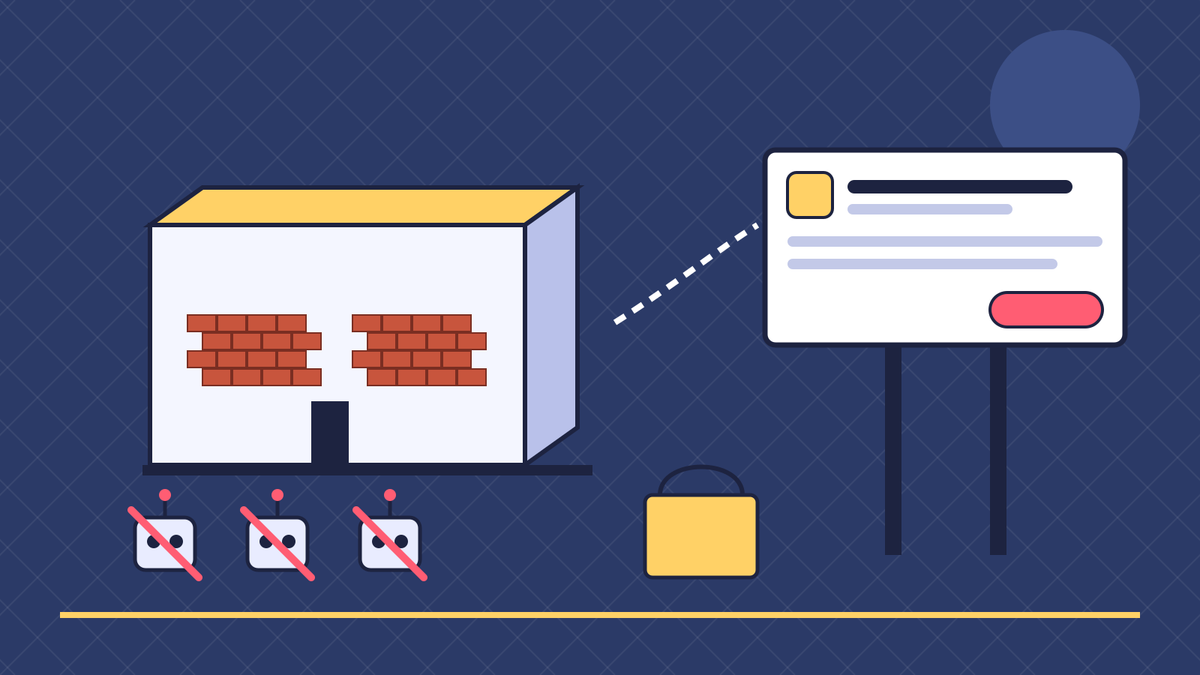
Think of it like a store that bricks up its shop windows and then rents a billboard across the street. Works fine if everyone already knows where your door is.
Arielle Feger at eMarketer flagged the downside for everyone else in the Digiday piece: brands selling on Amazon risk "paying twice for the same customer," once to reach them in ChatGPT and again to compete against sponsored listings once they land on Amazon. If your ChatGPT ad sends traffic to your own Amazon listing, that's worth sitting with for a second.
Why you probably shouldn't block all three
Amazon's math is unusual. Per Modern Retail, Amazon controls nearly 40% of U.S. e-commerce spending and makes roughly $56 billion a year from advertising. Every shopping query that resolves inside ChatGPT is a query that didn't hit Amazon search, where those sponsored listings live. Starving ChatGPT of good product data protects that.
Most brands don't have that problem. They have the opposite one: nobody's looking for them yet. The same Modern Retail piece cited an OpenAI working paper putting shopping-related queries at about 50 million a day. If your site disallows OAI-SearchBot, you've removed yourself from ChatGPT's search answers for all of them, and the only way back in is the ad auction. On paper, that's a fine trade if you have ad budget to burn. Most teams don't, at least not for a channel this young.
I also suspect a lot of sites blocked OpenAI's bots in 2023 as a single "no AI" gesture and haven't looked since. Back then GPTBot was the only one that mattered. Now the training bot and the search bot are separate, and lumping them together costs you visibility for not much gain. We made a similar point about Google's and Bing's training opt-outs: the training toggle and the visibility toggle are different switches, and it seems worth treating them that way.
The split I'd default to, for a brand that sells on its own site:
User-agent: GPTBot
Disallow: /

User-agent: OAI-SearchBot
Allow: /
Block training if you care about it. Allow search. Leave ChatGPT-User alone, since OpenAI says it may not honor robots.txt anyway and it only shows up when someone's request points ChatGPT at your page.
The 15-minute robots.txt and firewall check
This is quick, and honestly most of it is just reading.
- Open your own /robots.txt and search for four names: GPTBot, OAI-SearchBot, ChatGPT-User, OAI-AdsBot. Write down what each one is allowed to do. If you find a blanket
Disallow: /underUser-agent: *left over from staging, fix that first. - Separate training from search. If GPTBot and OAI-SearchBot share the same block, split them using the pattern above.
- Check your WAF, not just robots.txt. Search Engine Journal noted that OpenAI's docs don't say how OAI-AdsBot treats robots.txt, and that strict bot-mitigation setups on Cloudflare or Akamai could block it and cause ad validation problems. If you're running or testing ChatGPT ads, make sure your landing pages aren't behind a bot challenge.
- Give it 24 hours, then check logs. OpenAI says search results can take about 24 hours to reflect a robots.txt change. After that, your server or CDN logs should start showing OAI-SearchBot requests. My rough benchmark: if you allowed it and see zero OAI-SearchBot hits over 7 days, something upstream (usually a firewall rule) is probably still blocking it.
- Run five prompts. Ask ChatGPT about your five best-selling products by name. Note whether answers cite your site, a retailer, or a deal-aggregator page. If it's mostly aggregators, you're in Amazon's position without having chosen it, with someone else describing your products for you.
If you sell mainly through Amazon and your own site is thin, this whole exercise matters less, to be fair. ChatGPT will route your shoppers to Amazon search results either way, and you're back to the "paying twice" problem. That's a channel strategy question more than a robots.txt one. We touched on the shopping side when OpenAI quietly changed how ChatGPT Shopping describes partnerships, and it's going to keep coming up.
A guess about Prime Day
I expect this split to spread. My rough estimate: something like 60% odds that at least one more top-10 U.S. retailer ends up in Amazon's exact setup (all three original OpenAI bots disallowed, ChatGPT ads running) before Prime Day 2027. Retailers with their own ad networks have the same incentive Amazon does, and Black Friday just showed them it works, or at least that nobody stopped it.
For everyone else, it's sort of the reverse lesson. Amazon can afford to be invisible to ChatGPT because its front door is the most famous one in retail. Most of us are still the shop on a side street, and I'm not sure bricking up the windows does much for us yet.