OpenAI Deleted Its 'No Partnership Influence' Promise From ChatGPT Shopping
OpenAI removed the sentence promising that ChatGPT product results are "not influenced by any OpenAI partnerships" from its Shopping with ChatGPT Search help page sometime between November 4 and November 15, 2026. The page still says product results are not ads, but the independence promise is gone. Brands should audit who ChatGPT lists first on their top 20 holiday prompts before Black Friday.
Search Engine Roundtable covered the change this morning, after Juozas Kaziukėnas flagged it on X. The original catch came from AI Visibility Journal, which compared the live page against an Internet Archive capture and found the line present on November 4 and missing by November 15.
The old wording, per the November 4 archive: "Product results are selected independently by ChatGPT and are not ads, nor influenced by any OpenAI partnerships." The current page says: "Product results are not ads; how products and merchants are selected is described below."
Two words did a lot of work in that old sentence. "Independently" and "partnerships." Both are gone, and nothing replaced them.
Deleting a promise isn't the same as breaking it (probably)
I want to be fair to OpenAI here, because the SER headline is more confident than the evidence. Nobody has shown that a partner's products now rank higher. AI Visibility Journal says outright that the page gives no reason for the edit and doesn't prove any partnership influences results. OpenAI hasn't commented.
Legal and policy teams trim help docs all the time. Sometimes a sentence goes because it became hard to defend, not because anyone started gaming the ranking. That's a boring explanation, and boring explanations are usually right.
But. Companies don't usually remove a reassuring claim that is still cheap to keep. If results were selected purely on relevance and nothing about the business was about to change, leaving the sentence in costs nothing. Removing it buys optionality. And OpenAI has spent the fall collecting commerce relationships: Shopify catalogs are already wired in, Etsy is connected, and Search Engine Journal noted in September that feeds can also arrive through providers like Salesforce and Stripe. That's a lot of partners to promise neutrality to, forever, in writing.
So my read is roughly this: the edit probably doesn't change ranking today. It almost certainly changes what OpenAI is allowed to do next year without having to rewrite its own help page in public.
ChatGPT shopping was already less neutral than it looked
Here's the part that I think matters more than the deleted sentence, honestly. Even under the old wording, the shelf was tilting toward whoever was plugged in.
Profound's analysis of 1.76 million tracked prompt runs in July found the share of product recommendations coming from integrated feeds jumped from 8.26% to 61.54% on July 10, and feed retrieval sat around 65% by early September. Over the same stretch, the top-10 merchants' share of references rose from 22.5% to 41.8%, and the number of unique merchants cited fell from 13,524 to 10,607. Of 687 Profound customers in the sample, 450 lost at least a third of their Shopping visibility. Only 67 gained that much.
Profound estimated about 35% of July feed retrieval was Shopify-related. (One caveat: this is a vendor looking at its own customers' tracked prompts, not all of ChatGPT. Still, it's the best public dataset I've seen on this.)
Read those numbers together and the picture is pretty clear. ChatGPT shopping went from "the model reads the web" to "the model reads the feeds it has relationships with" in roughly one release cycle. The partnership sentence was describing a world that had mostly already ended.
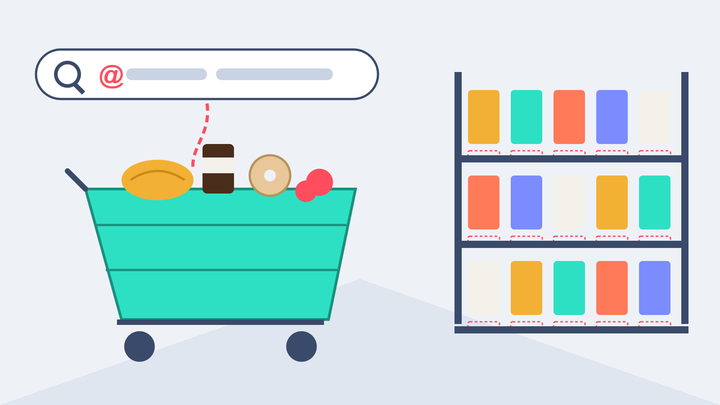
It's a bit like a grocery chain that promised its shelf layout was based purely on what shoppers want, then quietly took the promise off the wall the same quarter it started signing slotting deals. Maybe nothing changed on aisle 7. You'd still check aisle 7.
What the help page still tells you about ranking
The live doc does describe selection, and it's worth reading closely because it's the only official signal you get. Merchants are ranked on factors like availability, price, quality, and whether they're the maker or primary seller. Product data comes from "structured metadata from first-party and third-party providers." Shopify merchants are already integrated through Shopify Catalog, and everyone else is pointed to OpenAI's merchant page to apply for direct feed access (which, per SEJ, has been waitlisted).
One small detail surprised me. The page says the listed price comes from the first merchant shown, and that this may not be the lowest available. So the first-merchant slot isn't cosmetic. It's the price the shopper anchors on, and probably the click that wins.
If partnerships ever do start nudging anything, that first-merchant slot is where I'd expect to see it first.
A 20-prompt shelf check before Thursday
Treat ChatGPT product results like a retail-media shelf you don't control yet. You can't buy placement there today (that we know of), but you can measure where you sit so you notice when it moves. This takes maybe 90 minutes the first time.
- Pick 20 prompts. Your 10 highest-revenue holiday queries from Google Ads search terms, plus 10 conversational versions ("best gift for a runner under $100"). Skip brand queries; you'll win those anyway.
- Run each one logged out, in a fresh session. Memory and custom instructions skew results, so you want the cleanest view you can get.
- Log four things per prompt: whether your product appears, its position, which merchant is listed first for your product, and the price shown.
- Score it. Your baseline is the share of the 20 prompts where you appear in the top three products. If you're a mid-size brand and you're under 25%, I'd treat that as a feed problem before assuming it's an algorithm problem.
- Check your feed path. Are you coming through Shopify Catalog, a third-party feed provider, or nothing at all? If "nothing at all," get on the waitlist at the merchants page today, because the Profound data says unfed merchants are the ones losing ground.
- Rerun it weekly through January. A sudden shift in which retailer gets the first-merchant slot for your own SKUs, especially toward a big platform partner, is the signal worth escalating.
Anyway, the annoying truth is that a spreadsheet of 20 prompts is a small sample, and ChatGPT answers vary run to run. Run each prompt twice and keep the worse result. Imperfect, but it beats finding out in a February revenue review.
If you're already tracking ChatGPT as a channel, this connects to a few things we've covered: ChatGPT's own analytics hub won't show you prompts, and ChatGPT Ads runs without a search terms report. Visibility data from OpenAI is thin on every side of the product, so your own logs are kind of the only record you'll have.
My bet on where the shelf goes in 2027
I'd put it at about 60% that by the end of Q2 2027, OpenAI introduces some labeled form of paid or partner placement inside product results: a "featured merchant," a sponsored product slot, or a checkout partner badge. Ads are already live in ChatGPT, and product results are the obvious next inventory. The help page now leaves room for that without a correction.
And to be fair, this is the path every shopping surface has taken. Google Shopping started as free listings, went paid in 2012, then partly free again. Amazon search is mostly ad slots at this point. It would be strange if ChatGPT were the exception, and the deleted sentence was the main reason to think it might be.
None of that means you need to panic about a help-doc edit. It just means the "earn it on merit, ChatGPT is neutral" pitch you may have given your boss in the summer deserves a footnote now. I'd rather have the baseline numbers in a sheet before somebody else gets to decide what neutral means.