ChatGPT Ads Is Broad Match With No Search Terms Report (OpenAI Confirms It)
Three executives who run OpenAI's ad system told Adweek on November 23, 2026 that ChatGPT ads are matched to search queries written by OpenAI's own AI agent, which can draw on a user's previous chats. Advertisers only get aggregate results, never the prompts or queries behind an impression. In practice, every ChatGPT campaign is broad match with no search terms report.
Some of the mechanics aren't new. OpenAI described its "orchestrator" model in an engineering post on October 21, and we went through how an ad can win the auction and still lose the impression a few days later. What changed today is that OpenAI said the uncomfortable part out loud, to a trade publication, on the record: the query that triggered your ad was never typed by a human, it might come from a conversation that happened last week, and you aren't going to see it.
Adweek's piece also says buyers have found ChatGPT's CTR lags Google's, and that many advertisers are treating the platform as test spend. That second part is the more honest read of where things stand, I think.
Your keyword list is a suggestion box
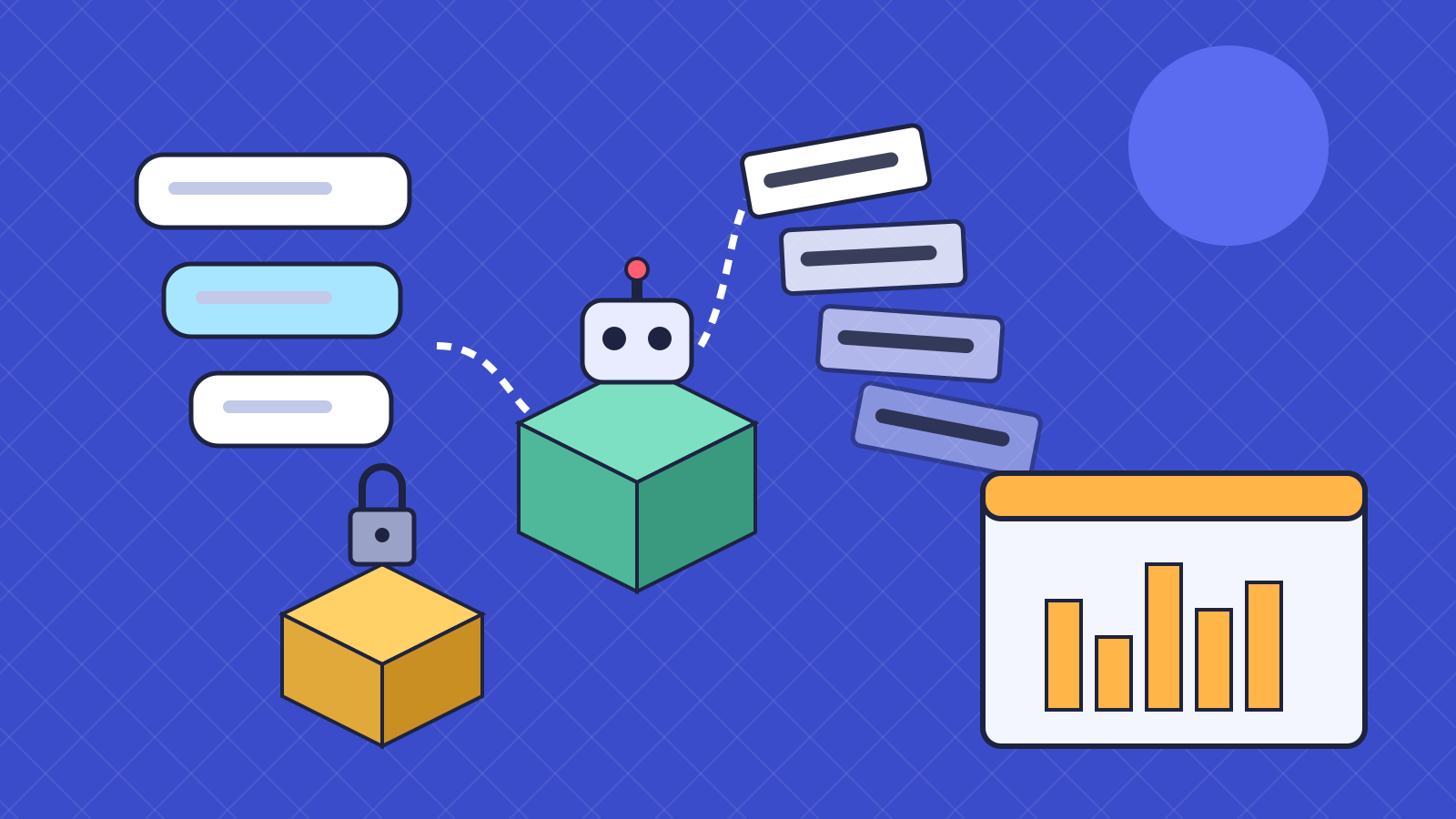
Here is the chain, per OpenAI's own description. A user writes a prompt. The orchestrator reads the conversation, works out what the person might want to buy, and "prepares one or more queries representing the relevant commercial intent." OpenAI says it may rewrite the context "to broaden the commercial possibilities beyond 1:1 search queries." Those queries become embeddings, a nearest-neighbor search pulls candidate ads, filters and scoring trim the pool, and an auction picks the winner.
Notice where the advertiser sits in that chain. Nowhere near the query.
OpenAI's help center is pretty clear about this if you read it slowly. At the ad group level you can supply "context hints that describe the conversations, topics, or keywords where their products or services may be relevant." Then the next sentence: "These hints help guide ad matching, but they are not exact-match keywords and do not guarantee delivery in specific conversations." Reporting covers impressions, clicks, spend, CTR, average CPC, average CPM and conversions. That's the whole list.
So if you migrated a Google Search keyword list into context hints and called it targeting, you probably built something closer to a mood board.
Memory makes the mismatch problem harder to see
The past-chats detail is the part I keep coming back to. OpenAI's engineering post describes a "stateful session" that remembers information across turns and across multiple conversations, and says that when a user has ad personalization on, the orchestrator also considers "nonsensitive information about the user's past conversations."
On paper, that sounds like an upgrade. Someone planning a hiking trip on Monday who asks about rain jackets on Thursday is a better prospect than either conversation alone suggests. And sometimes it is.
But think about what it does to diagnosis. When an ad shows up next to a conversation it has nothing to do with, you can't tell whether the system matched on a stale memory, misread intent, or just got it wrong. Neither can the user, who sees a clothing ad under a question about dating apps and assumes the machine is broken (or worse, that it's been reading along).
That isn't hypothetical. SE Ranking's study of 50,006 commercial prompts collected in July found ChatGPT showed ads on 25.94% of them, and that 14.35% of those ad impressions were no more related to the prompt than a random pairing would be. Their examples are kind of brutal: a Quince ad on "best dating apps for serious relationship," a TXU Energy ad on a newspaper subscription question, and a direct-mail platform topping the News & Politics category, apparently because the system latched onto words like "mail" and "subscription." Mismatch ran from 2.6% in Pets to 54.2% in News & Politics.
One caveat worth holding onto. SE Ranking was testing fresh prompts, and their own write-up calls the results "a snapshot, not a permanent feature of the platform." Real users with months of chat history might get better matching, or they might get stranger matching. Honestly, I'm not sure which, and I don't think anyone outside OpenAI is either.
You're paying for a query nobody typed, built from a conversation you'll never read.
The only levers that still move anything
If you can't see queries and you can't control them, you work on the inputs the orchestrator actually reads, and you measure on your side of the click. Here's how I'd set it up this week, roughly in order of effort.
1. Rewrite context hints as conversations, not keywords. OpenAI's own example turns a chat about a Yosemite trip into the query "shoes appropriate for hiking trip." That's the register the orchestrator writes in. A hint like "trail runners, hiking boots" is fine, but "people planning a multi-day hike who are worried about wet trails" probably sits closer in embedding space to the queries it generates. Write three or four per ad group, each describing a situation.
2. Check Settings for Negative Phrases today. Adthena spotted the field in August: up to 100 phrases, each up to 100 characters, and it's a hard block when a user's message contains them. OpenAI says it's for "qualifying advertisers," without saying who qualifies. If you have it, seed it with the obvious wrong-intent terms first (jobs, free, login, customer service, your competitors' names if you don't want comparison chats). One catch: it matches on what the user typed, not on the orchestrator's queries, so it won't catch the memory-driven stuff.
3. Turn UTMs into a crude query report. One utm_content value per ad group, one landing page per intent cluster. You won't see the prompt, but you will see which situation a click came from and what the person did next. If an ad group's engaged-session rate sits far below your Google Search average for the same page, I'd assume a chunk of its impressions are in that off-target 14% and tighten the hints before adding budget.
4. Treat the landing page as targeting copy. OpenAI's retrieval index for product feeds is described as "aware of positive or negative product reviews," and the scoring step weighs semantic relevance. The page and feed text the system can read are doing the work keywords used to do. Plain descriptions of who the product is for, and in what situation, seem to matter more here than they do in Google.
5. Judge it on a holdout, not CTR. SE Ranking's own test ran about 97,000 impressions at a 1.30% average CTR with very few sign-ups. CTR comparisons to Google feel natural, but they're measuring a different behavior. A geo or time-based holdout on conversions is the only read I'd trust, and we already showed how wide the gap is between what a ChatGPT click seems to be worth and what OpenAI suggests bidding.
Where this probably goes in Q1
The bidding side is shifting too. OpenAI is retiring Max CPC on January 1, which means buyers lose their per-click ceiling at roughly the same moment they've learned they never had query control either. Two levers gone in one quarter. You can see why buyers are calling it test spend.
And to be fair, this isn't entirely new territory. Google spent years shrinking the search terms report and pushing broad match plus Smart Bidding, and advertisers adapted (grudgingly). ChatGPT just skipped the part where you got visibility first and lost it later.
My prediction: OpenAI ships some kind of theme-level or category-level query reporting by mid-2027, because $1 billion in annualized run rate from more than 100,000 advertisers is a lot of people asking the same question in every QBR. I'd put that at maybe 60%. Prompt-level reporting, I'd put close to zero, given how hard OpenAI leans on "advertisers never see your conversations" in its consumer messaging.
Budget it like a black box, because it is one
I still think ChatGPT ads can earn a place in the plan. You are paying for the orchestrator's judgment, with your landing pages and context hints as the only real inputs, and conversions on your own analytics as the only real output.
I'd keep the spend small enough that a 14% miss rate doesn't hurt, structure ad groups so each one teaches you something, and give it a quarter before deciding. If the holdout says it works, you'll have earned the right to scale something you can't fully explain. Plenty of good channels have started out that way.
By Notice Me Senpai Editorial