Google's New AI Training Opt-Out Costs You Gemini Clicks (Bing's Doesn't)
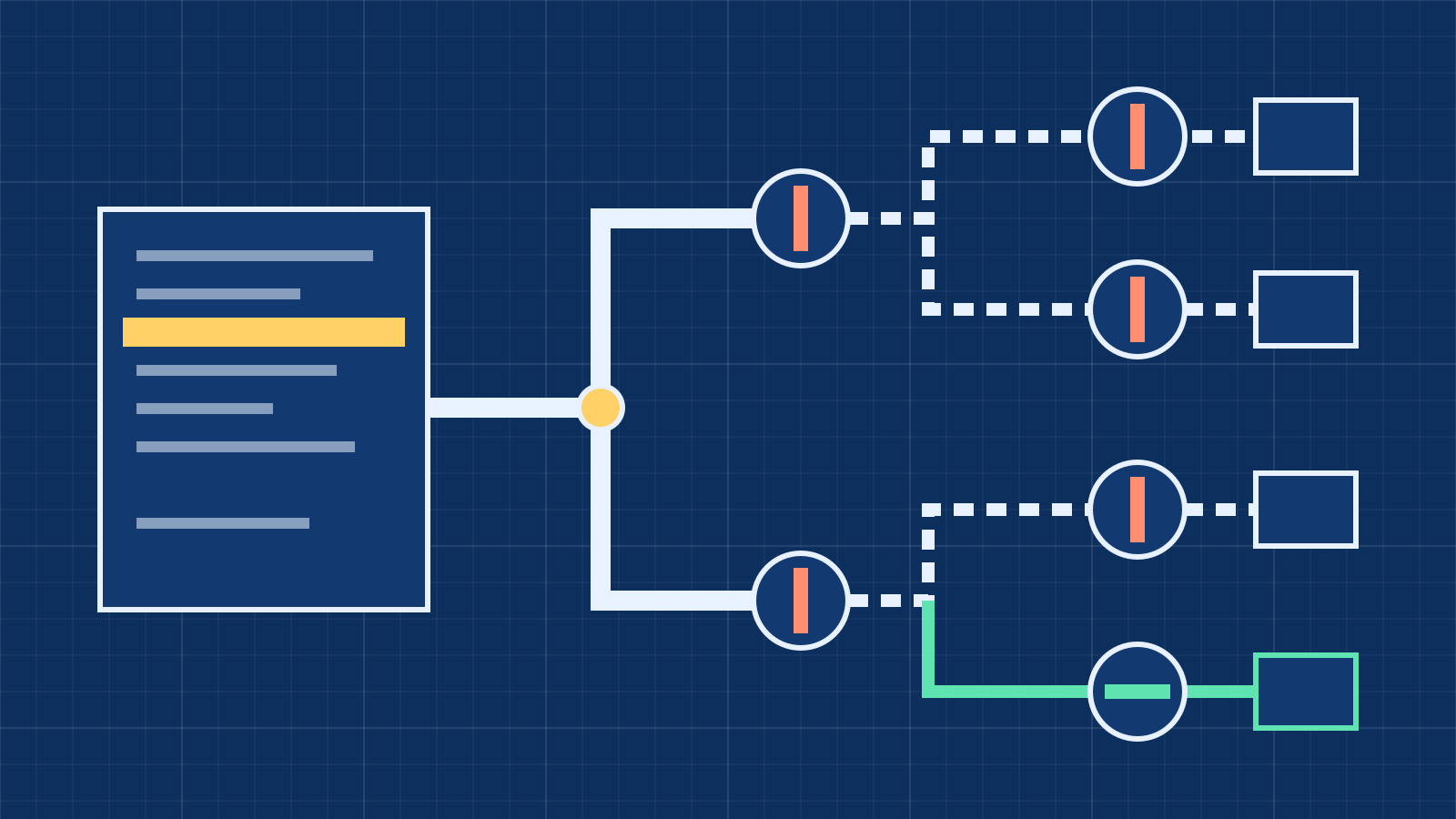
Google, Microsoft, OpenAI and Anthropic said on October 30, 2026 that they will honor one robots.txt token, __usage_ai-training, for AI training opt-outs. The same line does different jobs: Google plans to read it as a Google-Extended block, which also reaches Gemini grounding, while Microsoft applies it to training alone. Decide what Gemini clicks are worth before adding it.
Most of the coverage I read treated this as a tidy win for publishers. One line, four companies, no more maintaining a list of crawler names. On paper, that sounds like exactly what site owners have been asking for. And for training, it mostly is.
The catch sits in one passage of Google's announcement, written by John Mueller. When a site uses the token to opt out and Google-Extended is not explicitly specified, "Google plans to interpret that as if the publisher had disallowed Google-Extended." The next part is the one I'd read twice: "Websites that specifically allow Google-Extended are eligible to appear in responses and receive clicks via grounding in Gemini Apps."
Google-Extended was never only about training. Google's crawler documentation ties it to training for future Gemini models and also describes grounding, the step where the model pulls content from the Search index at prompt time. So somebody who thinks they just told four AI companies "don't train on my articles" has, at Google, probably also stepped out of the part of Gemini that can send them traffic.
Same line, two very different bills
Compare that with Microsoft's version. The robots.txt token covers training. Grounding is a separate, page-level setting (a meta tag or an X-Robots-Tag header), with three options: Allow, DisallowExtended, which limits grounding to Microsoft's own products like Copilot, and Disallow. There's no site-wide robots.txt switch for grounding at all. Block training at Bing and your pages can, as far as Microsoft describes it, still be used to inform Copilot answers.
Think of it as one light switch wired to one room at Bing and two rooms at Google.
You can't currently tell Google "use me for grounding, don't train on me" with a single setting.
That last point is my reading, and PPC Land's breakdown landed in the same place: there's no one Google control for grounding allowed plus training blocked, and Google's post doesn't address it. Maybe Google clarifies that before launch. It has until early 2027, the timing given on its crawler page, so there's room. I wouldn't plan around it, though.
AI Overviews and AI Mode are a separate conversation, by the way. PPC Land says those sit under Googlebot rules and the Search Console setting, and Google's documentation says Google-Extended isn't a ranking signal and doesn't affect inclusion in Search. So this line shouldn't touch your rankings. We covered what leaving AI Overviews did to one site's clicks last week, and that decision lives somewhere else entirely.
The Bing trap nobody will notice until March
If you run NoArchive or NoCache today, Microsoft's timeline deserves more attention than the Google news does. Those tags stop being read as training or grounding preferences after March 1, 2027. Temporary grounding preferences open in Bing Webmaster Tools on December 15, 2026, but only for sites using NoArchive or NoCache as of that date, and they expire on September 30, 2027. Miss the deadline and Microsoft says you default to Allow for grounding until the page is recrawled.
Two things follow from that, and both run against the instinct to tidy up:
- Don't strip the old tags before December 15. As I read the eligibility language, you'd be removing your ticket to the temporary preference.
- Be careful adding only the new training line. From February 1, 2027, Microsoft says that once it detects the new preferences on a site, it ignores any remaining NoArchive or NoCache tags there. A training-only update could, if I'm reading this right, quietly drop a grounding restriction you still wanted.
I'd want Microsoft to spell that second one out more plainly. PPC Land flagged the same gap. Until then, set grounding at the page level at the same moment you add the token, rather than a sprint later.
Nobody has fully flipped this on yet (so slow down a little)
The token comes from an individual Internet-Draft by Kevin Kelley of Anthropic, dated October 30 and expiring May 3, 2027. The IETF hasn't endorsed it. Nate Hake, quoted by Search Engine Roundtable, put it bluntly: "it's not actually done at the ietf level," and "some significant areas of dispute remain."
Rollout looks uneven too. Google says early 2027. Microsoft says February 1, 2027. OpenAI says "in the coming months." Kelley's mailing list post says Anthropic "has already started implementing support," but that it will take time across its services. Coywolf calls Anthropic the only company honoring it today, while Vanessa Fox's reference guide says the group isn't supported yet. I'd treat Anthropic's status as partial and unconfirmed.
And none of it is enforceable. The draft has no enforcement mechanism and it doesn't control crawling, so your server logs won't prove compliance either way. PPC Land cites TollBit data from August showing about 15% of AI page fetchers in Europe reached disallowed URLs. In fairness to the four companies, that figure covers a much broader population than them. Still, this is a request.
Two more details people will get wrong. A User-agent: * group never counts toward the token, so your existing wildcard rules express no training preference. And under the draft, the preference that applies is the one in your robots.txt when the content was retrieved, which suggests this does very little about pages already fetched.
Ten minutes on the Gemini math before you touch the file
Pull 90 days of sessions in GA4 with gemini.google.com as the source, and divide by total sessions. Treat the result as a floor. Attribution here is shaky, as we found when Gemini dropped its UTM tags after three weeks. Then open the AI Performance report in Bing Webmaster Tools and look at citations and grounding queries, since that's what you'd be protecting on the Microsoft side.
My rough line (it's a judgment call, not a study): if Gemini referrals are under 0.5% of sessions and don't convert, blocking costs you little, so block everywhere if you care about training. Say you get 400 Gemini sessions a month out of 100,000. That's 0.4%, and losing it is survivable. If you're above 1%, or those sessions convert better than your site average, I'd keep them. Between the two, I'd look at whether you're competing on comparison or how-to queries where Gemini citations might grow, and probably keep them.
If blocking everyone is the call:
User-agent: __usage_ai-training
Disallow: /
If you want Gemini clicks, you need the explicit line, and you should assume you're accepting Google training along with it:
User-agent: __usage_ai-training
Disallow: /

User-agent: Google-Extended
Allow: /
Fox's guide documents that override pattern. Keep your GPTBot and ClaudeBot rules where they are, too. OpenAI and Anthropic both describe the signal as sitting alongside their existing controls, and Meta isn't among the four anyway. Neither are Amazon or Apple, which makes "one line for everyone" a bit generous as a description.
A prediction I'd put money on
By the time Microsoft's March 1 deadline passes, I'd guess at least half of the sites using the new token will have no Google-Extended line at all, and most of them won't know what that did. I can't prove that number yet. It's just how robots.txt advice travels: somebody posts a two-line snippet, and it gets copied for years without the footnote.
Maybe that's the right outcome for plenty of publishers, honestly. A lot of them have decided Gemini's traffic isn't worth the trade, and I don't think that's a crazy position. I'd just like them to have made the decision on purpose.