Gemini Dropped Its UTM Tags After 3 Weeks, So Your September Growth Is Suspect
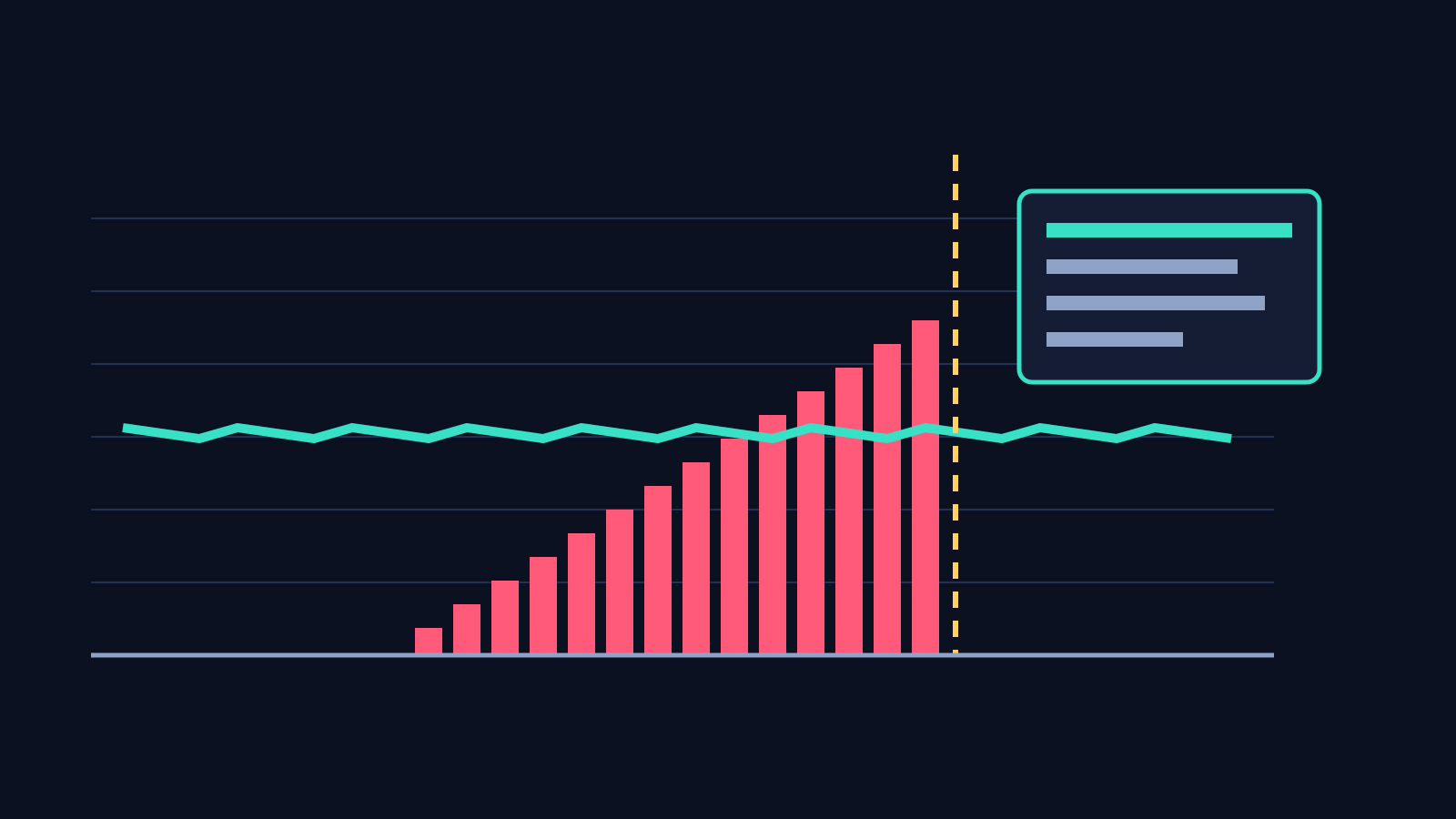
Google Gemini stopped attaching utm_source=gemini to cited links around September 28, about three weeks after the tags first appeared. Desktop referrer visits stayed flat throughout, so any September Gemini growth read from that tag was probably a labeling change. Rebuild your Gemini number from referrers, tags and server logs before reporting it.
This is a small story, and it will quietly wreck a few monthly reports anyway. Somebody out there has a slide showing Gemini traffic climbing nicely through September and then falling off a cliff in October. Both halves of that slide are probably wrong, and the second half is the one that will trigger an awkward meeting.
The details come from Barry Schwartz at Search Engine Roundtable, who says he no longer sees the parameter on any Gemini links. The data behind it comes from search data specialist Natzir, who shared a chart of tagged visits growing for three weeks and then vanishing overnight. He also said another analyst, known on X as Xyborg, saw the same drop at the same time. That's two sets of data, which is not a huge sample, but the timing lining up that neatly makes me doubt it's a coincidence.
The growth was a label, as far as anyone can tell
The detail that matters most is the flat line. According to Natzir, visits with a gemini.google.com referrer didn't move while the tag came and went. So the tagged sessions weren't sitting on top of a real surge in desktop usage. They look more like existing visits getting a name for the first time, or a name they didn't have before.
Where those visits came from is my inference, so hold it loosely. Search Engine Journal's report on the tags says a UTM survives the in-app webview, which a referrer doesn't. If that's right, the tag was briefly the one thing labeling app visits that normally land in Direct. Take it away and those visits go back to Direct, with nobody having lost anything except a row in a report.
There's a second wrinkle. A guide from Vizup says the tags were utm_source=gemini paired with utm_medium=organic, and that GA4 generally trusts campaign parameters over the referrer. So a tagged session could have landed in Organic Search rather than the AI Assistant channel. It's one vendor's account and I haven't seen Google confirm any of it, but it's easy enough to check in your own property. If it holds, your September Organic Search number may be carrying a little Gemini traffic too. That's probably a rounding error for most sites, though maybe not for a site that AI answers cite heavily.
Trying to read a trend off this is a bit like weighing yourself on a scale someone keeps moving between rooms. The number changes, and your weight has very little to do with it.
Some of the advice online describes a tag that's already gone
This part surprised me. Search Engine Journal's story ran on October 1, a few days after the tags apparently stopped. The Vizup guide is dated October 9 and still describes the tagging as something Google had begun doing. Neither was being careless, because Google never documented the behavior, so nobody had an announcement to work from in either direction. SEJ's piece says as much: the conditions that trigger the tags are unknown.
So if your team built a GA4 segment or a Looker filter in early October off one of those posts, it's probably been reading close to zero since the day you made it. It's worth a look, and it takes about a minute.
Google's own position seems loose too. Schwartz notes that John Mueller commented on the Reddit thread about seeing the parameters. In SEJ's account, Mueller asked for reproducible details on what was happening to the referrer, offered to forward them to the team, and said it would be great to have referrers retained alongside the tags. That reads to me like one person trying to help, and I wouldn't mistake it for a commitment to a measurement feature.
Nobody promised you this tag, so don't build a report that needs it.
And it's the second time this month. ChatGPT dropped its UTM tags after GPT-6 rolled out on October 7, which pushed those visits into Direct as well. Two of the biggest AI assistants changed how their traffic gets labeled within about ten days of each other, and neither one sent a memo. To be fair, this isn't entirely new, since mobile apps were hiding most AI visits long before any of this. It just feels a lot less like a temporary glitch now.
Where the Gemini iOS visits actually end up
Natzir's follow-up test splits this by surface. On the web, Gemini passes a referrer. In the iOS app, it opens links in its own WebView and sends no referrer, so the visit lands in Direct in GA4. The only trace left is a GeminiiOS user agent in your server logs.
That user agent isn't new. PPC Land covered it a year ago, when Natzir first spotted it in access logs, with a string containing "GeminiiOS" and "WKWebView". The same piece said Google Sign-In failed inside that WebView while Facebook and Apple sign-in worked. That report is from October 2025, so it may well be fixed, but if your checkout or lead form leans on Google Sign-In, I'd spend two minutes testing it from the app. Attribution is a reporting problem. A login that fails is a lost customer.
How big is the hidden part? Nobody has a clean number. SearchPilot's May reference table calls Gemini the worst mobile performer, at roughly 91% dark for app traffic, with a minority bleeding into Organic Search through Google app routing. SearchPilot aggregated that from other research and tells readers to validate it themselves. A Reddit user quoted by SEJ gave a similar figure of about 9% passing through from the app, which SEJ presents as a claim and not a finding. So call it directional. Most Gemini app visits seem to be invisible as Gemini in GA4, and the gap could be large or small depending on your audience's mix of devices.
A 30-minute rebuild, starting with the Sept. 28 line
You don't need a new tool for any of this. I'd do it in this order:
- Pull the two lines separately (10 minutes). In a GA4 Exploration, use session source / medium and filter for sources containing "gemini". Chart it daily from August 1 to today, with gemini / organic and gemini.google.com / referral as separate lines, then mark September 28.
- Judge growth from the referrer line only. My rule of thumb, and it is only that: unless gemini.google.com / referral is at least 10% above its August daily average, don't report Gemini growth at all, whatever the tagged line did. A tag that existed for three weeks can't be a baseline.
- Check the Organic Search spillover (5 minutes). Add up gemini / organic sessions for the tagged window and divide by Organic Search for the same dates. Under 1% and you can forget about it. Over that, footnote it in your September numbers.
- Count the app in your logs (15 minutes). Ask whoever owns the CDN or server logs for 60 days of requests with GeminiiOS in the user agent, grouped by day and landing page. On a plain access log,
grep -i "GeminiiOS" access.loggets you started. Filter to page requests, or assets will inflate the count. - Report a range. Referrer sessions are your floor. Referrer sessions plus iOS log visits is a better estimate, and it still leaves out Android, where that Reddit user says assistant invocations strip the referrer entirely. We made the same case for ChatGPT traffic, and it's no tidier here.
Then fix the plumbing so this doesn't recur. Any custom channel group for AI traffic should match both signals, something like gemini\.google\.com|^gemini$ on session source, so a tag appearing or disappearing doesn't move sessions between buckets. And add a GA4 annotation on September 28. Future you will have forgotten all of this by March.
One caution on that log count. Don't assume Direct falling or rising around the same date proves anything. Direct is noisy enough already, and bot traffic alone can swing it, as we saw when Direct rose 141% across 12 sites while engaged Direct barely moved. If you want to look for a shift there, use engaged sessions on deep pages, and even then treat it as a hint.
Don't let a dead tag decide your GEO budget
The practical risk is someone looking at a chart that drops in October and concluding that AI search stopped sending traffic, right as next year's budgets get argued over. Or the opposite: someone citing September's climb as proof a GEO program is working. I think both conclusions would be built on a labeling change, and I'd say so out loud before the numbers reach a slide.
My guess, and I wouldn't bet much on it, is about a 50% chance these tags return in some form by the end of March 2027. Mueller's comments suggest someone inside Google at least hears the request. If they do come back, they may come back just as quietly as they left, on some surfaces and not others, and we'd all be redoing this exercise.
I don't know that anyone gets this measurement fully right for a while. The people who come out of it looking fine will probably just be the ones whose reports said "range" before their boss asked why the line moved.