Meta and YouTube Lost the Legal Theory That Made Their Ad Business Possible
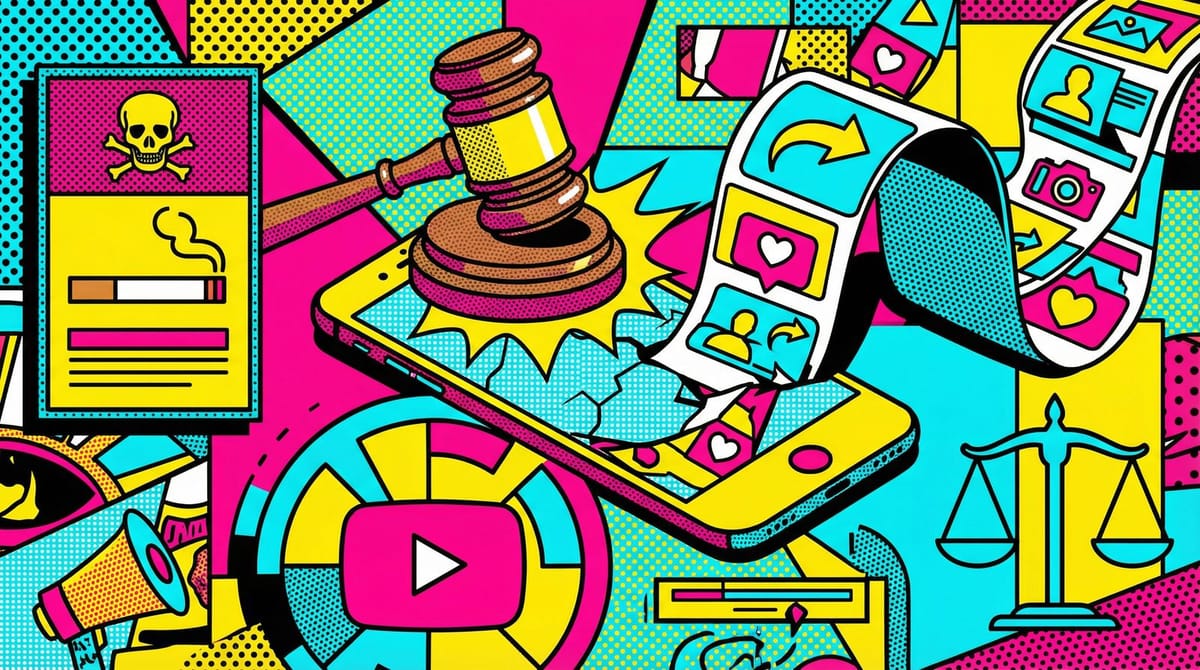
A Los Angeles jury just spent two weeks doing something no other court has fully managed since Section 230 was written into law. They decided that infinite scroll, autoplay, and algorithmic recommendations are not speech. They are product features. And product features can be defective.
That verdict, against Meta and YouTube on March 25, 2026, awarded $6 million to a 20-year-old plaintiff identified only as K.G.M. Meta picked up 70% of the bill, Google 30%. ($6 million is the kind of number that makes investors yawn, which is why most coverage stopped there.) But the part advertisers should be reading isn't the damages. It's the legal theory the jury accepted, and what that theory does to the operating model of the two largest ad inventories in the western world.
Why Section 230 didn't save them this time
For 25 years, the answer to "can you sue Facebook for what's on Facebook" has been "no, because of Section 230." The shield was built to protect platforms from being treated as publishers of user content. It worked, mostly. (Lawfare has a clean explainer on how product liability has been creeping around the edges of Section 230 for the last few years, if you want the legal theory in long form.)
What changed in California is that the plaintiff didn't sue over content. She sued over design. The argument: Instagram's recommendation system, infinite scroll, autoplay on YouTube, and push notifications were engineered to be addictive, the executives knew it, and the engineering choices themselves caused harm independent of any individual post. As McGuireWoods laid out in a March 2026 client alert, this is the first time a U.S. jury has accepted that framing inside a major social platform case.
The jury bought it. So did a New Mexico jury one day earlier, which hit Meta with a separate verdict over end-to-end encryption on Instagram messaging.
Meta and YouTube both said they will appeal, and they probably win on appeal in some form. But the question isn't whether the $6 million holds. It's whether the "design defect" door is now permanently propped open for the roughly 2,200 active cases sitting behind this one. From what I've seen of how bellwether trials shape MDL settlements, the answer is yes.
The internal documents got worse than the verdict
What put the jury where it ended up wasn't the legal theory in the abstract. It was the discovery file. A series of unsealed internal documents have been trickling out for months and they read, almost word for word, like the cigarette memos that ended Big Tobacco in 1998.
Tech Oversight Project pulled together a summary of the unsealed Meta documents in November 2025 that's worth bookmarking if you ever have to brief a CMO on platform risk. Some of the highlights:
- A 2022 internal Instagram audit reportedly found the "Accounts You May Follow" feature was recommending around 1.4 million potentially inappropriate adults to teenage users on a single day.
- Meta ran an internal "deactivation study" in which users who quit Facebook and Instagram for a week showed measurable drops in anxiety, depression, and loneliness. The company stopped the study and never published it.
- An internal Adam Mosseri memo, sent across Instagram in late 2023 (about two weeks after state attorneys general publicly accused Meta of addicting minors), reportedly told employees the goal was to bring more teens onto the platform anyway. The memo surfaced in unsealed filings in late 2025.
The jurors heard testimony from Mark Zuckerberg and Adam Mosseri (NPR has the trial-day rundown) arguing the apps weren't "clinically" addictive. The jury did not appear to find that distinction useful.
What this actually changes for advertisers
This is the part that affects budgets. If the design-defect theory holds up through appeals, the platforms have three options, and none of them are good for advertisers.
Option one: keep the features and accept legal exposure. This is the path of least resistance for the next quarter or two. The cost is settlement reserves quietly bleeding out of the same operating budget that pays for ad infrastructure.
Option two: scale back the features. TechCrunch's post-verdict analysis walks through what "scale back" might mean: weaker recommendation algorithms, less aggressive autoplay, friction between teen accounts and the For You feed. Each one of those is a knob the ad system depends on for delivery efficiency. (On paper that sounds like a content moderation story. In practice it's a CPM story.)
Option three: build separate, sandboxed teen experiences with the features stripped. Meta has been promoting "Teen Accounts" as exactly this for over a year, but the Molly Rose Foundation tested them in 2025 and reported that fewer than 1 in 5 of the published safety controls were fully functional. That study is going to get cited in every plaintiff filing for the next two years.
For an in-house paid social manager, the practical reading is roughly this. Brand safety contracts written before March 2026 do not contemplate design-defect liability. They were drafted for content adjacency, not algorithmic harm. If your brand is named in a placement on the wrong feed surface during the wrong news cycle, your indemnity language probably won't cover it. I think most teams will overcomplicate the legal response and underestimate the operational one.
The CMO conversation that should happen this week
Three things you can put in motion this week without waiting for legal to catch up:
- Pull a placement report on Instagram and YouTube and pivot it by audience age bands. You probably don't have age breakdown turned on by default. Turn it on. (CNBC's coverage made the point that the trial featured experts walking through exactly the youth-targeted placements brands buy without realizing.)
- Ask your media agency to flag, in writing, whether your current brand safety and content adjacency vendors include any design-related coverage. Most don't.
- Pre-write the internal note for the day a major brand gets pulled into a complaint as a co-defendant. It will happen to someone in the next 12 months. You don't want to be drafting that note from scratch.
This connects loosely to the Reuters and IAS keyword-blocking findings I covered last week, where the brand safety apparatus is already overcorrecting in one direction. Now it has to also worry about a different category of exposure entirely. Both come from the same place: tools built to filter out content can't filter out platform design.
The version of this story I'd actually pitch in a meeting
If I had to pitch this internally as a budget conversation, I wouldn't start with the verdict. I'd start with the deactivation study that Meta ran and quietly buried. Because the moment that document existed inside the company, every "we're just a neutral pipe" argument the lawyers were going to make in court died. They just hadn't filed it yet.
Most days, marketing law moves slower than marketing operations. (And honestly, the gap is usually our friend.) This isn't one of those days. The thing I'd watch for in the next 90 days isn't another verdict. It's whether the appeals court even bothers to engage with the design-defect theory or just disposes of it on Section 230 grounds. If they engage, the door is open for good. If they punt, the door stays propped halfway, which is somehow worse for budgeting.
I don't have a clean prediction here. I think the platforms underestimated how persuasive a stack of internal memos can be to a jury that doesn't owe anyone in San Francisco a favor. And I think the brands buying their inventory have been operating on a legal model that just got an asterisk added to it that nobody at the IAB has fully read out loud yet.
Notice Me Senpai Editorial