Omnicom Picked the One Programmatic Protocol The Big Three DSPs Aren't In
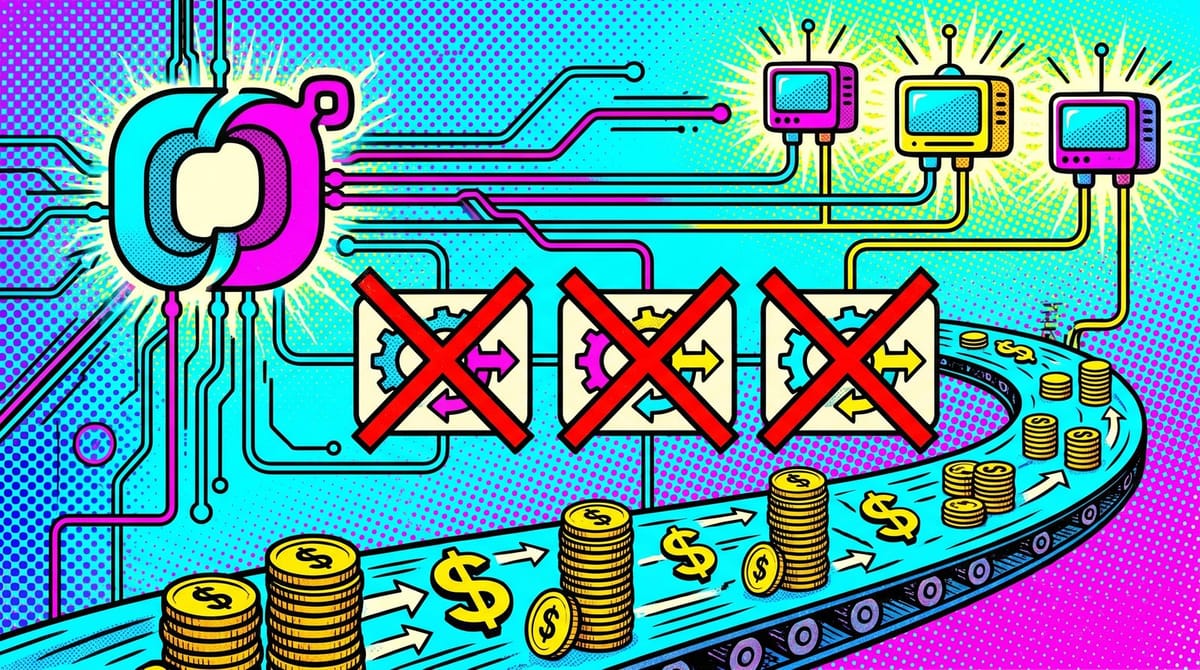
Omnicom announced on its April 28, 2026 Q1 earnings call that it is wiring Acxiom data into its Omni operating platform and routing AI media-buying agents through the Ad Context Protocol, the new agentic-buying standard, in a bid to recover the 64% of programmatic spend the ANA found never reaches the consumer. The catch: the protocol's 23-member founding consortium does not include The Trade Desk, Google DV360, or Amazon DSP, the three DSPs that handle most holdco spend.
What Wren and Yuvienco actually announced
CEO John Wren said the new setup is "exponentially more powerful for our clients." CTO Paolo Yuvienco was more specific: the agents are "in service of shortening the media supply chain" and intermediaries take "a toll" on "clients and by the industry itself." That is the framing for an integration that does three things at once. Omni now ingests the Acxiom identity graph natively, generates buying briefs through Omnicom's internal LLM stack, and dispatches them to SSPs that speak the Ad Context Protocol. The DSP layer that historically priced and arbitraged the auction sits outside that path.
Kristina Craig, who runs Omnicom's programmatic operation, described the shift to Digiday in plainer terms. The system, she said, "[unlocks] an entirely new way of structuring programmatic buys" by skipping "wastefulness, bid duplication, even DMPs potentially, all the ad tech players in the middle."
The Q1 numbers gave Wren the runway to make this case. Core revenue hit $5.6B, up 6.7% YoY and 3.9% organic. The IPG deal closed November 26, 2025, and Omnicom is now the largest holdco at over $25B in pro-forma revenue. Anything they ship now gets a year of cover before anyone can call it a stalled experiment.
Why the AdCP guest list is the whole story
Here is what other coverage glossed over. AdCP launched with 23 founding members, including Yahoo, PubMatic, Scope3, Samba TV, and Equativ. The DSPs that actually handle holdco programmatic at scale, The Trade Desk, Google DV360, and Amazon DSP, are conspicuously absent.
That is not an accident of timing. AdCP is the protocol Omnicom would route around DSPs with. The Trade Desk has its own agent stack (Koa). DV360 is welded to Google's auction. Amazon DSP is a closed shop. None of them benefit from a standard that lets buyer-side agents talk directly to supply.
So when Omnicom says "shortening the supply chain," the practical translation is shortening the path that runs through The Trade Desk specifically. Three holdcos already walked away from Trade Desk's Koa beta this month, and Stagwell's lone-volunteer position has not aged into a trend (background here).
I think that framing is closer to honest. It is less about cutting the ad tech tax than about deciding which protocol owns the next layer of buying. AdCP gives Omnicom that lever in a way Trade Desk's roadmap does not.
The 64% number Omnicom wants to claw back
The ANA's 2023 Programmatic Media Supply Chain Transparency Study is still the cleanest public data on ad tech leakage. It found that only 36 cents of every advertiser dollar entering a DSP reaches the consumer. The other 64% is lost to transaction fees, data costs, viewability shortfalls, and made-for-advertising sites.
Marketing Dive's coverage of the same study put hard numbers on the leakage points: 8% DSP transaction fee, 6% DSP data fee, 13% SSP fee, 9.5% non-viewable, and 15% non-measurable. The aggregate recoverable was put at $20B annually, with $13B as the conservative floor. The ANA also found the average campaign runs across 44,000 websites when a few hundred would reach 95% of the audience.
So when Wren talks about a "toll," he is pointing at a measurable number. If Omnicom can shave even 8 to 12 points off the supply-chain loss for its $25B in flight, that is real budget that lands in either client wins or holdco margin. The audits agency contacts have run on PMax-style buys broadly track the ANA finding. From what I have seen, the loss is rarely the full 64%, but it is almost never below 35%. Either way, you have a problem on the planning report your CFO eventually reads.
The new middleman is whoever owns the agent stack
Cutting middlemen out of ad tech has been the pitch every five years since exchanges existed. Header bidding, supply path optimization, direct deals, identity resolvers, retail media networks, all of them sold as ways to shorten the chain. Each one created a new middleman.
The agent layer is not exempt. If Omnicom's plan works, the new middleman is the LLM and the protocol. AdCP itself is built on top of Anthropic's Model Context Protocol, the open standard for connecting agents to tools. Omnicom owns the orchestration. Acxiom owns the identity graph. Whoever owns those three things owns the spread.
So the right way to read Wren's call is not that ad tech middlemen are dead. It is that Omnicom would prefer to be the one collecting the toll. Which is, to be fair, an honest holding-company strategy. The cleaner question buyers should be asking is: when the dust settles, do clients see the spread come back, or does it get absorbed as agency margin? Clients with negotiating leverage will probably claw some of it back. Mid-market clients on standard MSAs probably will not, and that part I am less sure about than I sound.
The headcount math nobody wants to say out loud
Omnicom is on a $1.5B cost-savings program over 30 months following the IPG close. Roughly $1B of that comes from job cuts, with $900M expected in 2026 alone. The company has also flagged $2.5B of "non-strategic operations" for sale inside 12 months (Marketing Dive has the breakdown).
The agentic buying story sits inside that cost program. Equativ's planning agent claims a 40% reduction in planning time. Butler/Till's Claude-based buying agent test targets a 40% cut in execution costs. Those numbers look small until you remember that media planning and buying ops is one of the largest line items in a holdco's labor base.
So when Yuvienco says agents shorten the supply chain, he is also describing the line item the labor cuts are coming from. That is not a critique. It is just how the math works. The buyer-side automation story and the headcount story are the same story, and saying it that way out loud is the part most holdcos avoid on earnings calls.
Three checks for buyers in the next 90 days
If you are running paid media and your DSP is The Trade Desk or DV360, the question to ask in the next quarter is whether your agency's AdCP roadmap is real or theatrical. Three concrete checks:
- Audit the seat, not the slide. Ask whether your agency's seat at AdCP is read-only or actively executing on test budgets, and which SSPs are receiving those calls. If the answer is vague, treat the agentic pitch as a 2027 story.
- Run the ANA framework on your last 30 days. Score your spend against DSP transaction fees, data fees, SSP fees, MFA exposure, and non-measurable inventory. The benchmark is 36 cents of every dollar reaching the consumer. Under 30 cents and the agency has cover to push for AdCP-routed buys; above 45 and a DSP swap is likely cheaper than the protocol bet.
- Re-read your incentive structure. Check whether your agency's contract rewards AI-driven savings or bills against a percentage of media spend. Almost every shortening-the-supply-chain story breaks on whoever is being paid by the gross.
Agentic buying is going to be real. The question is whether the spread comes back to the advertiser or just changes hands. From what is public so far, Omnicom's plan is the most credible attempt to date, but the AdCP guest list tells you which logo is positioned to extract the margin if it works. Cut out the middleman has never once meant the consumer pays less.
Notice Me Senpai Editorial