OpenAI's Aura Can Block Your Site From ChatGPT, and Your Logs Won't Show It

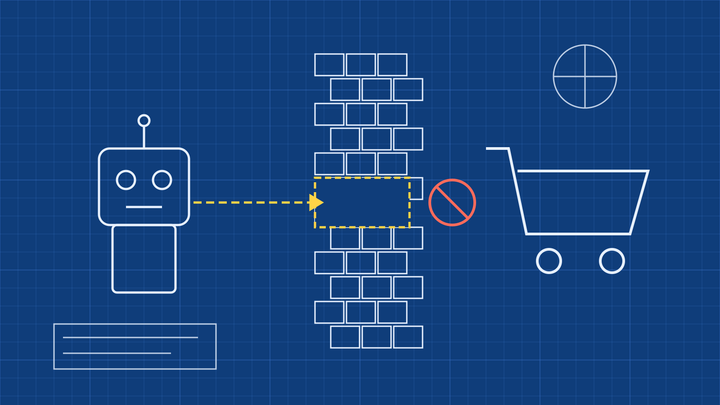
Aura is an undocumented OpenAI safety check that decides whether ChatGPT's live search and Codex's Browser Use are allowed to open a website, and a flagged domain gets refused entirely, overriding robots.txt and user settings. Blocked requests never reach your server, so your logs show nothing. A 15-minute same-session test against two competitor domains is the fastest way to tell an Aura block apart from a content problem.
The details come from Dan Taylor's write-up in Search Engine Journal. Taylor, a partner at the SEO agency 10 Spurs, was advising an international media publisher that had quietly vanished from ChatGPT browsing in May 2026. He traced the block to a status call, chatgpt.com/backend-api/aura/site_status, which runs before any of OpenAI's browsing tools touch a site. If Aura says no, the tool doesn't connect. It doesn't even try.
I think this one matters more than its niche-sounding name suggests, mostly because of how it fails. A slow site still shows up in your logs, and so does a robots.txt block. Aura failures look like nothing at all.
A block that lives above your crawler rules
Most SEOs have a mental model of OpenAI's bots that goes roughly like this: GPTBot trains, OAI-SearchBot indexes, ChatGPT-User fetches pages when someone asks a question. That model comes straight from OpenAI's own bot documentation, which also says, about ChatGPT-User, that "because these actions are initiated by a user, robots.txt rules may not apply." SEJ covered that caveat back in August, when TollBit data showed ChatGPT-User reaching disallowed pages on nearly half of the European sites that had listed it.
Aura sits on top of all of that. According to Taylor, it is separate from the crawlers, it ignores your robots.txt in both directions, and an explicit block can't be overridden by an administrator allow rule. The publisher tried setting Chrome to "Always allow" for its own domain. Didn't help. Weeks later, all five URLs they tested (main site, subdomains, individual article pages) were still blocked.
There's a small irony in the timeline, too. The publisher had recently run a single 24-hour ad campaign with OpenAI. So OpenAI was happy to take its money for a day while its own browser wouldn't load the site. Nobody's claiming the two are connected, and Taylor doesn't say they are. It just tells you how little the different parts of the company seem to talk to each other about this.
Why you'd probably blame the wrong thing first
Picture the usual sequence. ChatGPT referrals dip in your analytics. Someone pulls a prompt-tracking report, sees fewer citations, and the team spends three weeks rewriting pages for "AI visibility." Maybe they add FAQ blocks. Maybe they restructure headers. None of it works, because the model can't open the pages in the first place.
That is the real cost here. Taylor points out that when ChatGPT can't reach a site, it may lean on secondary sources instead, which means your brand can still get mentioned while the click goes somewhere else. That pattern already happens even without a block: a Shero Commerce analysis of 1,851 AI citations found brand-owned pages were only 2.8% of sources cited, and a brand's own page was cited in just 31% of the cases where the brand was recommended. An Aura block probably pushes that 31% toward zero for the affected domain, and nobody inside the company would see why.
We've written before about how fragile AI citation sourcing is, including the study where 8 of 10 AI search tools cited a fake concept within a week. Aura adds a different kind of fragility. It has nothing to do with what the model believes about your content. The question is whether it's permitted to look.
Think of it like a nightclub bouncer working from a list nobody's allowed to read. Your outfit doesn't matter. Your reservation doesn't matter. You're just not getting in, and the bouncer won't say why.
The 15-minute test before you touch any content
Taylor lays out a seven-step diagnostic. I'd compress the first pass into something you can run before your next standup:
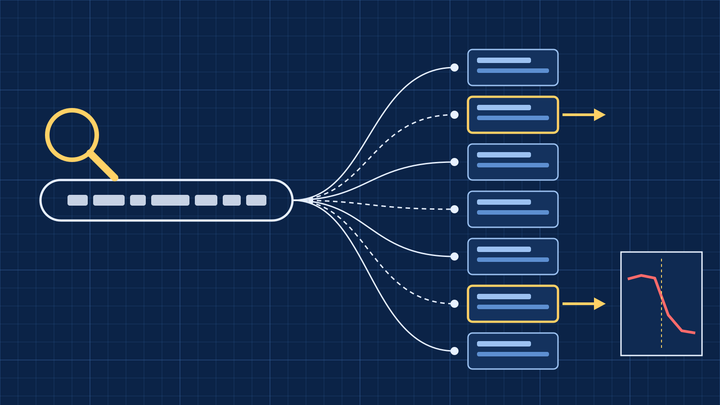
- Same-session controls. In one ChatGPT session, ask it to open three of your URLs and then two competitor URLs in the same vertical. In the publisher's case, both competitors loaded fine while the brand's own pages failed. If competitors load and you don't, that is your strongest signal.
- Test more than one surface. ChatGPT live fetch, the cloud browser, and Codex Browser Use if your team has access. An Aura block seems to hit all of them, while a WAF problem often hits only some.
- Check the logs at the exact timestamp. Note the time (with time zone) of each failed attempt and look at your CDN and origin logs. A WAF or rate-limit block shows a request that got rejected. An Aura block shows no request at all.
- Rule out yourself first. Robots.txt, bot management, geo-blocking, rate limiting. Boring, but most "ChatGPT can't see us" cases I'd guess are still self-inflicted.
One benchmark worth keeping in your head: the blocked publisher still logged about 5,000 successful connections from OpenAI's training crawlers over 30 days, against roughly 477,000 from Google and 564,000 from Anthropic. So "OpenAI's bots visit us" does not mean "ChatGPT can open us." Those are different systems, and a healthy crawler count can make a team falsely confident.
Your crawler logs can look healthy while ChatGPT's browser refuses to load a single page.
No appeal button, so build the paper trail
This is the frustrating part. There's no Search Console equivalent, no status page, and no documented appeal process. OpenAI's front-line support escalated the publisher's ticket, confirmed in writing that a safety block was active, and said the team was reviewing "the block and determine whether it's expected." That's about as far as it went, at least as of Taylor's write-up.
So the practical move is documentation. If your test points to Aura:
- Save screenshots of the exact error wording on each surface, with timestamps.
- Export the matching log windows showing zero requests.
- Record the competitor control results from the same session.
- Open a support case, keep the case number, and ask three specific questions: is there a site-safety classification on our domain, which surfaces does it cover, and what's the review process.
- Set up a weekly check on your 10 most important URLs so you know the day it clears (or doesn't).
Taylor is explicit that you should not try to route around it with proxies or alternate domains, since bypassing safety mitigations breaks OpenAI's usage policies. I agree, and not just on policy grounds. If you're on a list for reasons you don't understand, the last thing you want is to look like a site actively evading a safety filter.
What nobody knows yet about how sites get flagged
Here's where it gets murky. Taylor doesn't know what puts a domain on the list. Status requests apparently include chat details along with links, so some researchers suspect conversation context could play a role, but that's unconfirmed. Network errors during the check reportedly default to allowing access, which is sensible. Explicit blocks are strict. And decisions are cached locally for 24 hours, so even if OpenAI clears you, testing again ten minutes later might still fail.
To be fair to OpenAI, a filter like this makes sense. Agents that browse and act on pages are exposed to prompt injection and fraud in ways a search crawler never was, and blocking genuinely malicious sites before an agent lands on them is good engineering. Taylor makes the same point. The complaint is about transparency, and honestly it's the same complaint publishers made about Google twenty years ago before webmaster tools existed.
My prediction: within 12 months, OpenAI ships some kind of site-owner dashboard that at least tells you whether your domain is restricted, because the support volume from this will keep growing as agent traffic does. I'd put that at maybe 60% odds. Until then, "can ChatGPT actually open our site" should be line one of any AI search audit, ahead of schema, ahead of content structure, ahead of the prompt-tracking dashboard (and, yes, ahead of the stuff that's more fun to talk about). We saw with HubSpot's 80% traffic drop how much a team can misread when it doesn't know which layer broke. Aura is a layer most teams don't know exists, which is a pretty good reason to spend fifteen minutes this week ruling it out.
By Notice Me Senpai Editorial