OpenAI Put GPT-5.5 on the Ad-Free Tiers and Left Advertisers on GPT-5

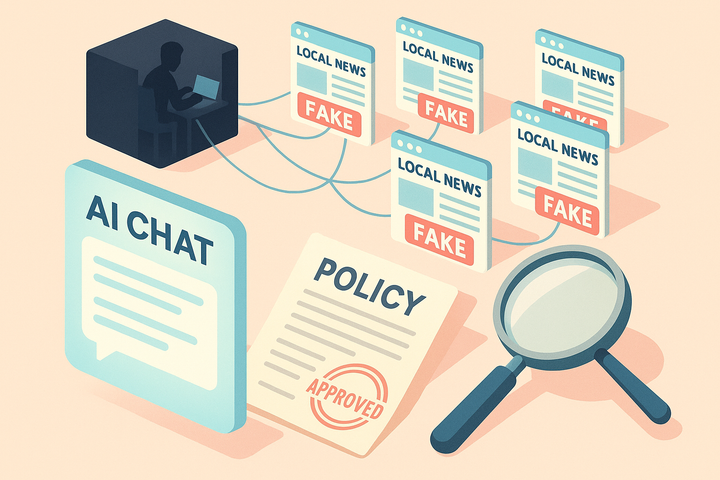
OpenAI released GPT-5.5 on April 23, 2026, six weeks after GPT-5.4, and routed it to Plus, Pro, Business, and Enterprise ChatGPT users only. Those four tiers are ad-free by policy. The Free and Go tiers, the only ones running ChatGPT Ads since February, still use the older models. The smartest model and the commercial ad inventory now live in separate rooms.
The split is a tiering decision, not a rollout detail
GPT-5.5 ships to Plus, Pro, Business, and Enterprise. GPT-5.5 Pro is limited to Pro, Business, and Enterprise. That is confirmed in TechCrunch's release coverage, where Greg Brockman described the model as "a real step forward towards the kind of computing that we expect in the future, but it is one step." Jakub Pachocki, OpenAI's chief scientist, called the last two years of improvement "surprisingly slow," which is an interesting thing to say about a model you're releasing six weeks after the previous one.
None of that matters for the marketing question. The marketing question is who gets to talk to whom through this thing.
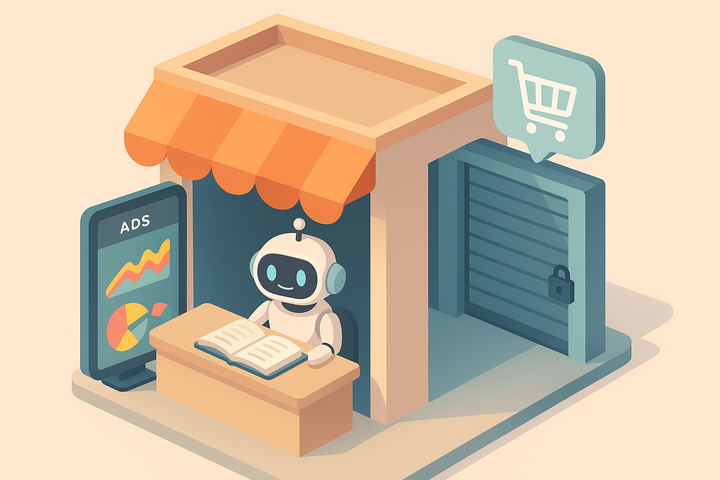
ChatGPT Ads went live in February 2026 with a shopping carousel format and a conversational banner format. OpenAI's own help documentation says ads are restricted to Free and Go tier users, and that Plus, Team, and Enterprise subscribers do not see them. That was fine when GPT-5 was the model on every tier. The capability gap was nominal.
It is not nominal anymore. The people paying OpenAI $20, $200, or five figures a seat are on a different model than the people seeing your Shopify carousel.
The tier you're advertising into is the one that got relatively worse
There is a version of this argument that is just panic. Free-tier users have always been where the impressions are. That is the whole volume case for ChatGPT Ads. What is different now is that the intent gap is going to widen.
GPT-5.5 is reportedly better at task continuity, custom instructions, and memory management. For a marketer that sounds like inside-baseball. In practice it means the ChatGPT user who actually gets through to a product decision, a purchase, a commercial conversation, is disproportionately on the paid tier, because those are the users whose multi-turn sessions hold up. Free-tier sessions are shallower on average. They always were. GPT-5.5 widens the delta.
This is not the end of ChatGPT Ads. Advertisers already paid the $200,000 pilot minimum and are collecting data. But the quiet shift is that the commercial tier of the platform is now the cheaper, less-capable one by design. Meta and Google never structured it that way. Meta serves the same ranking model to free and paying (there is no paying). Google's AdSense runs across all of Search. The whole thing is one auction surface.
OpenAI just made two surfaces.
The superapp makes this structural
On March 19, OpenAI told CNBC it was combining ChatGPT, Codex, and the Atlas browser into one unified desktop app. Fidji Simo, CEO of Applications, said the change was necessary because OpenAI had been "spreading our efforts across too many apps and stacks". That desktop app is enterprise-facing.
Meaning: the smart model, the browser surface, and the code agent all live inside a package aimed at people who pay. The Free web ChatGPT, which is where ads appear, is not that package. It is the lightweight, capped, older-model version. The superapp isn't a product that will eventually carry ads. It is a product that makes not-carrying-ads part of the value proposition.
The marketing implication, if you care: your ChatGPT Ads inventory is structurally pinned to the tier OpenAI has the least incentive to improve. The Plus/Pro/Business/Enterprise roadmap gets the features. The Free tier stays the ad surface. Those two things will stay apart.
From what I've seen in the early pilot reporting, this seems to be playing out in response quality too. Free-tier answers come back shorter, with less reasoning visible to the user. Which makes the "Ask ChatGPT about this ad" conversational banner a harder sell, because the rest of the session is already quieter.
What this probably means for the February pilot cohort
If you are running in the February 2026 ChatGPT Ads pilot, three things are different today than they were yesterday.
First, your CTR baselines are now set against Free-tier session quality, not ChatGPT's overall average. That is the number to watch going forward. If OpenAI ever publishes segmented data (they won't voluntarily), the gap between Free and Plus session depth will be the real benchmark.
Second, the enterprise superapp gives OpenAI a reason to keep advertisers out of the premium tiers permanently, not temporarily. When Plus was ad-free for brand reasons, that could flex. When the superapp is ad-free because that's the entire value proposition OpenAI is selling into Fortune 500 procurement, it cannot.
Third, the intent mix on the Free tier matters more than it used to. You want your product carousel firing on commercial queries with genuine purchase intent, not casual lookups. OpenAI's targeting stack combines real-time intent with chat history, which in theory filters for this. In practice, the pilot data is not public, and the only proxy for intent quality is conversion rate against your own funnel. Watch that number, not CTR.
The tell worth tracking over the next two quarters
OpenAI will keep launching model updates with this same tier pattern. Every time a new major model ships to Plus and up, the Free surface that runs your ads gets a little further behind. If the Free tier ever gets GPT-5.5 or a successor, read that as a signal that ad revenue is coming up short of what the premium-subscriber strategy is generating. The model-tier gap is the real advertising metric now, not CPM.
On the other hand, if the Free tier gets locked to the older model indefinitely, that is the opposite tell. OpenAI has decided the ad dollars are not the main game, and the enterprise superapp is where the business actually is. One of those two things will play out, and the one that wins decides whether ChatGPT Ads stays a serious channel or settles into a Free-tier experiment with a low revenue ceiling.
I'm not going to predict which one happens. But those are the two states.
What to check before your next media plan
If you are buying ChatGPT inventory, three things to look at this week and next:
- Pull your CTR and conversion data by day and plot against the April 23 release. If Free-tier response quality shifts measurably, you'll see it in behavior before OpenAI says anything.
- Ask your rep which model the ad-serving sessions are running on. If the answer is vague, note the date and ask again in 30 days.
- Don't raise your ChatGPT Ads budget this week. The signal is about to get noisier as GPT-5.5 ripples through paid tiers and shifts the Free-tier user mix. Wait two reporting cycles before any increase.
The ChatGPT Ads help page is already inconsistent about who sees ads and when. Two separate models running two separate experiences will make that documentation gap bigger, not smaller. Don't assume what OpenAI said six weeks ago is still true.
Honestly, the most interesting part of this release isn't the model itself. It is that OpenAI used a model release to draw a harder line between the paying and advertising sides of the product. That is a product strategy, not a technical one. And it means the ChatGPT Ads channel that agencies got briefed on in February is quietly a different channel from the one they are buying today.
Notice Me Senpai Editorial