Retail Media Growth Was Partly an Accounting Exercise. Now It Has to Compete for Real Budgets.
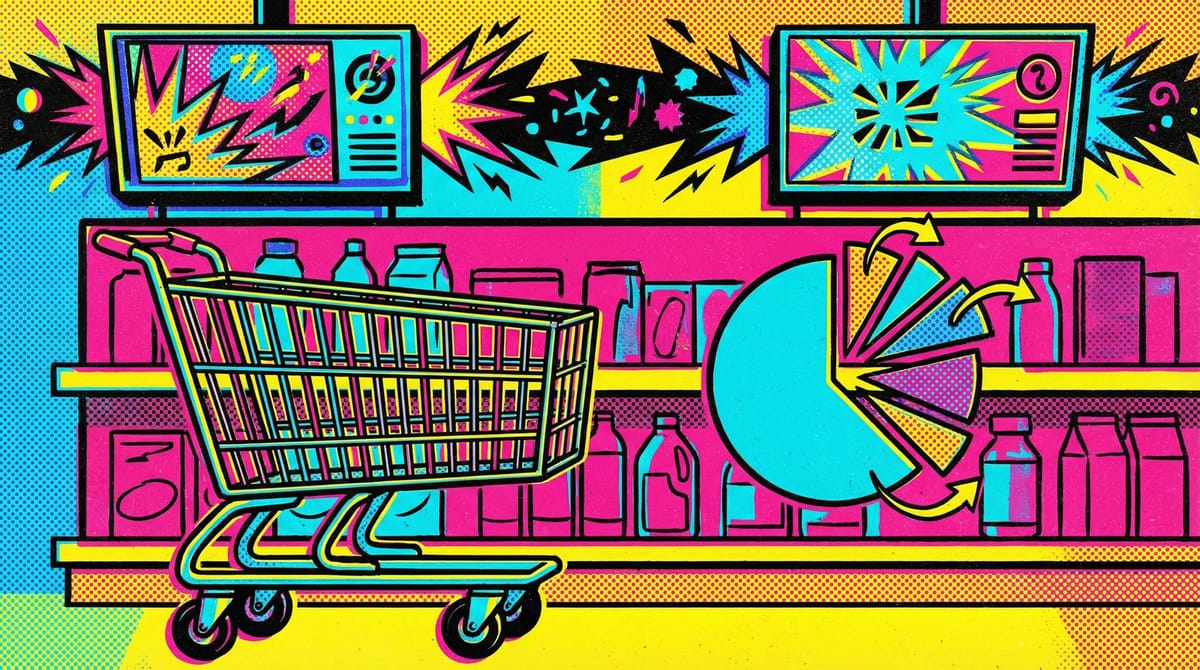
Retail media is a $69 billion market in the US this year. That number shows up in every pitch deck, every conference keynote, every budget conversation where someone needs to justify their retail media line item. And the number is real. eMarketer's latest forecast puts US retail media spend at $69.33 billion in 2026, up from $58.79 billion last year.
But the number does not mean what most people assume it means. And the distinction matters a lot right now.
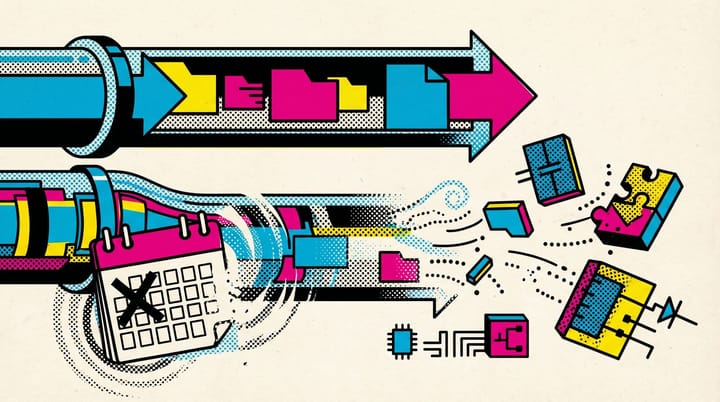
Collin Colburn at MarTech made the argument this week that retail media's easy growth phase is ending, and his central claim is one of those things that seems obvious once you hear it but that very few people in the space want to say out loud: somewhere between 30% and 60% of current retail media investment is reclassified trade and shopper marketing budget. Not new media dollars. Existing money that moved from one column of the spreadsheet to another.
That is not growth. That is relabeling. And the relabeling has mostly run its course.
The Growth Rate Is Slowing. The Real Question Is Where the Next Dollar Comes From.
Global retail media investment hit $174.9 billion in 2025 at a 13.7% year-over-year growth rate. For 2026, that growth rate drops to 12.4%, reaching $196.7 billion. Still impressive on paper. But the deceleration tells a story: the easy gains from converting trade budgets into retail media line items are largely done.
When trade budgets funded the growth, retail media did not have to compete directly with Meta, Google, or CTV for attention and dollars. Trade money was already allocated to the retailer relationship. Calling it "retail media" instead of "co-op" or "trade promotion" was more of a formatting change than a strategic one.
Now that well is running dry, retail media networks have to make a different case. They need to convince brand marketers and media buyers that retail media dollars are incremental, meaning they generate sales that would not have happened without the ad. That is a much harder argument to win, and the data suggests most networks are not equipped to make it convincingly.
Only 15% of Advertisers Trust the Measurement. That Should Alarm Everyone.
A Skai study on retail media measurement found that only 15% of advertisers report strong confidence in their retail media measurement capabilities. Nearly half say they are actively struggling with it.
Let that sit for a moment. A $69 billion channel where roughly half the advertisers cannot confidently measure whether their spend is working. Imagine telling a CFO that you plan to spend $3 million this year on a channel where you have no reliable way to prove whether it drove incremental sales or simply captured demand you already owned. In most organizations, that conversation would not go well. In retail media, it has been going well for years because the growth narrative papered over the measurement gap.
The measurement challenge is structural, not just technical. Retail media networks control both the ad platform and the conversion data. They grade their own homework. When Amazon tells you that a Sponsored Products ad drove a purchase, you are trusting the platform that sold the ad to also verify that the ad worked. There is an inherent conflict of interest that does not exist (or at least exists differently) in channels where measurement is independent.
AdExchanger argued this month that retail media's next phase depends entirely on moving beyond last-click attribution toward full-funnel measurement. I agree with the conclusion. I am less optimistic about the timeline, because the networks that benefit from last-click have very little incentive to replace it with something more honest.
We saw a version of this with the Albertsons ChatGPT ad test recently, where the retailer literally could not see its own ad performance data. If one of the largest grocery retailers in the country cannot get clean measurement from its own retail media platform, smaller brands have no chance.
89% of New Dollars Go to Two Companies. Everyone Else Has a Problem.
Here is the concentration number that should reshape how brands think about their retail media allocation: eMarketer estimates that 89% or more of incremental US retail media dollars in 2026 will flow to Amazon Ads and Walmart Connect.
Amazon and Walmart can justify that spend. Their scale, data assets, and closed-loop measurement (however imperfect) are genuinely superior to the alternatives. But that 89% figure means every other retail media network, and there are dozens now (Target's Roundel, Kroger's 84.51, Instacart Ads, Best Buy, Home Depot, Albertsons, and more) is fighting over roughly 11% of the incremental spend. That is not a vibrant competitive landscape. That is a winner-take-most market where the tail is long and starving.
I think a lot of brands are still distributing retail media budgets across 5 or 6 networks because it seems prudent to diversify. In practice, they are spreading money across platforms where they cannot measure incrementality, where the data is siloed, and where the scale may not justify the operational overhead of managing another platform relationship. The diversification instinct, which is correct in equity investing, is probably wrong in retail media right now.
The AI Shopping Agent Question Nobody Is Answering
Over 60% of US retail media revenue comes from sponsored search, meaning the ads that appear when a shopper searches for a product on Amazon, Walmart, or another retailer's site. That revenue stream has been reliable because shoppers search, see ads, and click. It is a familiar model borrowed directly from Google's playbook.
The question that Colburn raises, and that I have not seen anyone answer convincingly: what happens to sponsored search revenue when AI shopping agents start handling product discovery? If a consumer asks an AI assistant to "find the best running shoes under $150" and the agent returns a curated list without showing sponsored products, the entire revenue foundation of retail media shifts overnight.
This is not a 2027 problem. Agentic shopping is already being tested. Google's agent crawlers are live. ChatGPT has product recommendations. The timeline for AI intermediating the product search experience is measured in quarters, not years. And unlike the slow erosion that AI Overviews are causing in organic search (where the impact is uneven across categories), AI shopping agents would hit retail media's largest revenue line directly.
The IAS and Mastercard partnership we covered recently, which connects media quality to actual purchase data, might represent the kind of measurement innovation retail media needs. But it is one partnership, not a market-wide solution.
What to Do With a Budget You Cannot Fully Measure
If you are managing retail media spend right now, the honest position is uncomfortable: you are probably spending money on a channel where you cannot definitively prove incrementality, alongside everyone else in the same situation. Here is what I would be doing with that information.
First, consolidate. If you are spread across 4-5 networks, consider pulling back to the 2 where you have the strongest performance data (almost certainly Amazon and one other). The operational savings alone from managing fewer platforms may exceed the marginal revenue from smaller networks.
Second, run incrementality tests on your largest retail media line items. Geo holdout tests or matched-market experiments are not perfect, but they are better than trusting platform-reported ROAS. If a network refuses to support incrementality testing, that tells you something about what the results would show.
Third, GroupM data puts commerce media at 15.6% of total global ad revenue and climbing. That scale means the channel is not going away. But the current structure, where growth was funded by trade budget reclassification and sustained by immature measurement, is going to hit a wall. The brands that start building measurement discipline now will be the ones who can defend their budgets when the CFO starts asking harder questions.
The growth rate is decelerating. The trade budget pipeline is drying up. Measurement remains immature. AI threatens the primary revenue stream. None of those individually would derail a $69 billion market. But together, they create a situation where the difference between retail media spend that works and retail media spend that exists on autopilot is going to become very visible, very quickly. And most brands are not ready for that conversation.