Shopify Now Buys Meta Ads for You by the Sale (and Maybe Against You)

Shopify's Campaign Autopilot now buys ads on Meta, Microsoft Advertising and Snapchat and charges merchants only per sale, with Shopify absorbing the media risk, AdExchanger reported on November 10. In June it ran inside the merchant's own Meta account. If you run your own Meta campaigns, Shopify is now a second buyer chasing your customers, so compare blended new-customer CAC with Autopilot on and off before you scale either.
That second sentence is the part I keep coming back to. Five months ago, Shopify was very careful to describe Autopilot as a helper. Samir Pradhan, Shopify's VP of product for merchant marketing, told AdExchanger in June that "the Campaign Autopilot product works within the merchant's own Meta or Google accounts," and that Shopify took no cut of CPMs. The launch post from June 17 said the same thing in billing terms: you pay Meta, Microsoft and Snapchat directly, Autopilot itself is free on paid plans.
Now Pradhan is calling it a "risk-free ad product" where merchants set a price per sale and "Shopify takes that media risk." Those are two very different businesses wearing the same name.
Shopify just became a reseller of Meta inventory
When you pay Meta directly, you own the auction relationship. You see CPMs, you see frequency, you choose when to pull budget. When you pay Shopify per sale, Shopify buys the impressions, eats the bad days, and keeps the spread on the good ones. It's the arbitrage model affiliate networks and performance agencies have run for twenty years, just built into your store admin.
And to be fair, Shopify has been rehearsing this for a while. Shop Campaigns already charges only "for sales, not for impressions or clicks," claims 18M+ attributed sales, and lists Meta, Google, ChatGPT and Pinterest among its external placements. What changed this quarter is that the pay-per-sale logic now sits on top of the channels where most small merchants already spend money themselves.
The merchants this is pitched at, according to AdExchanger, are one- or few-person shops without marketing expertise. For a store that has never touched Ads Manager, a price-per-sale deal is honestly pretty attractive. You can't overspend on a bad creative week if you only pay when someone buys.
The problem is the store that already runs Meta.
Two buyers, one customer, and you're paying both
Shopify hasn't said how its per-sale buying interacts with a merchant's existing Meta campaigns, and I'd be careful assuming the worst. But mechanically, if Shopify is buying Meta inventory to find buyers for your products, and your own Advantage+ campaign is buying Meta inventory to find buyers for your products, the two will probably go after a lot of the same people. Meta's system is very good at finding likely purchasers. Both of you are pointing it at the same catalog.
Think of it like hiring a commissioned salesperson and then sending them to work the same trade show booth as your salaried one. Both will claim the deal. You'll pay salary and commission on the same customer.
Shopify's own Shop Campaigns docs show how wide that overlap can get. The help center page for managing campaigns says orders are attributed for 7 days after a click, that you "might incur attribution charges up to 7 days after you pause or end a campaign," and that returning customers can still appear in a campaign targeting only new customers. A 7-day click window is shorter than Meta's default 7-day click plus 1-day view, but it overlaps heavily. Someone who clicks a Shop placement on Monday and then converts on your retargeting ad Thursday could easily be claimed by both sides.
This is where the Shop Campaigns history makes me a little uneasy. Back in April, a write-up of an r/shopify thread titled "Shop campaigns is now going to cannibalize other traffic to increase ad revenue to themselves" described one seller who said Shopify had emailed about possibly charging above their CAC ceiling and counting sales on the seller's own site as campaign wins. That seller reported roughly three new customers in about six weeks. It's one anecdote, community-sourced, and Shopify never confirmed the details. Still, it's the exact failure mode pay-per-sale models drift toward when the seller of media is also the judge of who caused the sale.
The platform that counts your orders is now also the one billing you for them.
Where per-sale pricing actually beats your own account
I don't think the answer is "turn it off." There are a few cases where I'd honestly prefer Shopify carry the risk.
If your Meta account is small and learning-limited, say under 50 purchases a week, you're probably paying a tax for unstable delivery anyway. Shopify can pool signal "across millions of stores," as the June post put it, and that pooled view seems likely to beat what a single small pixel can learn on its own. Paying a fixed price per order for a product with healthy margin is a reasonable trade.
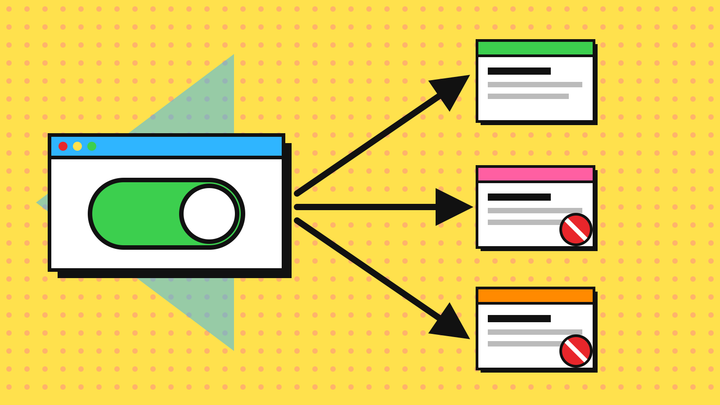
It also makes sense for channels you don't run. My guess is that most small Shopify merchants have never set up Microsoft Advertising or Snapchat at all. Letting Shopify test those at a per-sale price costs you nothing in setup time, and you only pay when it works. Autopilot also lets you set a higher incentive for new customers and switch off individual channels, per AdExchanger, so you can keep it out of Meta entirely while still letting it run Microsoft and Snap.
Anyway, that channel toggle is probably the single most useful control in the whole product for anyone already spending on Meta.
The 14-day holdout I'd run before Black Friday
Black Friday is 17 days out, which is not a great time for experiments. It's also exactly when an extra buyer in your Meta auctions would cost the most. So here's a quick version that fits.
- Pull your baseline first. Take the last 14 days of new-customer orders from Shopify (customer type: first-time) and total paid spend across every channel. Divide spend by new customers. That's your blended new-customer CAC. Write it down before you touch anything.
- Set the per-sale price from margin, not from the suggested field. Shopify's Shop Campaigns docs say the minimum acquisition cost is based on your store's historical average order value. Ignore what it suggests and work back from contribution margin. If a first order makes you $40 after COGS and shipping, a $25 new-customer price leaves room. A $38 one doesn't.
- Price returning customers near zero, or exclude them. Use the separate new and returning pricing. Paying acquisition prices for people already on your email list is the most common way these programs quietly lose money.
- Keep Autopilot off Meta for week one. Let it run Microsoft, Snap and Shop only. Then turn Meta on in week two and watch whether your own Meta account's CPMs or cost per purchase move. If your own Meta CPA rises more than about 15% the week Shopify enters, while total new customers stay flat, you're probably paying twice for the same buyers.
- Judge it on blended numbers only. Total new customers up, blended new-customer CAC flat or down: keep it. New customers flat and the Shopify invoice up: that's spend moving between line items, not growth.
Remember the 7-day trailing attribution, too. If you pause on day 14, charges can keep landing for another week.
One adjacent thing worth checking while you're in there. Shop Campaigns has a branded keyword option that's off by default, and it should probably stay that way. Paying per sale for people who searched your store name is the purest form of buying your own customers back. We wrote about the Google version of that same problem when PMax started handing brand searches back, and the logic transfers almost exactly.
What Shopify doesn't have yet
Pradhan was pretty candid that Shopify "doesn't have the open web" right now. X is in the pipeline, and Shopify is working on what AdExchanger describes as domain-specific contextual controls. My guess is that at least one of the big holding companies' commerce units will treat Autopilot as a competitor by mid-2027, and that Shopify reports a dedicated ads revenue line within 18 months. Neither is a certainty, but the direction looks obvious.
The less obvious part is what this does to margin math for small stores, which was already tight. We covered how 25% of Shopify stores never reach profit, mostly because GMV hides the real costs. A per-sale ad fee is easier to understand than a CPM, sure. It's also one more line taken off the top of a first order that probably wasn't profitable to begin with.
I don't really blame Shopify for any of this. It sits on the checkout data, so selling the ads that lead to checkout was always going to be the next step. I'd just want to know, before November 27, whether the new customers it bills me for are new to me or only new to Shopify's ledger.