YouTube Quietly Handed Every Creator an AI Video Tool. The Brand Opportunity Is Bigger Than Shorts.
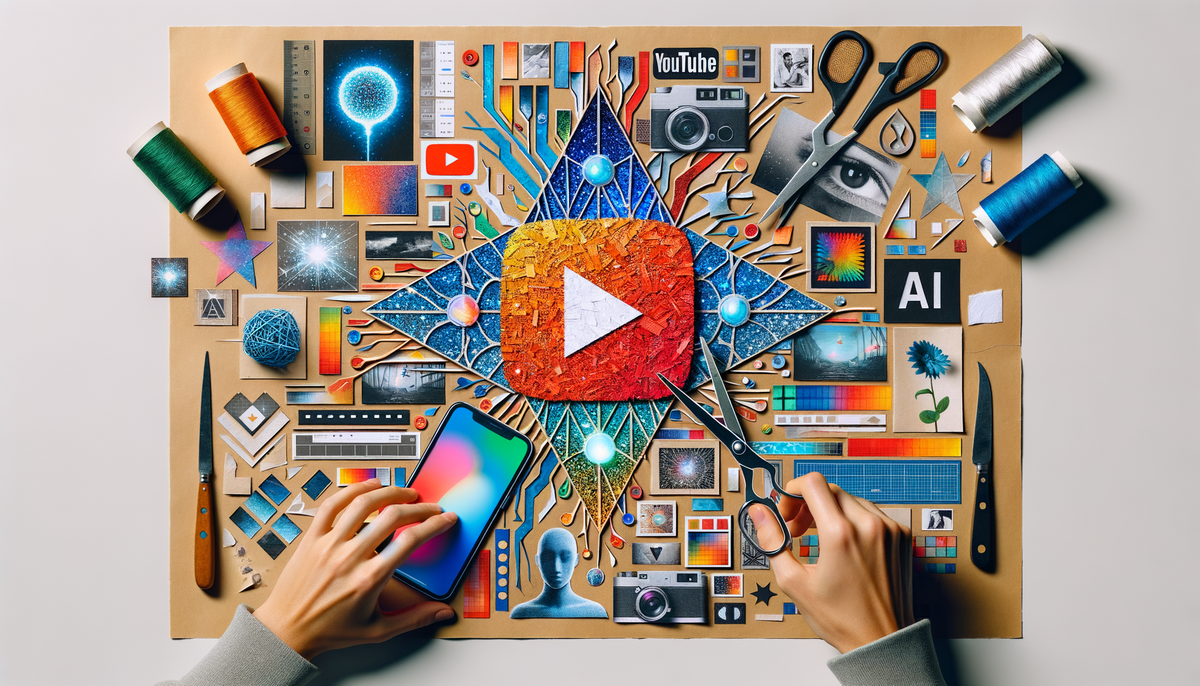
YouTube opened Effect Maker to all eligible creators on March 28, expanding a tool that has been in limited rollout since August 2025. The headlines focused on the AI video feature, which generates motion-based visuals from text prompts. That is genuinely interesting. But the part worth paying attention to is what happens when brand partnerships and custom effects combine at scale.
Effect Maker is not really a video creation tool. It is a distribution mechanic disguised as one. The brands that figure that out early will get something that is hard to buy at any price: organic reach through creator content that carries their visual identity.
What Effect Maker actually is
Effect Maker (effects.youtube.com) is a web-based platform where creators design and publish custom visual effects for YouTube Shorts. It supports face effects, particles (sparkles, confetti, smoke), 3D models in .glb format, body segmentation, and a node-based visual scripting system with eight trigger types. Think of it as a simplified version of what AR filter studios build for Instagram and Snapchat, but native to YouTube's ecosystem.
The new AI Video feature, which rolled out with the general availability launch, lets creators generate motion-based effects from text prompts. Describe what you want and the system builds it. No coding, no 3D modeling, no After Effects. Just a description and the AI handles the visual production.
There are practical constraints. Effects packages are capped at 5MB, memory is limited to 50MB, text support is English-only for now, and the entire tool is desktop-only. These are real limitations. But for the purpose of creating branded visual effects that millions of creators can apply to their Shorts, they are not dealbreakers.
Why the branded effects angle matters more than the AI
The feature most coverage is ignoring is the brand collaboration capability. Creators with Editor permissions can publish effects directly on behalf of brands. This formalizes something that has been happening informally on other platforms for years: companies creating visual effects (filters, stickers, AR overlays) and hoping creators adopt them voluntarily.
The difference here is that YouTube is building the pipeline into the creator tool itself. A brand can design an effect, a partner creator publishes it to their channel, and then every other creator on the platform can discover and use that effect in their own Shorts. The brand gets their visual identity embedded in thousands of videos without paying for each placement individually. That is scalable branded content that looks organic because it is organic. The creator chose to use the effect because it made their video better, not because they were paid to.
For context, this is structurally similar to what made branded Snapchat lenses and Instagram AR filters effective when they worked. The difference is that YouTube Shorts has a different audience composition (older, more diverse, more commercially active) and the creator ecosystem is already deeply monetized through the YouTube Shopping affiliate program, which recently lowered its threshold to 500 subscribers. Creators already have financial relationships with brands on YouTube. Effects add another surface to that relationship.
The AI video feature is a cost reduction, not a creative strategy
I want to be careful about overstating what the AI Video feature means in practice. Text-to-video generation for Shorts effects is not the same thing as text-to-video for paid ads. The quality constraints (5MB package, 50MB memory) mean this is closer to animated overlays than to the kind of polished video assets you would run in a performance campaign.
What it does do is remove the technical barrier to creating custom effects. Previously, you needed working knowledge of visual scripting, 3D modeling, or effect design to publish anything interesting through the platform. Now you can describe what you want in plain text and get something functional. For brands that wanted to experiment with branded effects but could not justify the production cost, that barrier just dropped to essentially zero.
YouTube has been building up its AI creative stack steadily. Veo 2 launched in July 2025, Veo 3.1 followed in January 2026, and Effect Maker's AI Video adds another layer. The through-line across all of these releases is making content production faster and cheaper, which is good for YouTube's content supply and good for brands trying to activate creator partnerships without massive production budgets.
On paper, that sounds like an upgrade. And sometimes it is. But there is a real question about whether AI-generated effects start to feel generic when everyone has access to the same generation system. When every creator can produce sparkle transitions and galaxy backgrounds from similar prompts, differentiation gets harder. The brands that will stand out are probably the ones building effects with enough visual specificity that they are recognizable even without a logo watermark. That takes more creative effort than typing a prompt, which is the part no AI tool solves for you.
YouTube's AI disclosure policy adds a small wrinkle
Since May 2025, YouTube has required disclosure labels for AI-generated content. Effects built using the AI Video feature should trigger automatic labeling since they are platform-native tools. But the policy creates an interesting dynamic for branded effects specifically: if your brand's effect uses AI generation and creators apply it, those videos carry an AI disclosure label.
Whether that label affects viewer perception or engagement is something nobody has clean data on yet. My guess is that for Shorts specifically, it probably does not matter much. The format is short enough that most viewers are not reading labels. But for brands in categories where trust and authenticity matter (financial services, healthcare, education), it is worth considering whether an AI-disclosure label on every piece of creator content featuring your brand is the association you want. It is a small thing, honestly, but the kind of small thing that marketing teams sometimes do not think about until it is already running at scale and harder to walk back.
The practical move for brands right now
If your brand has visual identity elements that translate well to video effects (distinct colors, recognizable shapes, signature animations), Effect Maker is worth exploring now, before the tool gets crowded. The process is straightforward: design the effect, find a creator partner with Editor access, publish it under their channel, and let organic discovery handle distribution.
Start with one effect that solves a real creative problem for creators. An effect that makes transition videos easier, or that adds a visual flourish that creators actually want, will get adopted. An effect that is just your logo floating in the corner will not. The best branded effects on other platforms have always been the ones where the brand's contribution genuinely improved the content rather than just stamping it.
For paid social teams already running YouTube Shorts ads, there is a complementary play worth considering. Run your paid campaign with standard creative, and simultaneously release a branded effect that creators use organically in their Shorts. The paid creative drives awareness, the organic effect creates ambient brand presence across the platform. Neither replaces the other, but together they cover the feed in a way that paid alone cannot.
The cost to experiment is close to zero right now. The AI Video feature handles technical production. The only real investment is the creative thinking about what kind of effect your brand should make. For most brands, that is a conversation that takes an afternoon of brainstorming, not a quarter of agency work.
Another surface in YouTube's expanding creator commerce stack
YouTube has been methodically building out the infrastructure connecting brands to creator audiences. Shopping affiliate, brand partnerships, and now effects. Each addition gives creators another way to monetize and gives brands another way to reach audiences through creator content rather than around it.
Effect Maker is not the most dramatic of these additions. But it might be the most interesting for brand marketers specifically, because it creates a form of exposure that does not feel like advertising at all. A viewer watching a creator's Short that features your branded effect is not watching an ad. They are watching content that happens to carry your visual language. That distinction matters, because it is the same distinction that made branded content on Instagram outperform display ads on Instagram, even when reaching the same audiences.
Whether Effect Maker becomes a meaningful brand channel or stays a niche creator tool depends mostly on whether brands show up with effects worth using. The tool is ready. The distribution mechanic is real. The only variable is whether the creative work is good enough that creators pick it up voluntarily, which has always been the hard part of any branded content strategy, and which no amount of AI video generation is going to solve on its own.