Ziff Davis Lost 37% of Its Google Clicks, So Why Is Your Placement Fee Flat?
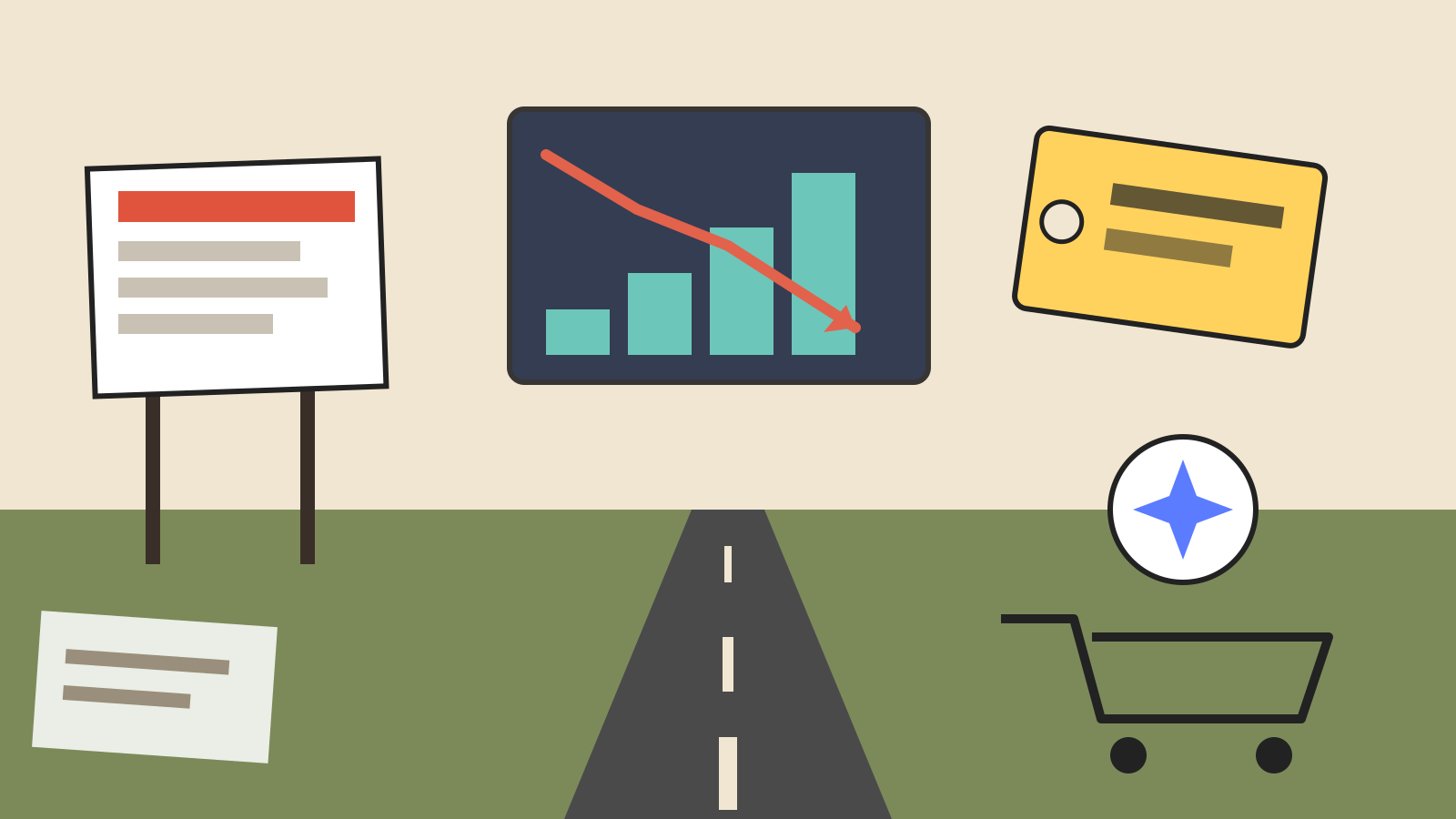
Ziff Davis, which owns CNET, PCMag, IGN and RetailMeNot, told investors on November 6 that organic Google referrals fell about 37% year over year in Q3 2026, on top of a 23% drop the year before. That is more than half its Google clicks gone in two years. Any brand still paying flat fees for placement on those best-of lists is paying for traffic that no longer arrives.
The headline number will get the attention. I think the more useful numbers are buried further down, in the advertiser metrics, because they show the market already repricing this inventory. Some of your competitors have quietly renegotiated. The question is whether you have.
Two years, half the clicks
The basics, from the Q3 2026 press release Ziff Davis filed with the SEC: revenue fell to $289.3 million from $306.5 million, adjusted EBITDA dropped to $82.2 million from $97.8 million, and the company took a $29.6 million goodwill impairment. According to PPC Land's breakdown, that entire impairment landed on the Technology & Shopping segment, which is CNET, PCMag and RetailMeNot. In other words, the affiliate-heavy part of the business.
CEO Vivek Shah was unusually blunt on the call. "We're not planning on a search recovery," he said. That sentence is worth sitting with for a second, because it comes from a company whose entire commerce model was built on Google sending people who were already about to buy something.
He said as much back in February. On the Q4 2025 earnings call, Shah put affiliate commissions tied to organic traffic at roughly $90 million for 2025, down about $25 million year over year, and called search "the highest-quality referral traffic for an affiliate commerce business." So the publisher knows which traffic is hardest to replace. It also knows that traffic is the part shrinking fastest.
2.7 billion citations, and nobody gets the click
This is the part of the call I expect to get quoted out of context for months. Shah said Google's AI Overviews and AI Mode cited Ziff Davis content about 2.7 billion times in the quarter, "nearly 10x the clicks those same sites received from Google Search." PPC Land does the back-of-envelope math and lands at roughly 270 million clicks, a total Ziff Davis did not confirm.
Two caveats. That 2.7 billion figure comes from the Search Console generative AI reports that reached every site in late August, and those reports show impressions without clicks or queries. So "cited 2.7 billion times" means your brand name might have appeared in an AI answer pulled from a CNET review. Whether anyone acted on it is unknowable from the publisher's side, and honestly from yours too.
Second, Ziff Davis is not an outlier. Chartbeat data reported in October put search at 12% of North American publisher pageviews in Q3 2026, down from 21%. UK publisher Reach said Google referrals fell 55%. We covered the consumer side of this in October when AI Overviews jumped to 89% of review searches, which is exactly the query type affiliate publishers live on.
The analogy I keep landing on: a best-of list in 2026 is a billboard on a highway the GPS now routes around. Plenty of people still hear it described. Far fewer drive past it.
The repricing has already started (just not for everyone)
This bit surprised me. In the Technology & Shopping segment, Ziff Davis now has 717 advertising customers, up from 634 a year ago. Revenue per customer, though, fell to $109,111 from $132,849, and net advertising revenue retention dropped to 87% from 94%. Those figures come from PPC Land's read of the filing.
Read that together. More brands are buying, each is spending about 18% less on average, and existing advertisers are trimming. From what I can tell, that looks like buyers who already noticed the traffic decline and pushed back on price, plus new advertisers coming in at lower entry points.
If your flat placement fee hasn't moved since 2024, you are probably funding someone else's discount.
To be fair to publishers, they aren't hiding the ball. Shah openly said "there is a gap between usage and monetization." Their content still gets read, just inside Google's interface instead of on CNET. That's a real problem for them and a pricing opportunity for you. And none of this is entirely new; tenancy fees on review sites have crept up for years while click-through quietly eroded. The difference now is that there's a public, audited number to point at in the negotiation.
Where the RetailMeNot shift fits
Ziff Davis is moving its own affiliate business off search. In February Shah named "building out traffic in both the RetailMeNot app and browser extension" as a 2026 priority, and in August RetailMeNot launched a rewards app it billed as the biggest product overhaul in its history, paying members $5 for every two qualifying purchases of $25 or more each month.
For affiliate managers, that changes the conversation in a slightly awkward way. App and extension traffic converts well, but a lot of it is people who were already checking out and went looking for a code. So as these publishers rebuild, more of your commission budget may drift toward last-click coupon and cashback touchpoints that a disciplined incrementality test would credit far less. Worth watching, at least.
Renegotiating before the January renewals
Many publisher placement and tenancy deals renew at the start of the year, which gives you roughly eight weeks. Here's how I would approach it.
- Pull your own click data first. Export 24 months of referral clicks and attributed orders from each paid placement, broken out by publisher domain. Do not rely on the publisher's dashboard alone.
- Calculate effective cost per click and cost per order for each flat-fee placement, then compare Q3 2024 to Q3 2026. If clicks fell 30% or more while the fee stayed flat (Ziff Davis's own numbers suggest that's the default case), you have a documented reason to reprice.
- Propose a hybrid. A reasonable opening ask, in my view, is cutting the flat portion by at least the percentage your clicks dropped and moving the difference into a higher CPA commission. Publishers still get paid when they deliver, and you stop pre-paying for traffic that may not show up.
- Ask for AI visibility data, separately. If a publisher wants to sell you "AI citation exposure," ask for the Search Console generative AI impressions for the specific page you're on. If they can't share it page by page, don't pay a premium for it.
- Cap coupon-site share. Set a ceiling on the share of commission going to coupon and cashback partners, then run a holdout on one of them for a few weeks to see what actually disappears.
A quick benchmark for the math: if a placement cost $10,000 a month and sent 5,000 clicks two years ago, you were paying $2 a click. At a 50% two-year decline, that same fee now buys 2,500 clicks at $4 each. Nobody would accept a doubled CPC in Google Ads without a fight. Flat fees just make it easier to miss.
Paying to be mentioned instead of visited
My guess: by the end of 2027, at least one of the big affiliate publishers will sell a priced "AI citation" package as its own line item, separate from placement. Whether brands should buy it is a different question, and I lean no until the measurement exists.
Personally, I don't think the publishers are the villains here. Their content is getting used more than ever and paid for less, and that squeeze is going to roll downhill onto whatever pricing model they can still defend. Your job, for now, is mostly making sure the deal you sign in January matches the traffic you actually got in 2026, not the traffic everyone remembers from 2023.