The 10-Gate AI Search Audit Most Teams Should Treat as a 3-Gate Audit

On May 5, 2026, Search Engine Land published Jason Barnard's 10-gate AI search pipeline: Discovered, Selected, Crawled, Rendered, Indexed, Annotated, Recruited, Grounded, Displayed, Won. Each gate's score multiplies into the next, so the weakest stage caps the final citation probability. For most sites, three of those ten gates explain nearly every citation miss. Auditing the other seven first is wasted budget.
The math is why you can't stage the fixes the way you used to
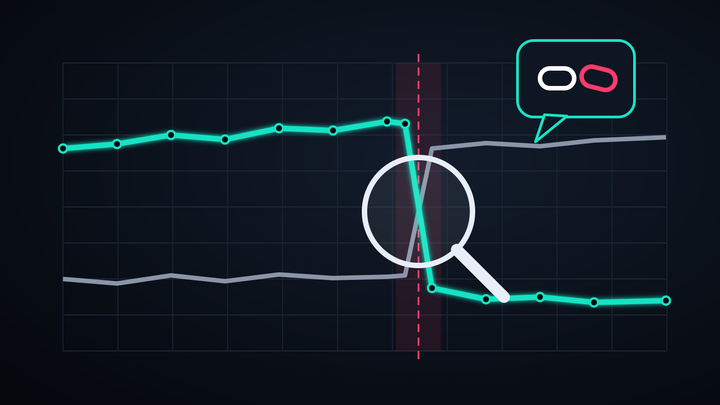
Barnard's framework is multiplicative, not additive. A page scoring 0.9 on three dimensions and 0.1 on a fourth ends up at 0.0729. A flat-mediocre competitor scoring 0.7 across all four lands at 0.2401. The flat-mediocre one gets recruited by the model. The brilliant-with-one-hole one doesn't. Kalicube wrote up the math, and Barnard's piece references the same example.
That's the part most SEO teams haven't internalized yet. We're trained on additive thinking: got the title tag, will fix schema next sprint, internal linking after that. Multiplicative systems punish that pattern. Whatever your weakest gate is, that gate's number is your ceiling. From what I've seen, the impulse to fix the gate you understand best instead of the gate that's actually broken is the single biggest problem with how teams approach AI visibility audits.
Gate one that actually moves citations: bot access
The first gate where most sites fail is the most boring one. AI bots can't read what your CDN, robots.txt, or anti-bot WAF is blocking.
The latest monthly AI crawler report shows training crawls now make up 49.9% of all AI bot traffic in March 2026, with search-time crawls at 7.7%. ClaudeBot bounced back to 11.7% market share that month. GPTBot is hitting individual sites at roughly 4,200 requests per day on average where it's allowed in. OAI-SearchBot ticked down to 2.2%. The bots that matter for grounded citations (Barnard's "Recruited" gate) are the search-time ones, not the training ones: OAI-SearchBot, ClaudeBot for Search, PerplexityBot, Bingbot, Googlebot.
The audit takes about fifteen minutes. Open server logs, count search-bot hits over the last seven days, divide by Googlebot hits. If that ratio is under 5%, your site is effectively invisible to AI search no matter how well you score on annotation or authority. Fix the access layer before you spend another dollar on content.
The bit I see teams forget here: rendering matters too. If your headline, byline, and primary copy load via client-side JS that the AI bot doesn't execute, you might as well be blocking it.
Gate two: are you embedded next to the right neighbors
This is the gate that maps to Barnard's "Annotated" and "Grounded" steps, and it's the one most SEO playbooks haven't caught up with. AI search runs on vector retrieval at the chunk level, not keyword retrieval. Whether your page gets pulled into a model's response depends on whether its embedding lands close to the embeddings the model is looking up for that query.
Practical test that costs nothing. Open Claude or ChatGPT, ask it the question you want to rank for, and read the citations. Don't look at whether you're cited. Look at who's cited next to whom. Those are your new SERP neighbors. If the model is grouping a major publisher plus a vertical trade outlet plus a niche operator blog, and you're a niche operator that's not in the cluster, that tells you the model has decided your content sits in a different topic neighborhood than the one it's currently grounding from.
Most teams reach for schema first. Schema rarely fixes this. The work is whether the body copy makes the entity relationships unambiguous to a chunker that doesn't have your context. Explicit entity binding, FAQ blocks tied to actual question phrasing, named author bios that link back to canonical entity pages. Search Engine Land made the same point in early May: visibility starts before search and ends with citations, and the middle isn't ranking. It's grounding.
Gate three: are you the source the model defaults to
Barnard calls the last gate "Won." It's the one a citation actually comes back from. This is where brand authority does its real job in AI search.
We covered this last week with the SE Ranking experiment showing brand search volume now outranks backlinks as the top predictor of AI citations. Same dynamic at this gate. When the model has three plausible sources for the same answer, it tends to pick the one with the strongest brand-entity signal in its training and grounding data. Backlinks help. They don't beat sustained branded query volume.
The audit here is harder and slower. You're tracking citation share by query class, not by individual prompt. Tools like Profound or Otterly will quote you the data, and the pricing gap between them is wide enough that you should test the cheap one first if you're not sure the metric will move. The leading indicator most teams ignore: do you show up in the model's training-era data at all? If your brand wasn't indexed by the model when it was trained, you're starting from scratch on every grounded query. That makes the brand-search work compound slower than it would for a name the model already half-knows.
Why the other seven gates can wait
The five infrastructure gates (Discovered, Selected, Crawled, Rendered, Indexed) are mostly Google SEO problems with new names. If you have organic traffic from Google today, you've already passed Discovered, Selected, and Indexed. Crawled and Rendered are real work for a JS-heavy site, but they're not new work, and the tooling is mature.
The two competitive gates I'd deprioritize (Recruited and Displayed) tend to move when the three I called out move. Recruitment improves when bot access and chunk neighborhoods improve. Display sorting improves when the source-default signal improves. Treat them as outputs of the gates that drive them, not as separate to-do items.
I'll hedge here, because Barnard's framework isn't wrong. If you're a brand defending top citation share for a category, the granularity of all ten gates is the right tool. Most sites aren't there. Most sites are still trying to show up at all, and a 10-step audit gives them ten reasons to stall instead of three reasons to ship.
Where to start tomorrow
Pull the last 30 days of server logs. Count hits from OAI-SearchBot, ClaudeBot, PerplexityBot, Bingbot, Googlebot. If AI-search bot hits are under 5% of Googlebot hits, your access layer is the bottleneck. Fix that first. After two weeks of clean logs, run the neighbor test in Claude and ChatGPT for your top five target queries. If you're not cited inside the cluster, that's gate two. Brand-default work is gate three, and it's a six-month project, not a two-week one. Sequence the audit in that order and your reports will start showing movement on the metrics that change a model's behavior, not just the ones that look good in a deck.
What I keep coming back to: the framework is a diagnostic, the audit order is a strategic call. The 10-gate model lets you measure failure everywhere. It doesn't tell you what to fix first. The Straight C rule does, and for most sites the answer is the same three gates.
Notice Me Senpai Editorial