AI Shoppers Outconvert Humans by 42% on Retail Sites (Up From 38% Worse)

AI-referred traffic to US retailers grew 393% in Q1 2026 and now converts 42% better than non-AI traffic, according to Adobe Analytics. A year earlier, that same AI traffic was converting 38% worse than human visitors. The fix most retailers still have not made: roughly 34% of product pages are inaccessible to LLMs, so shoppers arriving from ChatGPT, Gemini, or Perplexity can hit a wall before they buy.
That flip matters more than the 393% headline. For most of 2024 and 2025, retailers treated AI assistants as curious novelty traffic and quietly deprioritized them in the optimization backlog. The data from the 2025 holiday season and Q1 2026 makes that call look expensive.
The 12-Month Flip Nobody Priced In
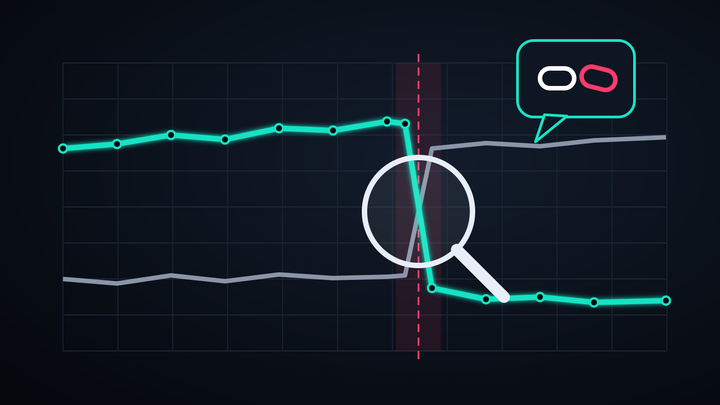
Here is what changed in twelve months. Adobe, which tracks over a trillion visits to US retail sites, reported that in March 2025 AI-sourced traffic converted 38% worse than non-AI traffic. By March 2026, the same measurement flipped: AI traffic converted 42% better.
Revenue per visit moved the same direction. A year ago, non-AI traffic was worth 128% more than AI traffic. In March 2026, AI-driven revenue per visit ran 37% higher. Engagement rate, 12% higher. Time on site, 48% longer. Pages per visit, 13% more. Every one of those metrics moved from "tourists clicking around" toward "buyers who already did their homework."
That is the part most retail teams still do not have in their dashboards. GA4 attribution is still largely blind to AI referrals unless someone specifically built the source classifications, and most measurement stacks lump this traffic under "direct" or whatever referrer string the AI assistant happens to send. So a retailer can be quietly making more money per AI visit than per paid search visit and have no way to prove it to finance.
Adobe's dataset is large enough to trust on direction. Over a trillion visits through US retail sites and a survey of more than 5,000 respondents is not a single-brand anecdote. The magnitudes will vary by vertical, but the sign of the effect has flipped for the industry as a whole.
Why AI Visitors Are Actually Worth More
The simplest explanation is selection bias in the shopper's favor. Someone asking ChatGPT "what is the best waterproof jacket under $200 with good reviews" has already done the research. The AI surfaces three options. They click through. They land knowing the price range, knowing what to expect, and pre-screened against alternatives they never bothered to open.
Adobe's survey of over 5,000 US shoppers backs this up. 39% said they used AI assistants for online shopping. 85% said the tools improved their experience. 66% said AI provides accurate results when shopping. Those numbers do not describe skeptical first-time users. They describe repeat buyers whose AI tool did the shortlist work before the retailer's homepage even loaded.
The implication for paid search is uncomfortable. If AI traffic converts 42% better on a zero-cost referral basis, and paid search traffic is the baseline, every dollar of Google search ad spend is now competing against a channel that looks better on both revenue per visit and engagement. Most brand teams have not run that comparison. The ones who have are quietly testing how much paid search budget they can reallocate to AI visibility work. We saw something similar with Dell's AI commerce ranking: the traffic source was real, the conversion path was not.
The Optimization Gap That Is Costing Retailers
This is where the Adobe data gets awkward. Roughly 34% of product pages across US retailers are inaccessible to AI crawlers. About 25% of homepage and category page content is not optimized for LLM parsing. One in three product pages is effectively invisible to the channel that now outconverts everything else.
The usual culprits are easy to list. JavaScript-rendered prices and descriptions that AI crawlers cannot see. Product schema missing offers, availability, or price fields. robots.txt blocking GPTBot or PerplexityBot. Pages gated behind shopper accounts or regional detection that fails without a cookie header. None of these show up in conversion reports until someone specifically goes looking for them.
From what I have seen, the retailers with the best AI referral conversion are the ones who treat their product pages like API responses. Clean HTML for the critical content. Schema.org markup that covers product, price, availability, and reviews. Short, declarative product descriptions instead of flowery brand copy that AI summarization garbles into nonsense.
What the Holiday Spikes Tell You About Q4 2026
If 393% year-over-year growth in Q1 feels steep, the holiday numbers are worse. Adobe reported AI-driven retail traffic rose 693% during the 2025 holiday season. November 2025 hit 769% YoY. December landed at 673%.
That is not a seasonal bump. That is a structural shift in how people find products during the one quarter retailers actually care about. For context, March 2026 standalone still posted 269% YoY growth, so the Q1 number is not a holiday hangover. It is the new baseline.
For anyone building a 2026 holiday plan right now, the signal is clear. A meaningful share of conversions will come through an AI assistant. If those pages are not clean and crawlable by late summer, the lift from the rest of the funnel is going to look muted because the highest-converting traffic source is walking into a 404.
The One-Hour Product Page Audit
Here is the fastest way to find out where you stand. Pick your top twenty SKUs by revenue. For each one, do three things.
First, ask ChatGPT, Gemini, and Perplexity for a recommendation in your category ("best wireless earbuds under $150," "women's running shoes for flat feet," whatever matches your catalog). Note which of your SKUs get mentioned. Anything not cited, dig into why. Usually it is missing schema or thin metadata.
Second, pull each page through Google's Rich Results Test and confirm Product schema is present with price, availability, aggregate rating, and review count. If any of those are missing, they are cheap fixes that land in the next dev sprint. The same study that looked at what gets cited in ChatGPT pointed at structured metadata as one of the stronger signals.
Third, spot-check your robots.txt and crawl-delay rules. Plenty of retailers blocked GPTBot in 2024 as a reflex and never revisited the decision. That block was reasonable when AI traffic was worthless. It is a line-item cost now.
None of these steps require a new agency engagement or a platform migration. The gap between retailers who convert AI traffic at 42% above baseline and retailers who lose it to a broken parse is usually a week of product page work, not a strategy overhaul.
The Quiet Reallocation Is Already Happening
The simplest read is that the measurement finally caught up with consumer behavior. Retailers who run the comparison honestly are finding AI traffic worth more per visit than paid search, worth more per visit than non-AI organic, and rising faster than any other channel in their stack.
I do not think the winners here will be the ones who spend the most on SEO or the most on LLM optimization consulting. It will probably be the ones who treat their top-converting product pages like they treat their checkout flow: obsessive, machine-readable, and relentlessly tested against what the actual traffic source expects to see.
Notice Me Senpai Editorial