Burger King Beat Nike at a Marathon Ad by Showing Runners Too Tired to Stand
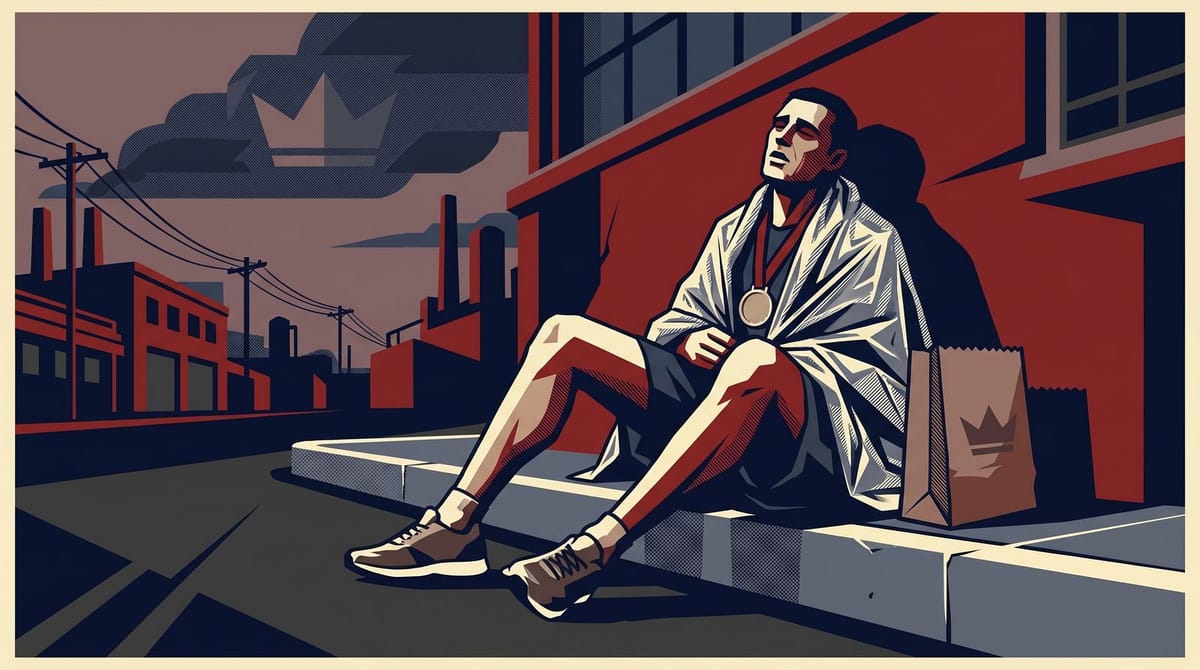
Burger King's London Marathon out-of-home ad hit a 4.3 Star Rating on System1's effectiveness scale on April 22, 2026, placing it in the top 6.2% of all UK outdoor creatives. Nike's competing parkrun campaign got pulled the same week after parkrun UK called the messaging elitist. The variable separating them was empathy: Burger King showed wrecked finishers eating, while Nike told weekend joggers to leave the park.
The Burger King creative is called "Finished." It is exactly what it sounds like. A runner sits on the curb in a foil blanket. Medal still around their neck. A Burger King in front of them. They are not posing. They are not endorsing. They are just done.
That image is what System1 measured.
What System1 actually measured
System1's Test Your Ad uses facial coding (FaceTrace) to score creative on three metrics: Star Rating, Spike Rating, and Fluency. The Star Rating predicts long-term brand growth. The category average for UK outdoor creative is around 2.5 Stars.
Burger King's "Finished" hit different numbers depending on the audience.
In a fitness-interested, urban, 18 to 44 sample, the ad scored 4.3 Stars and a Fluency Rating of 91, which means roughly 91 out of 100 people remembered the ad was for Burger King. Spike Rating came in at 1.12 (above the 1.0 baseline that predicts a short-term sales lift). Emotional Intensity was 1.61, which is high.
In the nationally representative sample, the same creative dropped to 2.4 Stars. Still respectable for outdoor, but not the top-decile number that has been getting passed around. Fluency held at 85.
Two nuances most coverage skipped:
- Happiness response landed at 44%, against a category average of 30%.
- Older audiences barely engaged. The 55+ cohort scored 1.0 Stars, which is essentially "nothing happens."
I think this is the more interesting story than the headline. Burger King didn't make an ad that works for everyone. They made an ad that works extremely well for people who run, or who relate to running. It is targeted creative being reported as universally great. The ad isn't universal. It is specific. That specificity is the entire reason the score is high. If you want to learn from this campaign, copy the specificity, not the burger.
The official System1 report is public and worth reading if you ever brief OOH.
Nike spent the same weekend apologizing
While Burger King was hitting top decile on a marathon ad, Nike was taking down its London parkrun campaign. The activation featured signage in Crystal Palace Park, Brockwell Park, and Peckham Rye telling weekend runners "You didn't come all this way for a walk in the park" and, on small wayfinding signs, "Runners only."
This is the same Nike that, two weeks earlier, pulled a "Walkers Tolerated" sign from its Boston Marathon storefront after runners spent the weekend posting it as the most tone-deaf brand activation of the year. Adweek covered the broader pattern of Nike's "Never Again" London Marathon backlash in a separate write-up the same week.
Kirsty Woodbridge, head of communications at parkrun UK, called the Nike parkrun signage "elitist messaging" on LinkedIn. Nike apologized within roughly 24 hours, saying it had "missed the mark" and would "use this moment to do better and continue showing up for all runners."
That is two apologies in two weeks for the same idea: that running is a closed club for serious people only.
System1's framing in the comparison report called Nike's approach "comparatively lifeless, inaccessible, and rooted in fitness stereotypes." That phrase is doing a lot of work. The honest read is that Nike's brand assumes elite identity. Burger King's brand assumes you are a person, possibly a tired one, possibly hungry. One of those assumptions is true for almost everyone on a marathon weekend.
The empathy gap is a category line, not a creative choice
Here is the part most agency presentations are going to miss when they reverse-engineer this study next week.
Burger King has been running a specific creative pattern for almost a year. The 2025 "Bundles of Joy" work showed new mothers in hospital beds, eating Whoppers right after delivery. It worked. "Finished" is the same idea applied to runners. Sweaty, exhausted, real, eating. The pattern is consistent enough that I'd bet money the next one is a graveyard-shift nurse or a postpartum dad. They are not making one-off campaigns. They are stacking proof points around an emotional thesis: that food at the worst moment is when food matters most.
Nike's campaign isn't a creative misstep. It is the brand telling the truth about what it sells, which is performance gear for people who self-identify as runners. The problem is that marathon weekend is the one moment of the year where casual runners outnumber serious ones by an order of magnitude. Telling them to leave the park, even in a winking way, reads as a category-level statement of who Nike thinks deserves the brand.
In most cases I've seen, the brands that struggle on emotional measurement aren't making bad creative. They're making creative that flatters their existing customer instead of recruiting the next one. Nike's signage spoke to current Nike runners. Burger King's spoke to anyone who has ever felt wrecked at the end of a hard thing. One of those audiences is a lot bigger.
A 5-second test before your next OOH brief
If you want to copy what Burger King did, do not copy the foil blanket. Copy the question they asked before they wrote the brief.
Look at your campaign concept and ask: who is the person in the frame, and is the moment in the frame the moment they would actually be in? Not the moment after they win. Not the moment they buy your product because they are an aspirational version of themselves. The actual moment.
A working benchmark from "Finished": the runner depicted in the campaign had a finish time of 4:36. That is roughly the median London Marathon finish time. The ad is not aimed at the 2:15 elite. It is aimed at the 4:36 average. If your OOH features people who would finish in the top 5% of whatever activity you are showing, your ad is for the top 5%, and your Star Rating will reflect that scope.
System1's category average is 2.5 Stars for UK outdoor. A 4.3 with a custom audience tells you the ceiling is real. A 2.4 in nat rep tells you the ceiling is also limited by who self-identifies into the moment. Both are useful numbers. If you brief outdoor in the next quarter, ask your agency for the System1 benchmark and the targeted audience cut, not just the panel-wide one. The variance across the two is where the actual creative problem lives.
What gets memorialised, what gets ignored
Burger King's last two creatives in this register, "Bundles of Joy" and "Finished," will get studied in agencies. The Nike parkrun campaign will get studied too, but as a cautionary tale. NMS already covered another brand stunt that worked off lived emotion rather than aspiration in The Tearquilizer, and earlier this month, Marc Jacobs adopting the microdrama format showed the same instinct: hand the camera to a real moment, not a polished version of one.
For most brands, the actionable read of this study isn't "make a Burger King ad." It is: stop briefing the trophy shot. Brief the recovery shot. Brief the moment your customer is sitting on a curb, sweaty, vaguely embarrassed, hungry. That is the ad. The trophy shot is the distraction.
And to be fair, Nike has the brand equity to absorb this and pivot. The data is too loud to ignore. The next brand brief that crosses my desk asking for "aspirational athletes in motion" is getting flagged.
Notice Me Senpai Editorial