QSR Brands Hit ChatGPT First Because You Don't Comparison-Shop a $5 Pizza
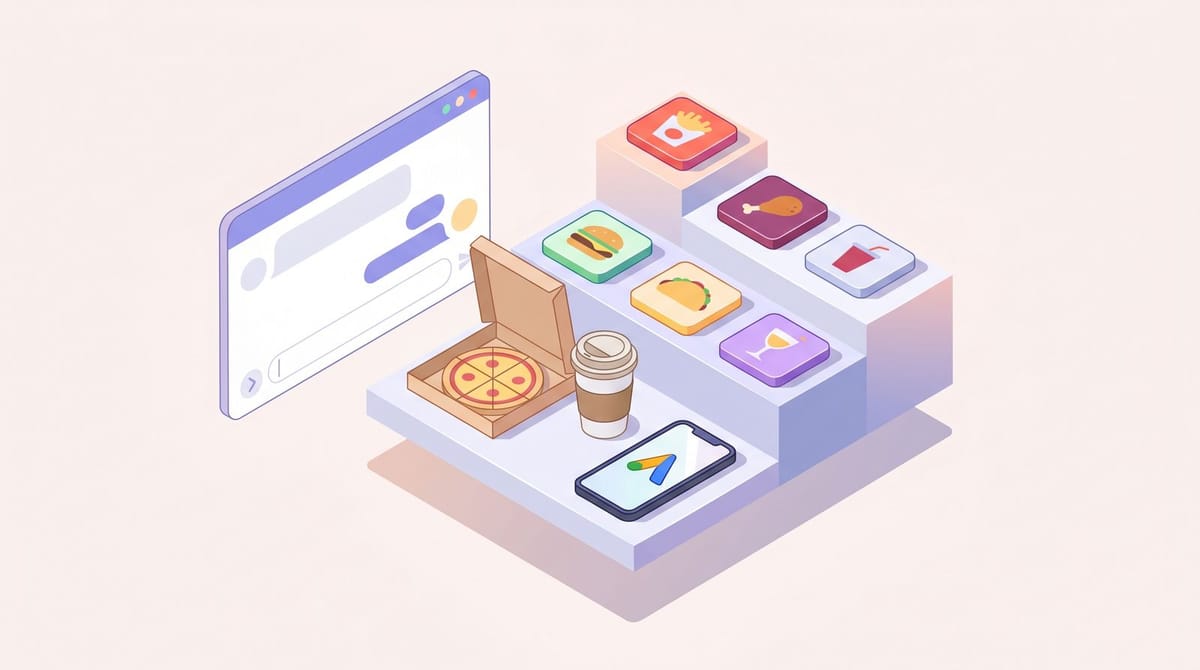
Little Caesars launched its ChatGPT app on April 16, 2026. Starbucks rolled out a beta the day before, and Burger King's app is already live in the OpenAI directory. All three brands sell single units priced under $10, which is not an accident. ChatGPT's commerce surface rewards impulse SKUs over consideration purchases, and the App Directory's first commerce wave is shaping up to look almost entirely like quick-service food.
Walmart and Etsy could ship. They haven't.
ChatGPT hit 800 million weekly active users in October 2025 and 900 million by February 2026. That's a customer base larger than every retailer's loyalty program combined. The Apps SDK launched in preview at DevDay 2025, third-party submissions opened that December, and consumer rollout began earlier this year.
Walmart, Etsy, and Booking.com are publicly testing the surface. None of them have shipped a working national transaction flow the way Little Caesars has. They could. They haven't, because the purchase shape doesn't fit yet.
A pizza order has roughly three variables: how many pies, what toppings, when. A coffee order has two: drink and customization. A washing machine has thirty: brand, capacity, energy rating, dimensions, finish, warranty length, delivery window, installation, removal of the old unit, financing, and so on. ChatGPT can handle three variables conversationally without making a customer feel like they are filling out a form. It cannot really handle thirty, at which point you have rebuilt the same category page someone could already get from Google.
What Little Caesars actually shipped
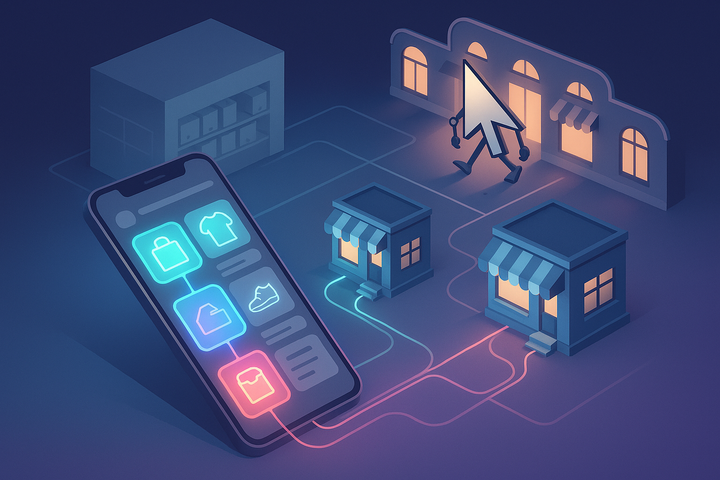
The Little Caesars build is, mostly, a deep-link wrapper around the existing mobile app. ChatGPT collects the order parameters (party size, dietary needs, budget) and hands off to the Little Caesars app for checkout and pickup. According to the PR Newswire announcement, the system "crafts personalized meal recommendations" based on conversational inputs, then deep-links into the existing Little Caesars app for payment. Nation's Restaurant News reported the launch covers the entire US plus much of Canada and Mexico from day one.
What's worth noting is what they didn't try to build. There's no in-ChatGPT payment, no loyalty integration, no native upsell flow inside the chatbot. OpenAI's current rules only allow link-outs for physical goods anyway, and selling digital goods or subscriptions inside ChatGPT is still off-limits. Little Caesars effectively treated that constraint as a feature: smallest possible bridge, ship in April, iterate later.
National rollout on day one (rather than a 50-store pilot) probably matters more than the technology itself. The App Directory is small enough right now that being the only major pizza brand on it means you collect almost all of the pizza-related conversation traffic by default.
Starbucks went discovery, not ordering
The Starbucks beta is a different play. You invoke @Starbucks in ChatGPT, describe your mood (or upload a photo that captures your vibe), and the app suggests drinks. Checkout still happens in the Starbucks app or on starbucks.com. The launch details are on Starbucks Stories, and CNBC's coverage framed it as a play to bring US customers back into cafes.
Starbucks regulars don't really struggle with whether they want a coffee. They struggle with picking from 87 menu drinks once they're already in line. ChatGPT collapses that menu into a conversation, and that is, on paper, a useful trade. Whether mood-based picking actually drives repeat behavior is the part nobody has data on yet, which is probably why Starbucks has been carefully calling this a beta and not a launch.
Burger King's app is the quiet one
Burger King has a live ChatGPT app in the directory, but the brand's bigger 2026 AI bet is internal. They're piloting "Patty," an OpenAI-powered headset assistant in 500 restaurants, plus the BK Assistant umbrella platform that ties point-of-sale, kitchen equipment, and inventory into a single tool.
The ChatGPT-facing app reads more like brand presence than commerce volume right now. There hasn't been a Little-Caesars-style nationwide order-builder announcement out of Burger King yet. It looks more like real-estate insurance: be in the directory before the directory matters. Given how aggressively the brand has invested in OpenAI on the operations side, planting a flag on the consumer side too is consistent with the broader posture, even if the consumer app doesn't ship meaningful order volume this quarter.
The unit-economics test for whether your category fits
Here's the heuristic I'd use to decide whether your brand should be scoping a ChatGPT app right now. Ask three questions about your average transaction:
- Does the unit cost less than $10?
- Can a buyer make the decision without comparing competitors first?
- Are there fewer than five variables involved?
Three yeses, scope the build. Any no, you're in the consideration zone, and the smarter play this year is structured-data work, so AI Overviews and ChatGPT can cite your reviews, specs, and pricing accurately when a buyer asks. Browser agents from Anthropic, Google, and OpenAI are already pulling product data from sites that have clean schema, so the boring version of the same opportunity is open for nearly everyone in the consideration tier.
Categories that fit the test naturally: meal kits, coffee chains, fitness booking, single-item food delivery, ride hailing, parking, beauty appointments, and most one-off services like haircuts or oil changes. Categories that don't: furniture, appliances, mortgages, B2B SaaS, anything with a salesperson involved, anything where buyers expect to compare three options before committing.
The 8-to-12 week build target
If you fit the test, the practical move this quarter is straightforward:
- Get on the App Directory waitlist now. OpenAI's review queue exists and approval is taking weeks, not days.
- Map your existing mobile-app deep links to a JSON schema the Apps SDK can consume. The Little Caesars launch is mostly deep-link plumbing dressed in conversational UX. If your mobile checkout already works from a deep link, you're roughly 60% of the way there.
- Pick one decision the customer hates making (the "what drink" problem, the "what combo" problem, the "build my own" problem) and make that the entry point.
- Benchmark: a working v1 should land in 8 to 12 weeks of engineering time if your existing app supports deep links. Anything over 16 weeks usually means you're trying to rebuild commerce inside ChatGPT, and that's probably the wrong scope for this version of the product.
The directory is small now and that's the entire opportunity
The ChatGPT App Directory has roughly 30 named partners as of April 2026. By December it will have hundreds, possibly thousands. The first wave is QSR because QSR is shaped right for the surface. The second wave will be everything that can be reduced to fewer than five variables and a sub-$30 cart. By the time the third wave ships, the early movers will already own the conversational shelf for their category, and OpenAI will probably have introduced auctioning or featured placement, which would mean free distribution stops being free.
I'm genuinely uncertain about conversion rates inside ChatGPT, and so is everyone else who has shipped so far. Nobody has clean numbers on basket size or repeat usage yet, and the first round of brand-side data probably won't surface publicly until late summer. What seems clearer is that the cost of being on the directory in April 2026 is roughly the cost of one mobile-app sprint. The cost of not being there in 2027 is unknowable but probably not small. If your unit economics fit the test, that's a fairly easy bet to take this quarter.
Notice Me Senpai Editorial