Expedia Picked the 150M-Sub Streamer Most Travel CMOs Wouldn't Touch
Expedia named IShowSpeed its Official Travel Partner on April 29, 2026, launching with a 12-hour Caribbean livestream across Dominica, Guadeloupe, St. Kitts and Nevis, and St. Maarten. The 150-million-follower creator's six-second teaser cleared 12 million YouTube views before the campaign officially went live. Two prize-winning trip winners get announced by end of September, which is the only piece of this deal that has hard attribution math sitting behind it.
Twelve million teaser views are the only number Expedia can walk into a CFO meeting with right now
Six seconds of footage. 12 million views before the partnership officially went live. That's the metric Natalie Wills, Expedia's SVP of brand marketing and creative, gets to walk into the next quarterly review with. The booking-side number, two winners announced by September, sits at the bottom of the official BusinessWire announcement and Ad Age's coverage for a reason. This is positioned as a brand investment, not a performance one.
Creator deals at this scale are reach plays dressed up as performance plays. When your talent has 150 million followers and your stated KPI is "trip booked plus completed," the funnel collapses to a sweepstakes. The actual lift sits in app downloads, brand search, and direct-traffic spikes around the Wednesday livestream. None of that is going to be cleanly attributable. According to the Simon-Kucher 2026 Global Travel Trends study, social media influences travel decisions for more than half of younger travelers globally, with India at 70% and the UAE at 65%. Among Gen Z specifically, 59% look to Instagram, 54% to YouTube, and 47% to TikTok for trip inspiration. Expedia is going where the eyeballs are. The question is whether they paid a defensible CPM to get them.
Why most travel CMOs ran the same math and walked away
Most brands hire creators with 1M to 10M followers because the brand-safety math is forgiving. Smaller audience, more accountability, more leverage on the contract. The YouTube creator marketing study summarized by PPC Land pegged creator trust at 79% among Gen Z and a 2.3x long-term ROAS advantage over paid social. That's why budget keeps moving toward creators in general. But the study covers a wide tier of midsize creators, not chaos-tier livestreamers with 150M-sub reach.
Expedia did the opposite. They went biggest possible audience, highest possible chaos. The track record around IShowSpeed includes a Pikachu firework stunt that nearly set his room on fire, a Valorant ban for sexist remarks during a match, distracted-driving footage that reignited streamer-safety debates, and the 2022 Qatar World Cup "konnichiwa" incident toward a Chinese spectator. He has also held down a $10 million Prime deal, a multi-year Twitch contract, plus Beats by Dre, Dick's Sporting Goods, and Doritos, per a streaming-economy newsletter that maps his endorsement history. Brands keep coming back because the audience keeps showing up. Travel CMOs in particular have always sat that conversation out.
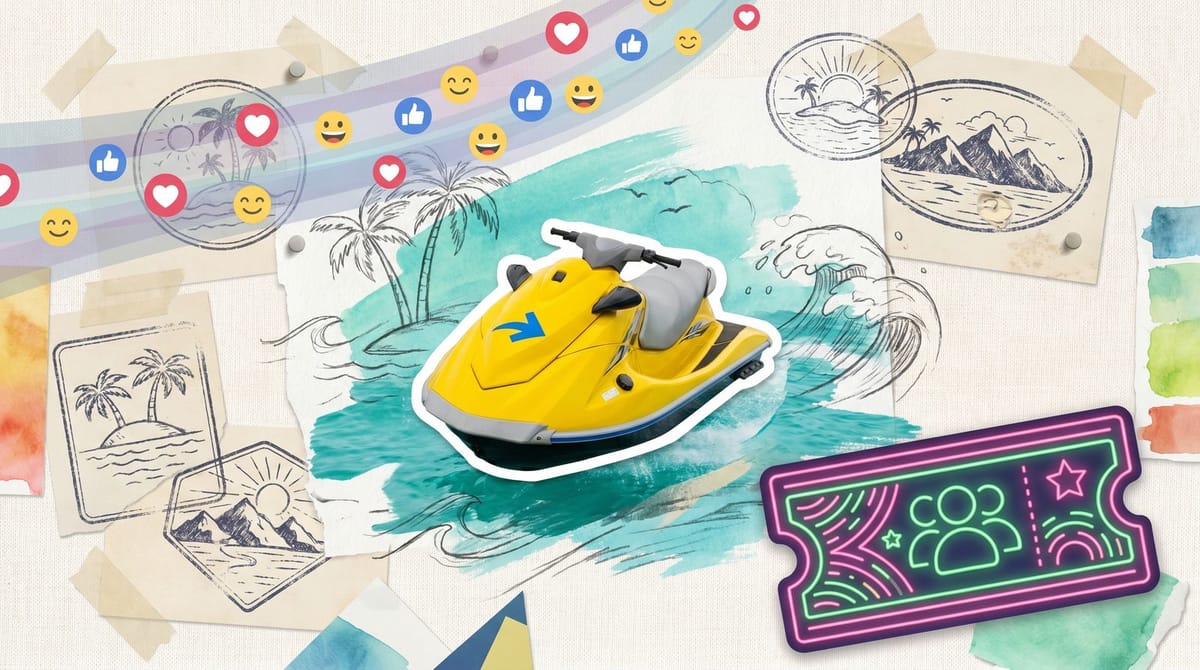
Travel is structurally different from snacks and headphones. Travel brands answer to legal, to insurance carriers, and to a P&L that bends the moment a single livestream becomes a viral safety incident on a yellow-branded Expedia jet ski. From what I've seen, that's the math most travel brands ran and quietly closed the deck on. The interesting part is that Expedia ran it and signed anyway. Either they negotiated a contract that prices the risk in, or they decided the upside curve from this audience is too steep to leave alone.
The booking gate is the part nobody is calling out
Read the announcement carefully. To enter the meet-IShowSpeed sweepstakes, fans in the U.S., Canada, and Mexico have to book and complete a trip via Exspeedia.com. Two winners. Plus-one allowed. Announced by end of September. That is the actual attribution mechanism. Not vanity views. Not livestream peaks.
The booking gate forces three things: an Expedia account, a trip booked through an instrumented sub-domain, and a trip that gets actually completed (which filters cancellations and bot signups). You can run a clean cohort against that. Compare cost per completed trip in the Speed cohort against the standard paid-social Gen Z cohort. That is the number that justifies the deal internally, and honestly, it is the only one that should.
Most influencer deals fail attribution because the conversion event is "watched the video" or "clicked the link" or "claimed the promo code." Expedia tied the upside to a completed transaction with revenue attached. From what I have seen, that is roughly the cleanest attribution any travel brand has built into a creator contract this year. The downside: by gating the prize behind trip completion, Expedia caps the entry pool to people who can already afford to travel internationally. Fine for ROAS. Awkward for the "Gen Z brand affinity" goal also stated in the announcement. So the deal has a measurable conversion floor and a fuzzier brand ceiling. Both real, just not both measurable.
Three things to copy if you are writing a creator brief in 2026
Pick your KPI first, the creator second. Reach goal, you go biggest. Conversion goal, you go smallest creator that actually maps to your buyer. Expedia picked reach and then built a conversion gate so the deal could be defended in both directions inside the company. That structural move is worth copying even if the talent choice is not.
Treat brand safety as an insurance line item, not a veto. Big creators with controversy histories are often cheaper to lock down with morality clauses, escrow holds, and tiered payouts than they look on the surface. A clause that says "you do not get the next $500,000 if the next stunt makes the news" changes the risk profile in a way most brand-safety committees can sign off on. That is closer to how sponsors of athletes have priced reputational risk for decades.
Build the booking instrumentation before you sign the contract. Exspeedia.com lives on a separate sub-domain because the analytics and the prize logic both need to live there. Most brands negotiate the creator first and bolt on tracking after. That is how you end up with a $1M deal and a "reach impressions" deck. The same lesson keeps repeating in the affiliate stack. NMS covered Impact.com absorbing Rakuten's affiliate stack earlier this week, and the underlying point is the same: the rails decide the math, not the deal.
Where this lands by Q3
I think most travel CMOs watching this won't replicate it because the brand-safety committee will kill it before the contract draft. The handful who will are the ones who already pulled budget out of paid social and need a wedge into Gen Z that Meta and Google can't quote them a clean CPM for. There is a version of this where the Caribbean tour goes fine, two winners get their photo with Speed in September, and Expedia rides a 9-month tailwind on Gen Z brand search. There is another version where week three involves a banned mod, a hospital visit, or a country-jersey incident, and Expedia's general counsel is on the phone before lunch.
Both versions are real. The booking gate is the part of the architecture that makes the first version cheap to extend and the second version walk-awayable without a write-off. That is the piece I would be studying if I were planning a creator brief for the back half of 2026, more than the talent pick itself.
Notice Me Senpai Editorial