Impact.com Just Absorbed Rakuten's Affiliate Stack Without Buying It

Rakuten and Impact.com announced a strategic alliance on April 28, 2026, naming Impact as the exclusive technology platform for Rakuten Advertising's affiliate network. Rakuten's merchants and publishers will migrate to Impact's platform over time, while Rakuten retains its Rewards cashback business and managed services arm. Together the two networks hold roughly 14% of affiliate market share, second only to Amazon Associates.
What actually changed (and what didn't)
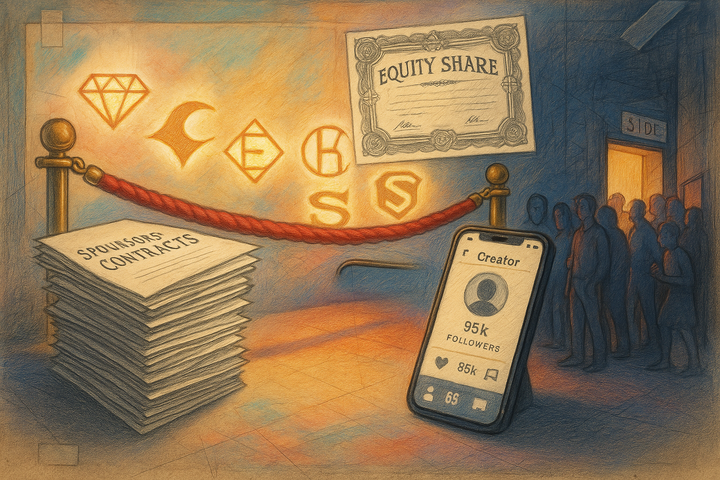
This is not an acquisition. No equity moved, no dollar figure was disclosed, and both companies will continue to operate as separate businesses. What did move is Rakuten Advertising's platform layer. Tracking, contracting, payments, and partnership infrastructure now run on Impact. Rakuten gets a new top-tier label called "Titanium Partner" inside Impact's network, plus continued ownership of Rakuten Rewards and the managed services people actually pay Rakuten Advertising for.
The plain-English version: Rakuten quietly stopped competing with Impact on technology and reframed itself as Impact's largest customer-slash-publisher. The "Titanium Partner" tier reads like a face-saving device. It exists because Rakuten is too big to be classified inside the existing Impact ecosystem without a custom designation. CEO Amit Patel said the alliance "isn't about stepping away from technology" and that Rakuten will "continue to invest in AI, measurement and automation." From what I've seen, when companies use that exact phrasing, they have stepped away from technology in the way that matters: building the core stack.
Why this lands differently from the usual martech consolidation
Affiliate has spent two decades as the channel marketers funded last and audited never. Five players controlled most of the volume outside Amazon: Rakuten, CJ Affiliate, Awin, ShareASale, and Impact. According to wecantrack's market share data, Amazon Associates sits at 46.11% globally, with Rakuten at 7.78%, Awin at 6.68%, ShareASale at 6.46%, and CJ at 6.24%. Impact does not appear on that consumer-facing ranking because its share is concentrated in enterprise SaaS and brand direct, not consumer goods.
Folding Rakuten's tech into Impact collapses two of the five non-Amazon stacks into one. If you ran a program on both, you used to negotiate against two roadmaps and two pricing teams. Now you negotiate against one. The remaining counterweights, Awin and CJ, are owned by Axel Springer/United Internet and Publicis respectively, both of which have their own publisher and ad-tech priorities. The number of independent enterprise affiliate platforms is dropping, not growing.
For practitioners, the question is whether your tracking, your payout schedule, or your fraud rules are about to shift under you. Impact's contract terms, attribution windows, and fee structure are not identical to Rakuten's. Migrations of this size historically renegotiate the line items that nobody reads in the original contract.
The contracts most at risk
If you are a Rakuten Advertising merchant, here is what tends to slip during a platform migration. Default attribution windows often shorten when networks unify, because the receiving platform standardizes on its own model. Cookie durations and last-click rules can change without a notification email. Override commissions on top publishers, the kind that get hand-negotiated by your account manager, sometimes do not transfer cleanly when partner records get re-imported. Promo code rules and coupon affiliate behavior frequently get reclassified.
The actionable move is to pull your Rakuten Advertising contract today and screenshot four things: your attribution window, your fee structure on managed program services, your override commission table, and the publisher exclusivity clauses. Those are the lines most likely to be reset during the migration. If the new Impact-hosted version of your program does not match, you have negotiating room during the cutover that you will not have six months in.
For publishers and creators on Rakuten LinkShare, the migration creates a different problem. Your historical performance data, the thing you use to renegotiate higher commissions, lives in Rakuten's reporting tools. The clean migration of that history into Impact's analytics is not a guaranteed outcome. Export your last 24 months of performance reports before any cutover starts. Worst case, you lose the negotiating record. Best case, you have it cleanly archived for the next quarterly review.
The "partnership marketing" framing matters more than it sounds
Impact CEO David Yovanno told AdExchanger that affiliate has been "that awkward kid" in advertising and that the rebrand to "partnership marketing" reflects a real shift. He's pitching the category as positioned to "compete with major channels like Google, Amazon and Meta." That phrasing is doing strategic work. It signals where Impact wants to take pricing.
The CPMs and CPCs that Meta, Google, and Amazon command sit roughly an order of magnitude above the cost-per-acquisition that affiliate networks have historically been priced on. Repositioning affiliate as a peer channel is the precondition for raising platform fees, not the consequence of having raised them. If you are budgeting affiliate as a low-fee, performance-only line item for 2027, that math may not hold. Patel's own quote in HelloPartner points at it directly: "Affiliate is no longer just a channel; it's becoming more data-driven and directly tied to real business outcomes." Translation: it costs more.
What this looks like for the rest of the stack
Awin and CJ now have a window. The next 90 days are the best opening either of them has had in years to win Rakuten merchants who don't want to migrate to Impact's terms. Expect aggressive pitches with concession-heavy contracts. If you have a Rakuten program and you've been curious about Awin's coverage in EMEA or CJ's enterprise tooling, the answer to most of your asks is "yes" right now. It will not be in twelve months.
For SaaS and B2B advertisers already on Impact, very little changes operationally. The platform inherits Rakuten's consumer brand catalog and a chunk of cashback inventory. That's mostly upside if your program competes for placement against Rakuten Rewards. The publisher pool gets bigger and the auction for premium placements gets noisier. Some of the placements that used to be Rakuten-exclusive are about to open up.
I think the underrated piece here is what Rakuten Rewards becomes. Cashback used to feel like an end-of-funnel commodity placement. Inside Impact's platform, with Rakuten's 30+ million cashback members tied to Impact's tracking layer and contracting tools, it can be packaged as a discrete inventory product with its own pricing. That's a more interesting asset than the affiliate network was on its own.
Where this leaves your roadmap
The merger itself isn't the surprise. Affiliate has been due for consolidation since the cookie deprecation noise of 2022 made it clear that fragmented tracking was the channel's biggest liability. The surprise is the structure: Rakuten kept its brand, kept Rewards, and quietly off-loaded the tech bill. That's a smart move for a Japanese parent company that has been trying to simplify Rakuten International's operating costs since 2024.
For NMS readers running paid affiliate programs, the next 30 days are the audit window. After that, you'll be negotiating against migration timelines, not contracts. We covered a related piece on consolidation pressure last quarter when Target pulled creator commissions in favor of a gamified gift-card model, which suggested major retailers were already losing patience with traditional affiliate economics. This alliance is the platform-side answer to the same pressure.
The clean version of this story is that one network bought a customer. The honest version is that the affiliate industry just admitted it can no longer afford five tracking stacks, and the consolidation is starting from the top. Worth pulling your contract today.