Colin Rocker Took Equity in Favikon Because 80% of Creator Deals Pay Under $300

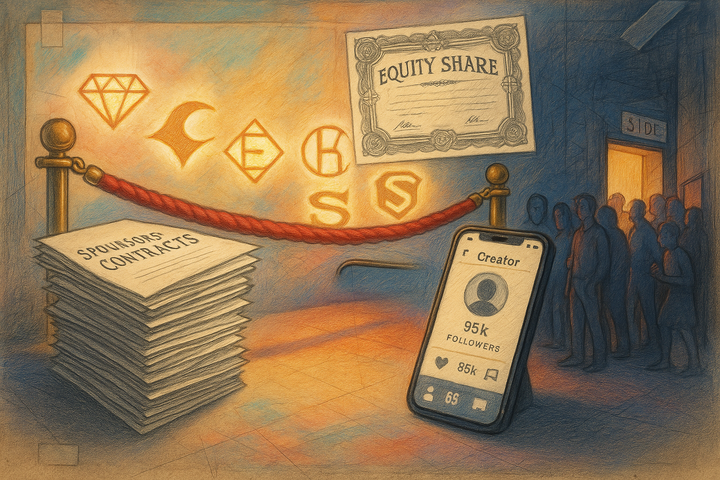
Colin Rocker, a 420,000-follower career creator whose income runs 85 to 90 percent brand sponsorships (Microsoft, Adobe, Apple, Ally Bank), took his first equity stake in May 2026 with creator-marketing platform Favikon. The trigger is structural. About 80 percent of US influencer deals close under $300, and total US influencer spend will hit $13.7 billion by 2027. The dollars are moving toward creators who own the asset, not just the post.
The math that broke first
Sponsor income is anti-fragile right up until it isn't. Rocker's deal sheet looks great on paper: Microsoft, Adobe, Apple, Ally Bank. All blue chip, all renewable, all paid up front. Then he says the quiet part out loud, in his Digiday interview: "I am a creator, I have this big audience, I'm making great money, but Meta, LinkedIn or TikTok could flip a switch."
That sentence is the entire creator economy compressed into 25 words. The platforms own distribution. Brands own the budget. Creators own a list of past deals and a follower count that's effectively rented from whichever algorithm is currently in mood.
eMarketer's most recent forecast pegs US influencer marketing at $10.5 billion this year, climbing to $13.7 billion by 2027. Looks like a tide that lifts all creators, right? It isn't. Nearly 80 percent of US influencer collaborations cost under $300 per post. The headline number is mostly being captured at the top of the pyramid, by macro creators, agencies, and platforms taking the spread.
For a micro or mid-tier creator, that means scaling sponsorships looks more like running a small ad agency with no operational moat than building a defensible business. And the operational ceiling is low. There are only so many integrations a 420K-follower account can run per month before the audience starts feeling like a billboard.
What "ownership" actually means at this tier
The Favikon deal isn't an exit. It's a seed investment with undisclosed financial terms. What Rocker bought is a position in the company whose product his audience already lives inside, which changes the calculation in a useful way.
That's a different vehicle than the macro-creator playbook of launching a Mr Beast Burger or a Prime energy drink. Most micro-creators don't have the audience size, the working capital, or the unit economics to turn a CPG brand into anything but a pile of returnable inventory and a humbling DTC P&L. Equity in tooling and platforms behaves differently. Lighter capital, SaaS-like margins, and the creator's audience pulls double duty as customer pipeline and credibility test.
The trade is also smaller: an equity slug instead of millions in upfront cash, and a payoff window measured in years. From what I've seen, this is roughly the line between creators chasing peak earning years and creators trying to compound something past them.
There's a quieter signal in Favikon's choice too. They picked a creator on LinkedIn, not TikTok or Instagram. LinkedIn audiences convert into B2B SaaS pipeline at rates the consumer platforms don't touch. If you're a micro-creator on a B2B-leaning platform and a tools company hasn't pitched you on equity yet, that's probably the next email coming. The same consolidation pattern is showing up across affiliate infrastructure too. We wrote about Impact.com absorbing Rakuten's affiliate stack last week, and the dynamic is identical. The platform layer is quietly absorbing the value that used to sit with publishers and creators.
Where the equity model stops working
Sway Group CEO Danielle Wiley puts the awkward part on the table: "That feels like a risk that most, certainly in this economy, most people are not able to take." Most creators can't afford to substitute deferred equity for current income. They're paying rent against a follower count and a quarterly invoice cycle.
Jennifer Quigley-Jones at Digital Voices made the structural point: equity deals scale for macro creators, but they don't scale easily for micro or mid-tier creators. The ones with the audience to be useful to a Series A startup are also the ones with the highest opportunity cost of skipping a $5K sponsorship slot. There's a real selection problem here that most "creators are becoming founders" takes skip past.
So the realistic version isn't equity replacing sponsors. It's equity layered on top of one or two sponsor slots a quarter, sized so it doesn't dent take-home pay. A creator who can walk into a B2B SaaS conversation with 50K to 500K niche followers and ask for advisor shares (something like 0.1 to 0.5 percent vested over two years) in exchange for six to twelve months of integrated content is closer to the deal that actually works at this tier. It's not as romantic as "creator-founder", but it is far easier to actually close.
The other thing nobody likes to say: most equity offered to creators is going to be worth zero. Series A startups die. Tools get acquihired with no payout for advisors. You should be running this portfolio with the same expected-value math you'd apply to a small angel check, not the "this could change my life" framing the press loves.
Three moves before someone offers you advisor shares
- List the platforms and tools your audience already uses where you're effectively driving conversions for free. That's your inbound equity-pitch list. Sort it by which ones already responded to a tag or a mention in the last 90 days.
- Build a one-page rate card that includes a "partnership with equity component" line, with terms drafted: advisor shares (0.1 to 0.5 percent), 24-month monthly vesting with a 3-month cliff, scope spelled out (content units per month, exclusivity carve-outs, IP rights). Most micro-creators get caught flat-footed when a founder asks "what would equity look like" because they have no template, and they end up taking whatever the first draft from the founder's lawyer says.
- Track sponsor concentration the way a services agency tracks client concentration. If any single sponsor is more than 25 percent of trailing 12-month revenue, that's the one to diversify away from first, not the one to deepen.
ThoughtLeaders' creator economy data shows 92 percent of brands now prefer sustained partnerships over one-off activations, and micro and nano creators are projected to claim 45.5 percent of total influencer marketing spend in 2026. The buying intent is sliding toward creators who can do something more than a single post. Equity is the cleanest way to capture that, when it's available, but it's not the only way to act on the same trend. Long-term retainer-plus-performance deals capture most of the same upside without the dilution problem.
The honest version
Rocker's deal will probably not return more than five years of his current sponsor income. That's fine. The reason it matters isn't the cash, it's the option value. He now has a stake in a piece of creator-economy infrastructure that benefits if creators like him keep getting bigger. Personally, I think that's a more interesting incentive structure than another six figures of Adobe brand integrations.
The thing nobody is saying out loud is that most micro-creators won't get an equity offer this year. The smaller, more durable signal worth noticing is that Favikon, with its own pitch deck to defend, decided putting equity into a 420K-follower creator was a better marketing investment than running a nine-month sponsorship deal at the same dollar value. That's a vote on where the long-term value actually sits in this market, and it isn't the post.
Notice Me Senpai Editorial