
GA4's New Data Manager Can Double Your Conversions 19 Days Before Black Friday
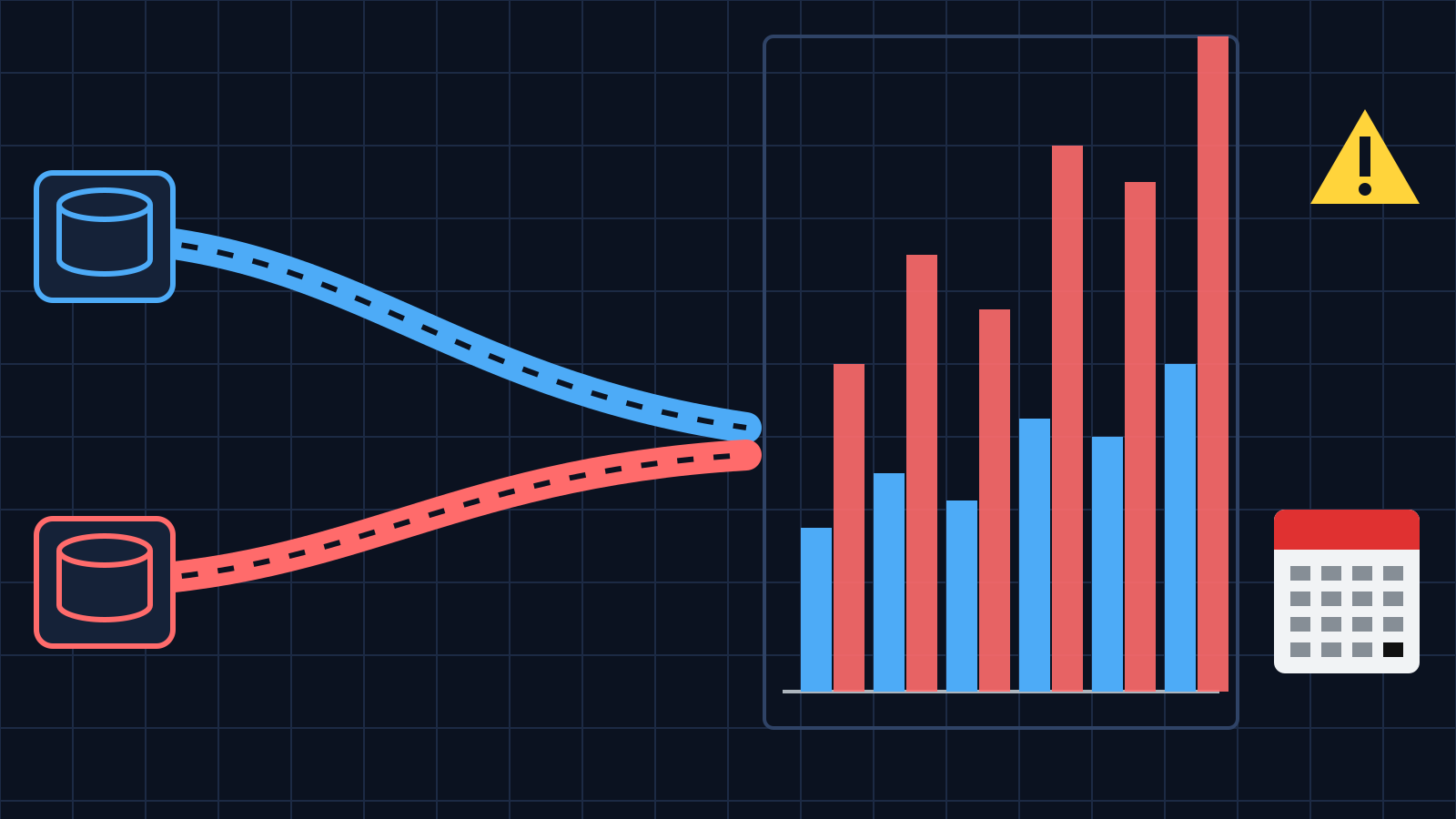
Google released Data Manager inside Google Analytics as a beta on November 6, 2026, giving GA4 its own hub for CRM, offline-file, and ad-platform imports. Its help page carries one warning that matters more than the feature: running an identical pipeline in both Analytics and Google Ads Data Manager "can log conversions twice." Audit every conversion source before Black Friday on November 27.
That warning is one sentence long. It sits in a help doc for a beta feature that launched on a Friday, three weeks before the biggest bidding weekend of the year. I'd guess most of the people it applies to will never read it.
And the people it applies to are not edge cases. If you spent the last year doing what Google told you to do (connect your CRM, upload offline conversions, feed Smart Bidding more first-party signal), you probably have a pipeline sitting in Google Ads Data Manager right now. Google is now nudging you to build the same thing in GA4.
What Google actually shipped on November 6
According to PPC Land's breakdown of the release, Data Manager in Analytics lives in the Admin area and pulls together data streams, product links, and first-party imports. It has a connection map that shows where data comes from and where it goes, plus diagnostics for broken connections. Sources include Google Tag Manager, CRM platforms, Google Ads links, and offline files. Campaign cost imports from Meta, TikTok, Pinterest, Snap, and Reddit route through it too.
Data flows one way: from Analytics out to linked Google Ads and Google Marketing Platform accounts. Google recommends using the Analytics version for future connections. Subproperties and roll-up properties are not supported yet, and there is no date for leaving beta.
None of this is a surprise if you've watched the rollout. Google's own Data Manager announcement page listed Analytics as "coming soon" alongside Google Ads, Search Ads 360, and Campaign Manager 360. The same page claims advertisers who connect offline and app data through Data Manager see a 26% average increase in incremental ROAS on Search campaigns bidding to conversion value (Google's figure, April 2025 to April 2026). That number is the carrot. It's also why so many accounts already have offline pipelines running in Ads.
The sentence Google buried in the help doc
Here is the line, as PPC Land quotes it: "Don't activate an identical data pipeline in both interfaces together, as this can log conversions twice."
The help page doesn't explain how duplicates are detected or reconciled. Which, honestly, tells you most of what you need to know. If the system cleanly deduplicated across the two interfaces, Google probably wouldn't need the warning.
Compare that to how Google handles duplicates inside Google Ads. The multi-source conversions FAQ says Google Ads "prevents double-counting by matching the Transaction IDs from both data sources" when you attach an offline source to a tag-based web conversion. Same FAQ, different paragraph: that additional-source feature isn't supported for imported Google Analytics conversions, and merging has to "happen within Google Analytics itself." So the dedup logic you might be counting on seems to stop at the GA4 import boundary.
Think of it like two cashiers scanning the same cart at adjacent registers. Each one did their job correctly. The receipt is still wrong.
How this actually ends up doubled in a real account
The obvious version: a CRM connection uploads closed deals in Google Ads Data Manager, and someone on the analytics team, excited about the new feature, connects the same CRM in GA4. GA4 imports the resulting key event into Google Ads. Now the same deal arrives twice, through two doors.
The less obvious version is where I think most of the damage will come from. Google's Analytics help documentation says conversions based on GA4 key events are set to "secondary" in Google Ads specifically "to prevent counting the same event twice for bidding." That's a decent safety net. But it only works if nobody flips the imported action to primary, and it's very easy for someone to flip it during a "why does GA4 show more conversions than Ads?" scramble.
There's also an API path. Google's May 2026 Data Manager API update opened event ingestion into GA4 as an alternative to Measurement Protocol, with transaction-ID events as an additional data source limited to allowlisted properties. If your dev team already moved server-side events to that API, and someone now adds a UI connection in Analytics for the same data, you've got another overlap.
And the timing makes it worse. As we covered last month, Google Ads Data Manager stops requiring hashed customer data on November 16. Per PPC Land, encrypted data processed in a trusted execution environment becomes the default for Customer Match and enhanced conversions across CRM connections, cloud storage, file uploads, and the API. Lots of teams are touching their upload setups this month anyway. That's exactly when duplicate pipelines get built by accident.
If one deal shows up twice, Smart Bidding doesn't see a reporting bug. It sees a keyword that looks twice as good as it really is.
What doubled conversions do to Smart Bidding in late November
Inflated conversion data doesn't just make dashboards look nice. It changes bids. Sarah Stemen's value-inflation audit guide in Search Engine Journal describes how stacked distortions can inflate reported account value by 20% to 40% without any alert in the interface. (She doesn't cite a methodology for that range, so treat it as a practitioner estimate, not a study.) Her hypothetical: Google Ads reports $400,000 in conversion value against $270,000 of recognized revenue over 90 days.
She also notes that a model trained on inflated data can keep learning from it for "weeks, sometimes months." So a duplicate pipeline switched on in mid-November doesn't just inflate Black Friday reporting. It can tilt your December and January bidding too, which nobody budgets for.
The ugly part: during BFCM, a doubled conversion count looks a lot like a good week. CPA drops, ROAS climbs, everyone screenshots the dashboard. You find out in January when finance reconciles revenue.
The 15-minute audit I'd run before Friday
None of this requires a consultant. It's mostly clicking through two admin panels and comparing lists.
- List every pipeline in Google Ads Data Manager. Note the source (CRM, cloud storage, file upload, API) and which conversion action each feeds.
- Open Data Manager in GA4 and do the same. The new connection map is actually helpful here. If any source appears in both lists, that's your problem, and Google's guidance points to keeping the Analytics version for future connections.
- In Google Ads, go to the conversions summary and filter for primary actions. Each real business outcome (purchase, qualified lead, closed deal) should have exactly one primary action. If an imported GA4 key event and a native Ads action both track the same outcome as primary, demote one to secondary.
- Reconcile against your CRM or order system. Pull the last 30 days of Google Ads conversions for your main action and compare to actual orders or deals from paid search. My rough rule of thumb: if Ads reports more than about 110% of what the backend shows, something is probably counting twice. Ad platforms usually under-report against real orders once consent and cookie loss kick in, so anything above 100% deserves a look.
- Check transaction IDs. If you send offline conversions, make sure every upload carries the same transaction ID the tag uses. That's the key Google Ads uses for deduplication when the multi-source setup applies.
If you find a duplicate after bidding has already learned from it, Stemen's recalibration advice applies: lower tROAS targets in steps of 15% to 20% every five to seven days rather than slamming them down in one move.
We've written before about the opposite problem, where GA4 saw only 32% of one retailer's Christmas orders. It's a little funny that the same tool can now miss most of your orders or count some of them twice, depending on how you wire it. Measurement in 2026 seems to be mostly about figuring out which direction it's wrong this week. If you haven't done a GA4 settings pass recently, our guide to the seven GA4 settings to fix first is a decent starting point.
Google wants one pipe, and so should you
My read: Data Manager in GA4 is a good idea that arrives at a bad moment. Consolidating imports into one place, with a map that shows where everything flows, is genuinely useful. Plenty of accounts have pipelines that nobody on the current team remembers setting up, and a map fixes that.
But migrating a working CRM pipeline from Ads to Analytics eight days before a hashing change and 19 days before Black Friday is the kind of project I'd personally park until December. If it works, leave it where it is. Just make sure it only exists in one place.
Prediction, with some uncertainty: I'd bet at least one in five accounts that touch Data Manager in either interface this month will end up with a duplicated conversion action, and most won't spot it until Q1 budget reviews. Maybe that's pessimistic. Still, Google rarely writes warnings like this for problems nobody has hit yet.
So pick one pipe per outcome, write down which one it is, and tell whoever else has admin access. That last part, boring as it is, is probably the one that actually prevents this.