Google Just Made Email Addresses Optional. Your Subscriber List Doesnt Know That Yet.
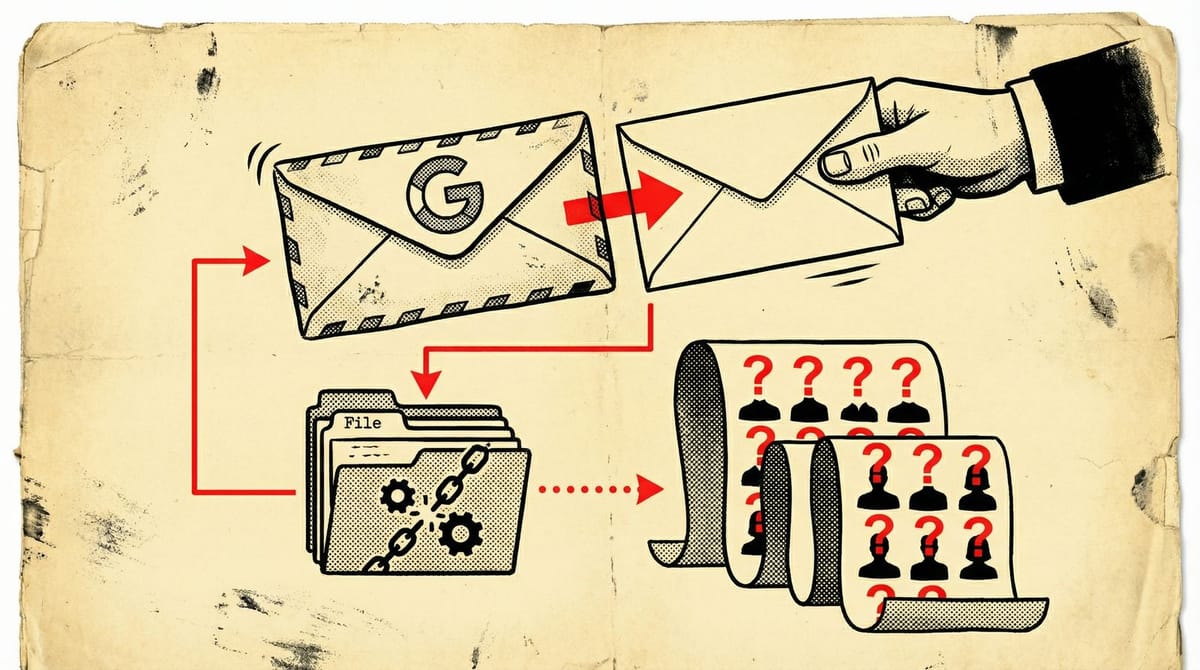
Google rolled out a feature last week that lets Gmail users in the US change their email address. Most of the coverage has been about the user experience, the technical complexity, how you can finally ditch that embarrassing handle you made in 2007. Fair enough. But the part that matters for anyone running an email program got roughly zero attention.
Your CRM probably treats email addresses as permanent identifiers. So does Google Ads Customer Match. So does every email platform, every CDP, every marketing automation tool you've ever touched. Google just made those identifiers mutable for 1.8 billion accounts.
The Feature Nobody Is Framing Correctly
Here's what actually changed: US Gmail users can now swap their @gmail.com address once per year, up to three times total. Google preserves all account data, emails, and history. The old address becomes an alias that still receives mail. Both addresses work for sign-in.
Google's product manager Julia Steier described the effort as "navigating massive technical complexity and collaborating across almost every corner of the Google ecosystem." The reason it took 20 years is that email addresses were never designed to be swapped out like profile pictures. Google's internal systems use persistent identifiers beneath the email layer, treating addresses as labels pointing to accounts. Not the accounts themselves. That's a meaningful architectural decision.
For users, this is a nice quality-of-life improvement. For email marketers, it's a slow-moving change to one of the most foundational assumptions in digital marketing: that an email address is a stable, permanent way to identify a person.
What Breaks (and What Doesn't, Yet)
Not everything breaks immediately. That's part of what makes this tricky to reason about.
Google built in a mitigation: third-party apps that identify users by email address will continue to receive the old username after a change. So right now, your ESP probably still sees the old address. Your Customer Match lists still technically function. Your CRM entries aren't suddenly orphaned.
But the part I keep coming back to is this: the user thinks they've changed their email. They identify with the new address. Over time, they'll stop recognizing the old one. They might not even remember it. When an email arrives at an address someone has mentally abandoned, the odds of that email getting ignored, archived, or quietly flagged as spam go up. Not overnight. But steadily.
One data professional quoted in PPC Land's coverage put it simply: "list management just got a bit trickier." That is, to be fair, an understatement.
Customer Match Is the Quiet Casualty
If you run Google Ads Customer Match campaigns, this is where things get specifically interesting.
Customer Match works by hashing email addresses and matching them against Google's user data. Google's own documentation requires specific normalization for Gmail addresses before hashing: periods stripped, plus-sign suffixes removed. The hash has to match exactly or you get zero match.
Now layer address changes on top of that. You upload a hashed email based on the address you collected. The user has since changed their primary Gmail. Google says the old address still works as an alias, but Customer Match normalization was built for a world where email addresses don't change. Whether Google's matching system follows the alias chain or just looks at the primary address isn't documented anywhere I can find. And that ambiguity alone should concern anyone running high-value Customer Match audiences.
At scale, even a small degradation in match rates compounds fast. If 2-3% of your Gmail subscribers change their address in year one (and honestly, Google's rollout messaging practically encourages it), your match accuracy starts drifting in a direction you can't easily measure or attribute.
The CRM Identity Problem Goes Beyond Gmail
The deeper issue is that email has been the de facto universal identifier in marketing for roughly 25 years. Every tool in the stack, from Salesforce to Klaviyo to GA4 to Meta's ad platform, uses email as the primary key for matching, deduplication, and audience building.
Google just signaled, architecturally, that email addresses are labels. Not identities. The persistent identifier lives underneath, invisible to marketers.
This isn't entirely new as a concept. Apple's Hide My Email feature already creates throwaway addresses. But Apple's version was opt-in and pretty niche in practice. Google's affects 1.8 billion monthly active users and roughly 30% of the global email client market. That's a different scale of exposure, even if the immediate impact feels manageable.
From what I've seen across various email programs, the marketers who will handle this well are the ones who already treat email as one signal among several. They're matching on phone numbers, customer IDs, purchase history, and behavioral data alongside email. The ones who are going to get caught flat-footed are the ones whose entire attribution and audience strategy flows through a single email field in a spreadsheet. And I think there are more teams in that second group than anyone wants to admit.
A Short Audit That's Probably Overdue
I wouldn't panic about this. But I would check a few things before Q2 planning wraps up.
First, pull your Gmail subscriber percentage. For most B2C lists, it's somewhere between 40-60%. That's your exposure surface. If Gmail is 55% of your list and even 2% of those users change addresses in the first year, that's over 1% of your total list accuracy quietly degrading without any unsubscribe event to flag it.
Second, check whether your email platform tracks engagement by address or by some underlying ID. If it's purely email-based (most are), watch for a new pattern this year: subscribers who suddenly go cold without unsubscribing. That could be someone who changed their Gmail and stopped seeing your messages at their primary address. It looks like disengagement. It's actually a data problem.
Third, if you're running Customer Match or any hashed-email audience targeting, document your current match rates now. You'll want a baseline before drift starts showing up in the numbers. The degradation won't be dramatic. It'll be the kind of slow, 3-5% annual decline that's easy to misattribute to audience fatigue or creative issues if you're not specifically watching for it.
The bigger structural move is diversifying your identity resolution stack. Phone number collection at opt-in. First-party customer IDs. Server-side event tracking that doesn't depend entirely on email matching. These were already smart practices before last week. Google just made them more urgent.
The Address Was Never the Person
Google's engineering team spent years untangling email from identity on their backend. Marketers haven't started that process. The feature is live, the old address still works, and nothing is going to break loudly enough to trigger an emergency meeting. Which is exactly why most teams will ignore this until match rates have slipped 5-8% and someone in the quarterly review asks what happened.
The fix isn't complex. But it requires admitting that the field your entire marketing stack treats as a unique key was always just a convenience. Not a guarantee. Google figured that out about their own systems. The interesting question is how long it takes the rest of the industry to catch up, and how much list accuracy erodes in the meantime.
Related: The Email Metric That's Quietly Replacing Open Rates