Google's June 15 Consent Rewrite Makes ad_storage a Single Point of Failure

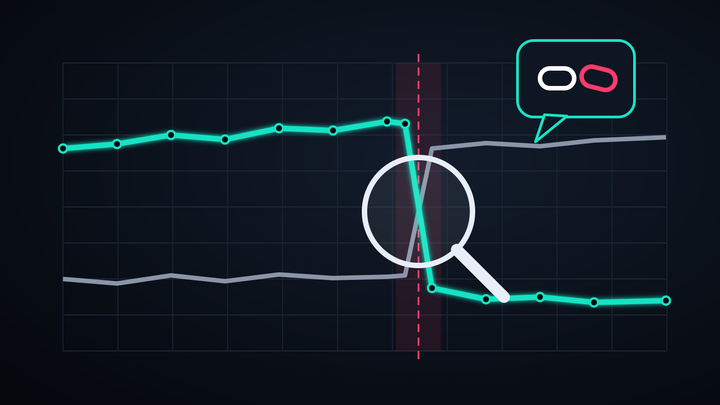
Google confirmed that on June 15, 2026, Google Ads data collection will rely solely on the ad_storage consent signal, removing Google Signals from the advertising data path. That means one consent parameter will govern every cookie, conversion, and remarketing audience flowing into Ads from a linked Analytics property. A misconfigured CMP after that date will not halve your data. It will zero it.
The Old Setup Had Redundancy Built Into It
Under the current system, your advertising data flow from a linked GA4 property into Google Ads depends on two separate controls. The ad_storage signal from Consent Mode, and the Google Signals toggle inside GA4 admin. Both need to be permissive for personalized remarketing and enhanced behavioral reporting to work end-to-end. A lot of teams used that overlap defensively, whether they realized it or not. If legal or a regional setting pulled Google Signals, the ad_storage path still worked for basic conversion tracking. And if a CMP broke and sent ad_storage=denied incorrectly, the Google Signals toggle kept signed-in user data flowing for analytics reporting.
That's the backstop disappearing.
Google's own documentation now states that "Google Analytics will transition to using Consent Mode (within Google Ads) as the single control for data." Google Signals, in Google's own words, will only control "the association of your Google Analytics sourced data with signed in user information for behavioral reporting." It still does something inside GA4. It does nothing for Ads.
Think of ad_storage as the circuit breaker for your entire Ads data pipeline. Before June 15 you had a second breaker on the same circuit. After June 15 it is one breaker, one failure point.
The Case Nobody Wants to Repeat
When Consent Mode V2 enforcement first hit EU advertisers, the pattern of silent damage was already visible. PPC Land documented a client whose Google Ads conversions dropped 90% overnight because the CMP was collecting user preferences in the banner but not actually transmitting ad_user_data and ad_personalization signals to Google's tag infrastructure.
Two days of diagnosis. Forty percent of the attribution recoverable through behavioral modeling. Sixty percent permanently gone.
The part that should worry anyone reading: "their numbers had been soft for months." The account team blamed Q1 seasonality. Turned out the infrastructure had been quietly losing signal the whole time.
Up until now Google Signals provided a partial alternate path in scenarios like that. After June 15 that path closes. If the CMP breaks and ad_storage returns denied when it shouldn't, Google Ads sees nothing from the linked GA4 property. No audiences. No enhanced conversions beyond what the gclid alone can carry. Just a slow collapse that won't trip an alarm for 48 to 72 hours while Tag Diagnostics catches up.
We covered what happened when Google's consent enforcement silently ate nine months of EU conversion data, and honestly, the worst cases in that story would be routine under the new setup.
Why Google Is Doing This (And Why I Don't Entirely Buy the Reasoning)
Google's official framing is that they're "removing redundant settings" so user preferences get "enforced consistently between Google Analytics and Google Ads." That's the Search Engine Land summary of it, and the PR reads fine.
The cleaner read, from what I've seen, is that Google is centralizing consent enforcement into a single signal so they have one defensible answer when regulators come asking. Consent Mode V2 is the layer DPAs and privacy auditors already scrutinize. Google Signals was a separate, older toggle that muddied the compliance picture. Collapsing it all into ad_storage gives Google a single control point they can demonstrate compliance through.
That's rational for Google. It is also dangerous for advertisers who do not currently treat ad_storage as mission-critical infrastructure.
The IP Address Change Buried In The Announcement
This one didn't get much coverage, but it matters. Google's help doc states that "IP addresses that are automatically collected by the Google Tag and SDK will be encrypted and flow to your linked Google Ads account." The exact date hasn't been published. It will land "later in 2026."
Practically, IP-based signals that were previously scoped to GA4 (or anonymized at the property level) will now be flowing encrypted into the Ads environment. On paper that sounds like a signal upgrade for attribution modeling. In practice, it means your legal and privacy teams need to review whether your existing consent language actually covers IP flow to Google Ads, or just to Google Analytics. For EU clients that distinction isn't academic.
If your CMP today only authorizes analytics-scope IP handling, you might have an exposure gap you haven't considered.
Three Things To Check Before June 15
Not going to give this section a template-y header because the list isn't universal. But these are the three things I'd audit first if I were running paid search at scale.
1. Verify ad_storage is actually firing. Open Tag Assistant in preview mode, trigger your consent banner through every permutation (accept, reject, close, region-locked), and confirm the update call contains ad_storage=granted when it should. If your CMP updates analytics_storage but forgets ad_storage, you have the same bug that produced the 90% case. This is boring work. Do it anyway.
2. Check whether Google Signals was load-bearing in your audiences. Query your GA4 audience builder and remarketing lists. If any of them depend on Google Signals behavioral data that currently flows through to Ads, that flow dies on June 15. Either the audience gets thinner (fewer signed-in matches) or it breaks entirely, depending on how the list was built. Rebuild affected audiences on consent-mode-compliant logic now, while you still have comparison data to test against.
3. Run Tag Diagnostics on a schedule, not reactively. Google's consent mode tooling has a 48 to 72 hour detection window for consent signal issues. If you only check it when performance drops, you are already three days behind the incident. From what I've seen, teams that run Diagnostics as a scheduled weekly task catch CMP regressions before they corrupt a full reporting period.
Related context from last month: Google simplified enhanced conversions by removing the parts you could audit. That change and this one rhyme. Google is steadily stripping out the diagnostic surface area advertisers used to rely on, and replacing it with "trust our signal."
The Three Groups, And Where You'll Probably Sit
I think the actual split, when this lands, will be roughly three groups.
Group one: large advertisers with dedicated analytics engineers who already treat Consent Mode as infrastructure. They will be fine. Their CMPs are instrumented, their dashboards will flicker for a day, and things settle.
Group two: mid-market accounts where the CMP was set up once by an agency eighteen months ago and has never been re-audited. These are the accounts most exposed. The consent banner will look fine to users, the tag will fire, and the data will not flow. The soft-numbers-for-months pattern applies here. PPC Land reporting already flags this group as the quietest casualty of the earlier Consent Mode V2 rollout.
Group three: small advertisers running Google Ads default tagging without a CMP at all. Consent Mode falls back to basic mode, which already operates on consent-denied assumptions. These accounts won't see a dramatic change because they were already running on modeled data.
If you are in group two and reading this, I'd move the audit up. The deadline is roughly eight weeks out, and analytics engineering bandwidth always runs tight in Q2.
One Tuesday Afternoon
One setting decides whether your Ads account sees your audiences. That setting is enforced by the same consent tooling that produced 90% conversion drops elsewhere. Google has not promised a warning period. The change lands on a Monday, and reporting dashboards will look roughly normal for 48 hours afterward.
The uncomfortable read is that most advertisers won't find out they broke their data collection until the first week of July, when attribution reporting against June spend comes due and the numbers don't reconcile to last month's benchmarks.
Worth spending a Tuesday afternoon on it this month, probably.
Notice Me Senpai Editorial