Phrase Match Now Pays 28% More for Leads It Never Used to Find
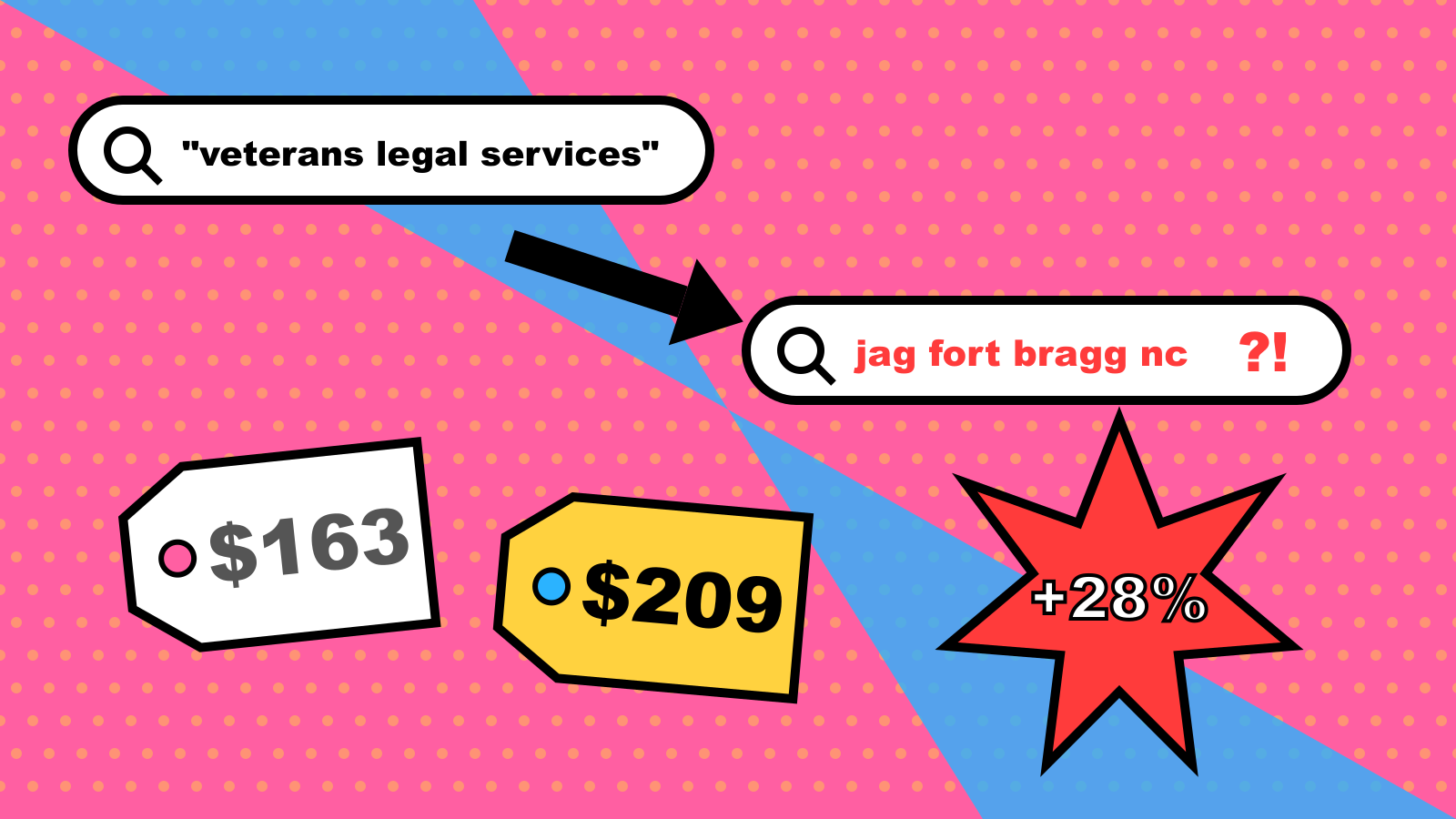
New Path Digital compared nearly 50,000 keyword and search-term pairs across three lead-gen Google Ads accounts and found that phrase-match queries which first appeared in 2025-26 cost $209 per lead, against $163 for queries the same keywords already matched in 2022-23. That is 28% more. Click prices were identical at $16, so the gap comes from conversion rate, which fell from 10% to 8%.
That last detail is why I think this study deserves more attention than its sample size would normally earn. Google isn't charging more for the new traffic. It's charging the same for traffic that converts worse, and Smart Bidding seems perfectly happy paying it.
What New Path Digital actually measured
The study itself, written by Mary Rippe at the High Point, North Carolina agency, looks at three accounts it manages: a law firm, a higher-education advertiser and a local B2B service business. Every campaign ran Maximize Conversions, and a conversion means a form fill from a non-brand keyword. The method is pretty clever, honestly. A keyword only qualifies if it had impressions in both periods with the same account, campaign and match type. A query counts as "existing" if it showed up for that keyword in both periods, and "new" if it only appeared in 2025-26.
So the comparison holds the keyword list constant and asks one question: what is Google now matching that it didn't match before, and what does that cost?
According to PPC Land's breakdown of the data, the answer splits sharply by match type. Exact match barely moved. New exact queries actually came in about 7% cheaper per lead ($109 vs $116). Phrase match is where things went sideways:
- Queries sharing no words at all with the phrase keyword grew from 2% to 9% of phrase volume.
- New queries ate roughly 75% of phrase match cost.
- New phrase pairs made up 92% of all phrase pairs, though most of them never spent a cent.
- Phrase impressions rose about 21% while exact impressions slipped about 1%.
One example from the study: the phrase keyword "veterans legal services" matched the search "jag fort bragg nc." Not one shared word. You can sort of reconstruct the logic (people looking for free military legal help), but I doubt the law firm paying for that click would have picked it.
Same price per click, worse buyer
Most match-type complaints are really CPC complaints. This one isn't. The average click price for new and existing phrase queries was the same $16, and the cost per lead difference comes almost entirely from conversion rate dropping two points.
Think of it like a restaurant that keeps your table booking but quietly swaps half the guests for people who wandered in off the street. The bill per seat doesn't change. Fewer of them order dessert.
That matters because it's the kind of erosion a Smart Bidding account won't flag on its own. Your CPCs look stable. Your conversion volume might even grow, because you're reaching more queries. The blended cost per lead creeps up slowly enough that it gets blamed on seasonality or competition. We saw a related pattern in Grey Matter's finding that B2B clicks rose 21% on identical keywords, except here the price stayed put and the quality slipped instead.
If your phrase keywords are matching queries they share no words with, you are basically running broad match at phrase-match confidence.
Three accounts is thin, and the study says so
I want to be fair about the limits here, because the study is unusually upfront about them. Rippe calls the findings correlations. Search behavior changed between periods, negatives changed, budgets changed. And every figure is cost per form fill, not cost per qualified lead or signed client. A new query could produce cheaper junk leads or pricier great ones and this data wouldn't tell you which.
The per-account spread is also wide. New phrase queries cost about 75% more per lead in one account, 29% more in another and only about 3% more in the third. The smallest account had around 100 conversions, which is not a lot to hang a verdict on. The headline numbers are also weighted by each account's share of existing-query conversions so one expensive account doesn't skew the pool. That's a reasonable choice, though the unadjusted figures aren't published.
Then there's the visibility problem. Nearly 43% of eligible search terms were hidden by Google, mostly on phrase match. That isn't new either. When Google limited the search terms report in September 2020, Seer Interactive measured visible terms falling from 98.7% to 71.0% overnight. So whatever drift this study found is the drift you can see. The hidden 43% could be better or worse, and nobody outside Google really knows.
Still, this lines up with what other people have reported independently. PPC Land covered a four-month test by Mantica where phrase close variants cost $97.67 per conversion against $43.97 for true phrase matches. Different accounts, different method, same direction. And Google's own keyword matching documentation describes phrase match as reaching searches that include the meaning of your keyword, where that meaning can be implied. The word "implied" is doing a lot of work there.
The zero-overlap audit (about 20 minutes)
The useful part of this study is that the test is cheap to run on your own account. You don't need two years of history to get a first read.
- Export the search terms report for your phrase-match keywords for the last 90 days, with the keyword column included. Non-brand only.
- Flag zero-overlap rows. In a sheet, split each keyword into words and check whether any of them appears in the search term. Rows where none do are your drift. Treat plurals and obvious misspellings as matches, or the flag gets noisy.
- Compare cost per lead for zero-overlap rows against everything else. Wait for at least 30 conversions in each bucket before reading anything into it.
- Pull CRM outcomes for the zero-overlap leads if you can. This is the step most teams skip and the one that actually decides it.
My rough benchmark: if zero-overlap queries make up more than 10% of phrase spend and run 20% or more above your phrase-match cost per lead, add the worst offenders as negatives and move your best-performing phrase keywords into exact. New Path Digital's data suggests exact still behaves roughly the way you'd expect, which is more than I'd say for phrase right now.
If the zero-overlap leads close well in the CRM, leave them alone. Some of them will. The JAG search could, in theory, come from someone who'd hire a civilian lawyer once they learn what the base legal office won't handle. Cheap form fills that never close are the real enemy, and expensive ones that do close are fine.
Phrase match keeps drifting toward broad
Google is pulling everything toward looser matching. It told advertisers in August that campaigns using the broad match setting would upgrade to AI Max from September 1, and we covered how Google Ads Editor 2.14 picks your landing pages unless you say no. Phrase match getting a bit broader every year fits that direction.
My prediction, and I'd hold it loosely: by the end of 2027, zero-overlap queries will pass 15% of phrase volume in a typical lead-gen account, up from the 9% New Path Digital measured. If that happens, the practical difference between phrase and broad starts to look like a rounding error, and exact becomes the only match type that still means roughly what it says.
I'll admit part of me finds this a little funny. Advertisers spent years being told to move from exact to phrase for reach, and the agencies running careful audits now seem to be drifting back toward exact. Maybe that's just how match types work. They loosen until someone measures them, and then people quietly retreat to the one that still listens.
Anyway, run the export, count the zero-overlap rows, and find out what your number is before the Q1 budget gets locked in.