YouTube Lost 567 Points in Google's March Core Update. Reddit Lost 64.
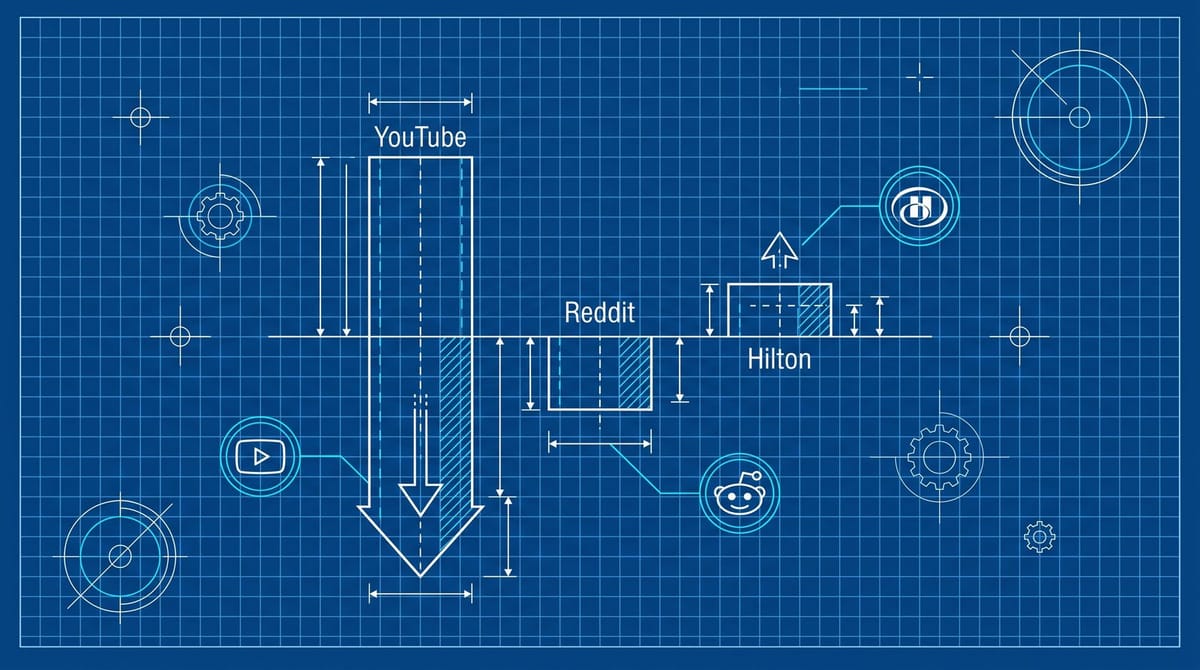
Google's March 2026 core update finished rolling out on April 8 after 13 days, and an Amsive analysis of 2,076 domains found YouTube took the largest hit at -566.97 SISTRIX visibility points. Reddit fell 64.24, Instagram 48.13, X 45.93, TripAdvisor 44.78. The pattern is a recalibration toward sites that own the content, not a blanket move against aggregators or UGC.
The volatility number nobody is leading with
SE Ranking's exclusive data for Search Engine Land shows 79.5% of URLs in the top 3 changed positions during the rollout, up from 66.8% in December 2025. In the top 10, 90.7% of pages shifted, and 24.1% of top-10 pages fell out of the top 100 entirely. December's number was 14.7%.
That last one is the figure I'd put on the wall. About a quarter of every top-10 ranking outright disappeared past page 10. This was not a surgical update. It had a wider blast radius than the December core update most teams already considered volatile.
If you check Search Console between March 27 and April 8 and your impressions look stable, you almost certainly have re-ranking happening underneath, just at the same scale as the noise. From what I've seen, "stable but average" Search Console weeks during a core update usually mean churn, not calm.
Read the loser list as a post-Reddit-deal correction
Lily Ray, VP of SEO Strategy & Research at Amsive, called the update a "first-party, official-source correction" in her writeup. Her cleaner framing: "The top of the winner list is almost entirely 'the company that owns the thing.' The top of the loser list is almost entirely 'the platform people use to talk about the thing.'"
That's the line worth taping to a monitor. The story underneath it, though, is the timeline.
Reddit's organic traffic from Google US grew from 57M visits in July 2023 to 427M in April 2024 after Google signed a $60M-per-year licensing deal with Reddit. By April 2025, Reddit was pulling 1.2 billion search referrals a month, roughly 2x the year prior. Reddit went from a fringe SERP citizen to the #5 most visible US domain in roughly nine months.
What happened in March looks less like Google deciding aggregators are bad and more like Google walking back a year and a half of overcorrection. Reddit wasn't zeroed out. It lost ~64 points. That still leaves it ahead of where it was before the deal got signed.
Travel and jobs read differently from the headline
The travel category split clean. TripAdvisor (-44.78), Yelp (-33.1), and Expedia (-32.7) lost ground, while Hilton (+4.0) and Hotels.com (+3.6) gained. Jobs followed the same shape: Indeed dropped 18 points and ZipRecruiter 13, while Disney Careers gained 59% and USAJobs.gov gained 16% on a percentage basis.
The pattern there is not "kill aggregators." It's "the brand that owns the booking or the listing should be findable for its own name." Anyone who has ever searched their own employer's career page and gotten Indeed first knows exactly what query class Google was correcting.
Health is where it gets more honest. WebMD (-9) and Cleveland Clinic (-12) both lost visibility. Those are not aggregators. They're original-content publishers. GoodRx (+55) gained, and GoodRx is a price-comparison aggregator. The neat "first-party wins" story breaks down once you look at the medium-tier publishers, and Google is going to lean on the answer "we elevated NIH and the CDC" rather than explain why a Cleveland Clinic page on a procedure ranks below a manufacturer's product page.
What this changes if you're a small publisher
The "small publishers winning back ground" framing some of the early coverage ran with is wishful. Independent publishers continue to lose 50-90% of search traffic in successive core updates. The March update did not reverse that. It moved visibility from aggregators to brand-owned domains. Brand-owned domains are not small publishers.
If you run an editorial site, three things are worth doing this week.
First, pull your direct-traffic share for March 26 through April 11 and compare it to your search share. If direct is more than 30% of total, you're insulated. If it's under 15%, this update changed your business model whether your search share moved or not. Push notifications and email become the difference between recoverable and not. Chartbeat already showed push and peer sharing pulled more traffic than search at 535 publishers last quarter, and that was before this update.
Second, audit any keyword cluster where you compete with a brand-owned property. If you write reviews of a SaaS tool that has a feature page targeting the same query, assume Google now prefers the feature page. Reframe the post toward comparison or workflow, not pure description.
Third, stop linking out to aggregators in roundups. If your link target lost ranking power in March, the link equity you're sending out is worth less than the link equity you're keeping. Internal linking does more for you in this environment, and outbound to authoritative primary sources does more for editorial trust.
The Reddit angle most coverage is missing
Reddit didn't lose because Google decided UGC is bad. Reddit lost because Reddit was already running 80M weekly searches inside its own platform and Google over-rewarded that signal in 2024 and 2025. The deal didn't get unwound. The signal got reweighted.
That matters because the next few core updates will probably keep doing this. Google's pattern through 2025 was tuning toward UGC, then quietly deindexing pages AI Overviews already replaced, and now pulling some of that UGC weight back. None of those moves is "the algorithm is fixed." All of them are Google rebalancing under pressure from publishers, the FTC, and a search experience people increasingly say is worse.
Each core update is a recalibration, not a verdict. The verdict the SEO press is looking for, "Google has finally decided X," isn't coming.
The teams who treat every core update as another rebalancing run will outperform the teams who keep waiting for Google to settle on a stable preference. Run the audit, move the weight, ship the next thing.
The two findings I'm not sure about
I don't think the Cleveland Clinic decline ages well. Authoritative health publishers losing visibility while brand pharma sites gain is a reputational risk Google will probably correct within the next update or two. There's a version of this where the May or June refresh quietly puts them back.
I'm also not fully convinced the YouTube number is real. YouTube ranks for so many queries that a 567-point SISTRIX swing could be one product change at Google, a SERP layout adjustment or a new "videos" carousel position, rather than an algorithmic decision about YouTube quality. Aleyda Solis's analysis hinted at the same uncertainty around YouTube without committing to a cause. Watch the May data before assuming YouTube is structurally lower.
The data is good. The narrative is too clean.
If you write about this update for a client this week, the most useful thing you can give them isn't the winners-and-losers list. It's the volatility number, the 24.1% top-10-out-of-top-100 figure, and a plan for the second half of the year that doesn't depend on Google holding still.