J. Cole's Rollout Had No Schedule (and 1 Million People Queued Anyway)
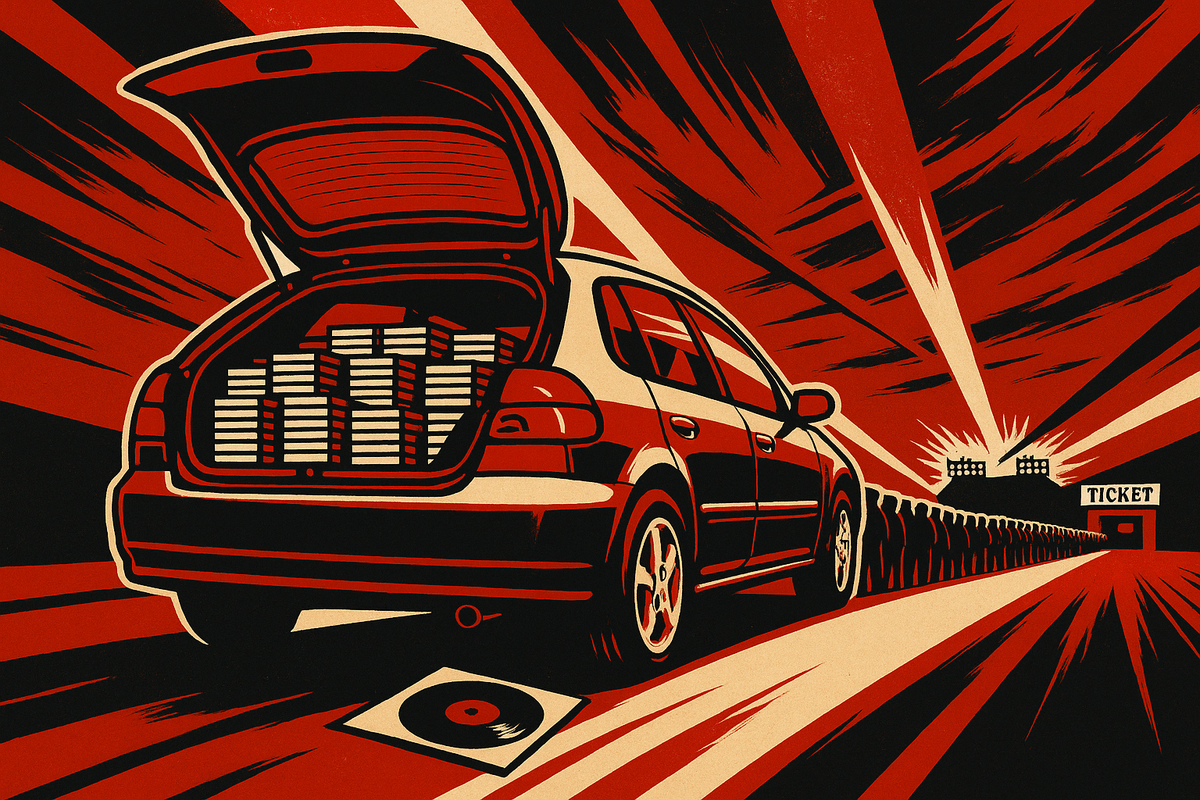
J. Cole released The Fall-Off on February 6, 2026, sold CDs out of the trunk of his old Honda Civic with no published schedule, and opened at No. 1 with 280,000 units, 80,000 of them on vinyl. The tour he announced ten days later put more than 1 million people into Ticketmaster queues on presale morning. The mechanics were scarcity, physical product, and sequencing, and most of them transfer to brands with no celebrity attached.
The Muse by Clio piece that ran Friday is about the show itself. Tianna-Marie Rosser watched the Detroit date and came away arguing that the camera work, the lighting and the sparse staging did as much of the job as the performance. Fair enough, and I think she is right. But the detail that stuck with me was the backdrop: the Market House from Fayetteville on one side, a 2000s Honda Civic on the other. That Civic was the distribution channel six months earlier. The rollout and the arena show are the same idea, run at two very different scales, and the rollout is the part a marketing team can actually copy.
The trunk sale was a scarcity engine with a vlog attached
The day after release, Cole posted on X: "Today I got my old civic (with the brand new engine) a tour bus and some sprinters. In the trunk of my car is boxes of The Fall-Off CD's." Then the line that did the work: "I don't know where we bout to drive to, but catch me outside!" Vice had the full post within hours. Black Enterprise noted that no dates or locations had been announced at all, and that he framed it as a callback to selling CDs hand to hand in Fayetteville as a teenager.
What followed was a week of stops nobody could plan around. North Carolina A&T, Atlanta, Howard's campus, Silver Spring. Complex reported that thousands of fans were requesting pickups on social media, and that Cole was literally driving people around in the Civic and playing them the record. The trips were cut into official vlogs that doubled as previews for music videos, per the album's documented rollout.
The mechanism is worth spelling out, because it is the whole thing. With no schedule, the only way to get a CD from Cole was to watch his feed. Every fan became a monitor. A normal pop-up has a date, a geo-targeted paid push, an RSVP page, and by the time it opens the scarcity has leaked out through all three. This one kept the scarcity inside the feed, where it compounds.
Honestly, the CDs themselves were almost beside the point. Physical CD sales barely register in 2026. The trunk sale was a content format wearing a retail costume, and the people who showed up were the footage.
Physical was the headline SKU, and the vinyl number proves it
According to Billboard's chart report, The Fall-Off earned 280,000 equivalent album units in its first week per Luminate, the largest opening for an R&B or hip-hop album in nearly a year. Roughly 113,000 of those were pure album purchases, and about 80,000 of the purchases were vinyl, around 71% of sales. It was the first Cole album available on vinyl the same day as streaming.
Label the metrics, because they get mixed up constantly. Equivalent album units blend streams and sales. Pure sales are people paying for the whole record. Vinyl is a subset of pure sales. (Early trade projections from HDD put the total closer to 291,000 with about 115,000 pure, per HipHop-N-More; Luminate's final is the one Billboard charts on.)
The gap between the stunt and the payout is the part I find interesting. The trunk sale moved a few boxes of CDs. It also made "owning a physical copy of this album" the story of release week, and vinyl is where that story cashed out at volume. Seventy-one percent of purchases on vinyl for a rap record is unusual, and I would be careful generalizing from one artist with a decade of anticipation behind him. But it does suggest the format follows the narrative, not the other way around.
A million people in a queue, and a tour that grew from 50 dates to 73
The tour was announced February 16, ten days after release and right as the trunk sale vlogs were peaking. Artist presale opened the next morning. By midday Cole's manager Ibrahim Hamad was posting "Damn yall got over 1m people in the queues for the east coast and Midwest shows," and fans were sharing screenshots of 248,007 people ahead of them. Consequence put the original announcement at 50 dates across more than 15 countries, opening July 11 in Charlotte, with three nights in New York and two in Los Angeles added before general on-sale. The current itinerary lists 73 shows, running July 10 through December 12 in Johannesburg.
One honest caveat. This is Ticketmaster, Live Nation and VIP Nation doing what they do. Cole did not avoid the machine. He made the machine the last step instead of the first. Album, then proximity, then scarcity, then the big ask. Most rollouts run that order backwards: tour announcement and presale codes before anyone has heard the record, because the tour is where the money is and everyone is nervous.
The sequence is the stealable part. The feed was already primed by a week of "where is he today" before anyone was asked to sit in a queue.
The $40 magazine is the piece I would copy first
On July 7, a few days before the first show, Cole announced a 144-page print magazine called The Fall-Off, priced at $40, sold on the tour and at thefalloff.com. XXL has the details: Bonsu Thompson as editor-in-chief, more than 60 contributors, interviews with Jay-Z, Lauryn Hill, RZA, GloRilla and J.I.D, framed as an homage to hip-hop print journalism.
On paper this is merch. In practice it is content that costs money, which is the hardest kind to sell and the most valuable kind to own. It keeps the "physical is the premium format" thread consistent from the trunk to the arena concourse, and it gives the tour a second product with its own press cycle. Most brand tours sell a t-shirt and call the vlog the content. Cole made the content the merch.
Stealing this without the Civic
The part nobody wants to hear: scarcity only works when demand already exceeds supply. Cole had a decade of "is The Fall-Off ever coming" behind him. A brand with no pent-up demand running an unannounced drop gets an empty parking lot and a very awkward vlog. So the first question is whether any segment of your audience already chases you. If your last limited release sold through in under 24 hours without paid support, you probably qualify. If it took a week and a retargeting budget, fix that first.
If you do qualify, the 30-day test looks like this. Pick one physical product, one city, one day. Announce only the month. The morning of, reveal the location in-feed and nowhere else: no paid, no geo-push, no RSVP page. Track three things: same-day post engagement against your trailing median, time to sell-through, and how many email or SMS signups you capture on site. My rough bar is that the reveal post should do at least 3x your median and the product should be gone in under two hours. Hit both and you run it monthly. Miss both and you have learned, cheaply, that your audience will not come to you, which is a much cheaper lesson than finding it out after a national campaign.
Second, put the physical product in the story rather than in the store. The trunk sale made the object the plot. The vinyl sold because people had spent a week watching a man hand out the CD version.
Third, sequence the expensive ask last. Ticket drops, preorders, waitlists. Earn a week of attention before you ask anyone to wait in a queue. We wrote something similar about Polaris hauling 200 tons of dirt into Manhattan: the experiential piece only pays if the follow-on is already designed.
I would bet at least three major-label rollouts in the next 12 months copy the no-schedule pop-up format, and I think most of them will announce the dates anyway, because somebody in a meeting will want the paid support to hit. That will be the tell that they copied the costume and not the mechanism.
The Civic on stage is what I keep coming back to. The same object sold the album, shot the vlogs, and closed the show. Most brands would have rented three different ones.