Taco Bell Answered a Parasite Outbreak With a $1 Enchirito
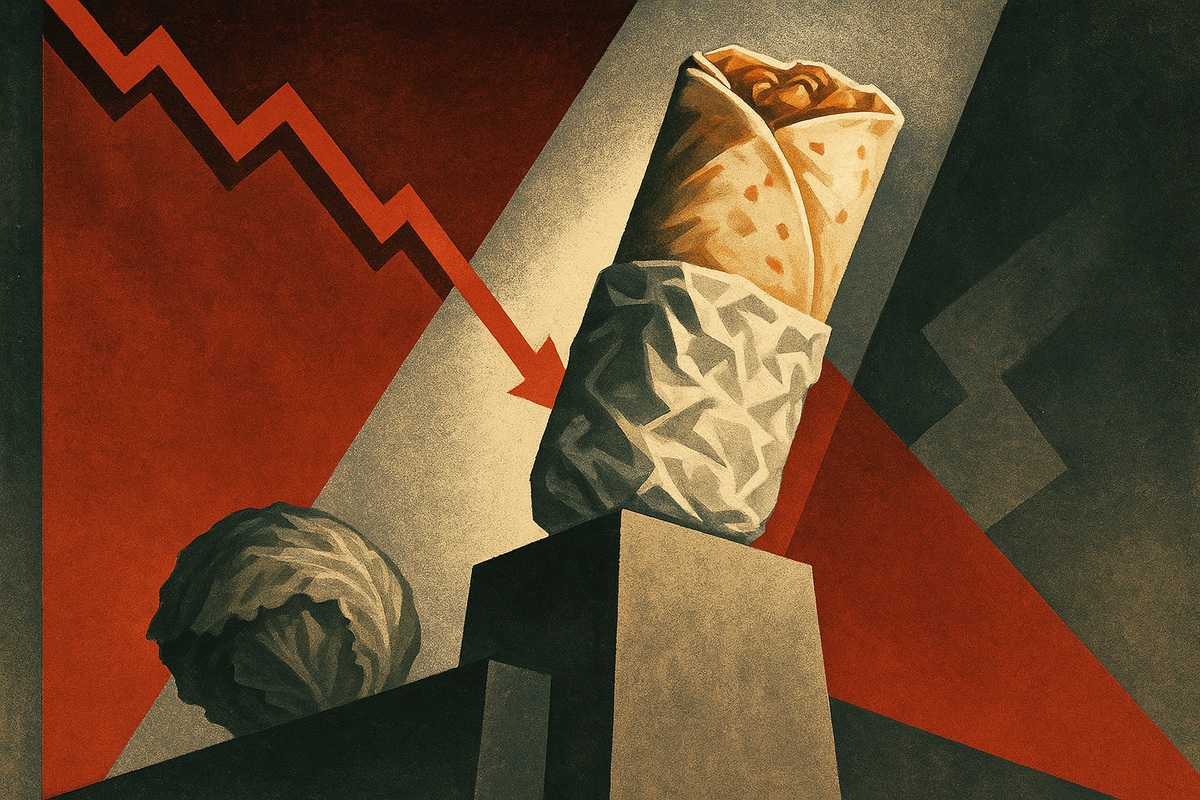
Taco Bell brought back the Enchirito at $1 on July 22, five days after federal investigators tied a Cyclospora outbreak to iceberg lettuce served at its restaurants. Placer.ai measured store visits down roughly 19% the previous Friday against a fast-food category that fell 1.9%. Discounting into a safety crisis buys visits back faster than it buys trust back, and those two lines recover on different clocks.
The setup, briefly, because the marketing lesson only makes sense with the timeline attached. On July 14 Taco Bell pulled several fresh produce items and told CNBC there was no confirmed link to the outbreak. Three days later the FDA named Taylor Farms de Mexico as the supplier of the contaminated shredded iceberg. The CDC has since logged 1,947 people who got sick and reported eating at Taco Bell, with 94 hospitalizations across nine states. Then came the dollar Enchirito.
The 19% is the polite version of the number
Two different Placer.ai figures circulated last week and they are not measuring the same thing. Forbes reported Friday, July 17 visits running about 19% below the chain's average Friday for the year to date. Other coverage of the same dataset put the drop closer to 31% against the average for that specific day of the week. Both numbers are defensible. They just use different baselines.
Year-to-date averaging smooths out seasonality. Same-day-of-week comparison catches the shock. If you are the one walking this into a Monday leadership meeting, pick a baseline and then never quietly switch, because switching baselines mid-crisis is how a recovery narrative gets manufactured out of nothing at all.
Same data, two baselines, a twelve-point spread in how bad your quarter looks.
The number I would actually put on the first slide is neither of those. It is the category comparison: fast food overall was down 1.9% that same Friday, so Taco Bell's decline ran roughly ten times its peers. That is the isolation metric. It proves the problem is the brand rather than the weather, the calendar, or consumer spending, and it is the only figure in this whole story that a skeptical CFO cannot argue with.
Why the $1 price is the part I would argue about
The Enchirito normally sells for somewhere around $4.29 depending on location, so a dollar is about a 77% cut. Taco Bell announced it on TikTok with "for the ones who've been riding with us, $1 enchiritos just dropped," and CEO Sean Tresvant added, "We aren't entitled to your loyalty. We earn it one meal at a time."
That is a good line. Genuinely, it is better than most crisis copy, which usually reads like it was drafted by counsel and then softened by someone who has never eaten in a drive-thru. The trouble is that the discount does the talking and the copy just stands next to it. A 77% cut communicates something the sentence does not: we understand you have a reason to be nervous, and this is the compensation for the risk you are taking on our behalf.
That framing is fine once you have genuinely fixed the thing. It gets expensive if you have not, because it teaches your loyalty base a price. From what I have seen in promo-led recovery, the customers who return for a dollar tend to return for a dollar the next time too, and you end up rebuilding traffic on a margin structure you cannot keep.
The smartest detail here got almost no coverage. The Enchirito is lettuce-free, and it always has been. Choosing that specific product means the offer is not really "please come back." It is "here is an item that structurally could not have hurt you." That is a supply chain argument wearing a value-menu costume, and it is more persuasive than the price is. If I were briefing this, I would have led with the lettuce-free logic and priced it at $2. Same reassurance, half the margin damage, and no anchor to undo in September.
Chipotle already ran this experiment and published the receipts
We have a decade-old control group for exactly this play. After the 2015 E. coli outbreak, Chipotle gave away more than six million free burritos and bowls plus a million orders of chips over the winter, closed every store for a food-safety meeting, and launched a loyalty program on top of it. Comparable restaurant sales still fell 29.7% in the first quarter of 2016, and profit dropped 82%, dragged partly by the cost of the giveaways themselves. Restaurant Business walked through the full bill at the time, and NRN's timeline is still the cleanest record of how slowly it unwound.
The sentiment side is where it gets uncomfortable. The Drum reported on Crimson Hexagon social listening showing that as of March 2016, months into the free-food campaign, 15% of Chipotle fans on social were still saying they would not return.
Free food moved traffic. It did not move the 15%.
And to be fair, this is not a perfect parallel. Chipotle's brand was built on ingredient sourcing in a way Taco Bell's is not, and cyclosporiasis, while genuinely awful to experience, is not E. coli in terms of severity. Taco Bell may well recover faster on that basis alone. The mechanism still rhymes though. Price pulls the transactional customer back quickly and leaves the anxious one exactly where they were.
Thursday morning is when the scoreboard shows up
Yum Brands reports second quarter results on July 30 at 7:00 a.m. Taco Bell was running 8% same-store sales growth in Q1, so Q2 will probably look healthy and tell you almost nothing, because the outbreak landed in mid-July. That is Q3. The interesting material will be in the guidance language and whatever quarter-to-date commentary they volunteer on the call.
I will put a number on it. I think Taco Bell's US comps print negative for Q3, somewhere in the mid single digits, and traffic claws back to within 5% of baseline well before brand favorability does. Early September for visits, October at the earliest for the softer measures. If traffic recovers and favorability does not, that is the discount working and the trust repair failing, which is the exact scenario the $1 price makes harder to diagnose.
One more wrinkle that deserves more attention than it got: Forbes found Taco Bell had already flagged cyclospora risk to investors before any of this happened. A risk factor in a filing is not a plan. It is a legal acknowledgment that you know the thing can happen, which is arguably worse than not knowing when the day arrives.
The audit to run before a supplier makes this your problem
This is not really a Taco Bell story for most people reading it. The spillover was broad: CBS reported salad chains and grocery lettuce sales dipping too, and the outbreak has now been tracked across 41 states. Brands that never touched Taylor Farms lost traffic anyway.
Three things worth doing this week if you own brand or comms anywhere near a physical product.
First, map single-supplier exposure by revenue, not by SKU count. Shredded iceberg is one ingredient and it touched an enormous share of a menu. The question to answer is which single vendor failure would compromise the largest share of what you actually sell, and my rough benchmark is that any supplier sitting above 25% of revenue-weighted exposure needs a documented second source and a pre-written statement.
Second, time your response window against the one that just played out. Taco Bell said there was no confirmed link on July 14 and the FDA named the supplier on July 17. Three days between "we do not believe this is us" and a federal agency saying otherwise. If your holding statement is written after the news breaks, you are already behind that clock.
Third, set your discount ceiling now, while nothing is on fire. Decide in advance that crisis-period promotion caps at somewhere around 20 to 30% off and attaches to a product that is structurally unaffected, the way the lettuce-free Enchirito was. Making that call under pressure, with traffic down and a board asking questions, is how you end up at 77% off and a base trained to wait for the next outbreak. We have written before about brands turning an awkward moment into earned media instead of paid apology, and the difference is almost always whether somebody decided the response ahead of time.
I do not think the dollar Enchirito was a mistake, exactly. It bought a news cycle where the coverage said "Taco Bell responds" instead of "Taco Bell silent," and that has value you cannot easily model. I just think it bought the cheaper of the two things Taco Bell needs, and the expensive one is still sitting there waiting, mostly indifferent to price.