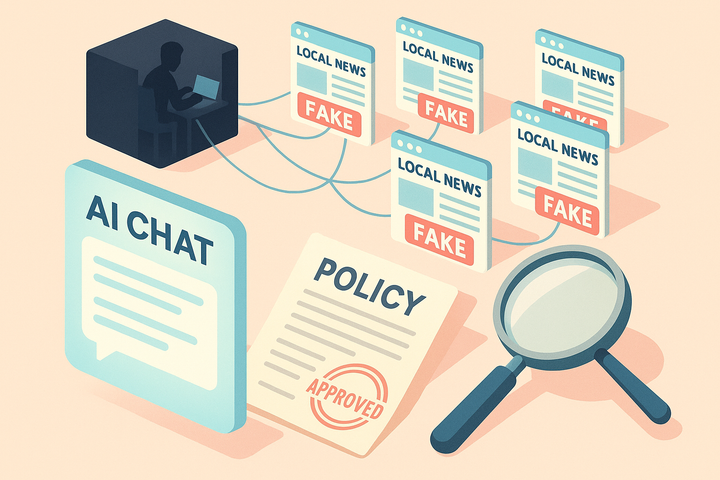
Opal's Gem Targets the Alignment Tax Burning 84% of Marketing Teams
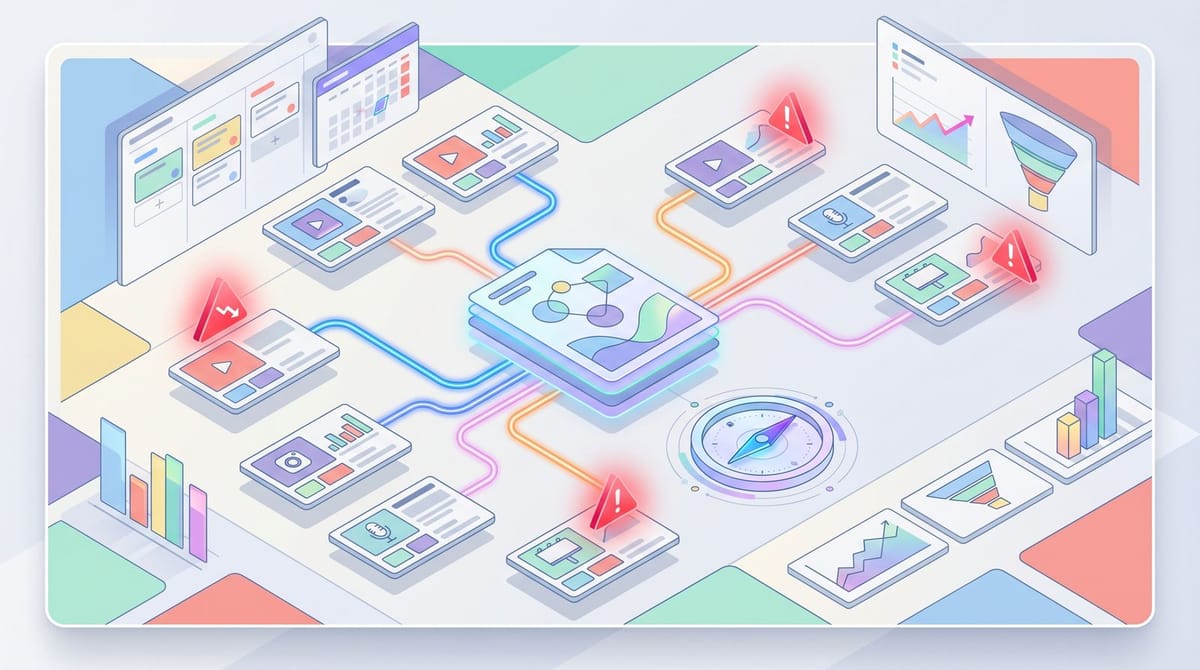
Opal launched Gem on April 14, 2026, an AI copilot inside its marketing planning platform that flags briefs and assets that drift from a brand's strategy. Gartner found 84% of companies are stuck in a brand "doom loop" of underfunded measurement, fading C-suite trust, and shrinking budgets. Gem is Opal's bet that the bottleneck for marketers in 2026 isn't AI content volume, it's the human cost of aligning teams on what to ship and why.
"Alignment tax" is a new label for an old drag
CEO George Huff calls the cost the "alignment tax": hundreds of millions of dollars in time spent across marketing orgs chasing data, justifying decisions, and explaining how a campaign actually fits the larger strategy. Per Marketing Dive's coverage, it's the friction of meetings, phone calls, and Slack threads that should never have happened if the brief and the strategy were already linked in one place.
That phrase is doing a lot of work. The problem itself isn't new. Brand managers, agency leads, and CMOs have always lost hours to "what was the strategy again, and does this fit it." What changed is the volume. Opal's pitch leans on a forecast that machine-generated marketing collateral will grow roughly 5x by 2030, and at that volume the eyeball-and-Slack approach to brand fit just stops scaling.
I'd push back on the framing slightly. The 5x number sounds like an industry estimate, not a measured baseline, and "alignment tax" is the kind of phrase a vendor invents to size a market that hasn't been priced before. But the underlying drag is real, and anyone who's run a quarterly planning cycle inside a 200-person marketing org already knows it.
"AI is often seen as a content vending machine, but more content without a compass only amplifies the alignment predicament." George Huff, CEO, Opal
Gem is a brand-aware layer, not another GenAI assistant
Here's where Gem differs from a generic ChatGPT integration. According to AdExchanger, earlier Opal versions made clients upload data in specific formats, with "a lot of spreadsheets and decks." Gem reads natural language and pulls from whatever's already in the platform, so a planner can ask "what's our campaign mix for Q3 in Germany" without triaging tabs first.
The model setup is more interesting than the chat layer. Gem defaults to Anthropic's Claude, but customers can swap in OpenAI or Gemini, and Opal runs the whole thing in private Azure environments with no client data used for model training. That's table stakes for enterprise AI right now, and it's also a quiet jab at vendors still defaulting to public model endpoints.
Associated Luxury Hotels International is the named customer doing real work with it. VP of Marketing Meghan Hanna told AdExchanger Gem produces campaign templates that get the team "85% to 90% of the way there," cutting redundant brief writing and improving speed to market. SAP's VP of Global Social Media Kelly Broili was quoted in TechEdge AI saying Opal already runs SAP's content backbone, and an embedded AI layer is something the team is "excited about." Translation: SAP hasn't deployed Gem in anger yet. ALHI has.
The math behind the bet, not the marketing theater
The Gartner number is doing the heavy lifting on Opal's pitch, and it's worth reading in context. Gartner surveyed 426 senior marketing leaders in late 2025 and found companies in the doom loop are roughly half as likely to hit growth targets as those with proper brand measurement. Sharon Cantor Ceurvorst, the Gartner VP behind the work, framed it bluntly: "Underfunded measurement breeds C-suite skepticism, which deprives brand of the investment it needs to drive growth."
That's where Gem's actual sell lives. Not "we make AI content faster" but "we give CMOs a defensible audit trail to take into the budget meeting." If the C-suite asks why the latest paid social push aligns with the rebrand, you can pull a Gem-generated mapping in seconds rather than commission a deck. From what I've seen of how budget cuts actually happen, that defense matters more than content speed.
The risk is real, though. An AI alignment layer is only as honest as the strategy doc it's reading from. Garbage strategy in, confidently misaligned briefs out, and now the audit trail says everything's fine. CMOs without a clear, current brand framework will end up automating their incoherence at scale, which is somehow worse than the manual version because it looks like governance. Translation: a tool that grades briefs against a rubric nobody updates is a way to make stale strategy feel objective, and that's the failure mode I'd watch for in the first six months of any deployment.
Where Gem hits the agency QA layer
This is the part nobody at Opal will say out loud. A meaningful share of the work agencies bill for on retainer accounts is QA: reading briefs, flagging brand drift, comparing creative against guidelines, and writing the polite Slack DMs that say "this doesn't quite feel on-brand." A platform that does most of that pre-execution, inside the brand's own planning stack, eats directly into hours that show up on agency invoices. The agencies that win the next round of pitches will probably be the ones who admit that out loud, rather than the ones who keep selling 40-hour QA cycles as a feature.
I think most agencies will undercount this risk for another twelve months and then scramble. The smart move is to treat Gem (and tools like it) as an input to QA, not a competitor: ingest its alignment scoring, layer human judgment on the harder edge cases, and bill on the diff. That's a different commercial model than retainer-funded review work, and it requires admitting which parts of QA were always going to be automated.
The same pressure shows up across the stack. We covered Meta's Andromeda creative refresh cycle compressing to 14 days last week, and the pattern is the same one Opal is selling against: more output, faster cycles, less review headroom. A tool that pre-flags drift on the brief side is on the same trend line as a system that decides creative is stale on day 14 instead of week 6.
What to audit before the next planning cycle
The honest test isn't whether Gem can run. It's whether your brand strategy is documented well enough to feed it. Three things to check this week:
- Is your current brand strategy doc more than six months old, and would the team that wrote it still defend it today? If not, any alignment tool is going to grade against a stale rubric.
- How many active campaign briefs are in flight without an explicit strategy linkage written into the doc itself? That number is your manual alignment tax. Pull it before any vendor demo.
- Where does QA actually live in your stack right now: agency, in-house ops, or vibes? Tools like Gem make the implicit explicit, which is great for budget defense and uncomfortable for whichever team's hours just got priced.
If the answer to any of those is "we'll figure it out when the tool's installed," the tool won't help. The "alignment tax" phrase isn't a sales gimmick because the friction it names is real. But a copilot won't fix a marketing org that can't write down what good looks like, and honestly, that's the cheaper problem to fix first.
Notice Me Senpai Editorial