OpenAI's $60 CPM Ads Manager Doesn't Need to Be Good Yet
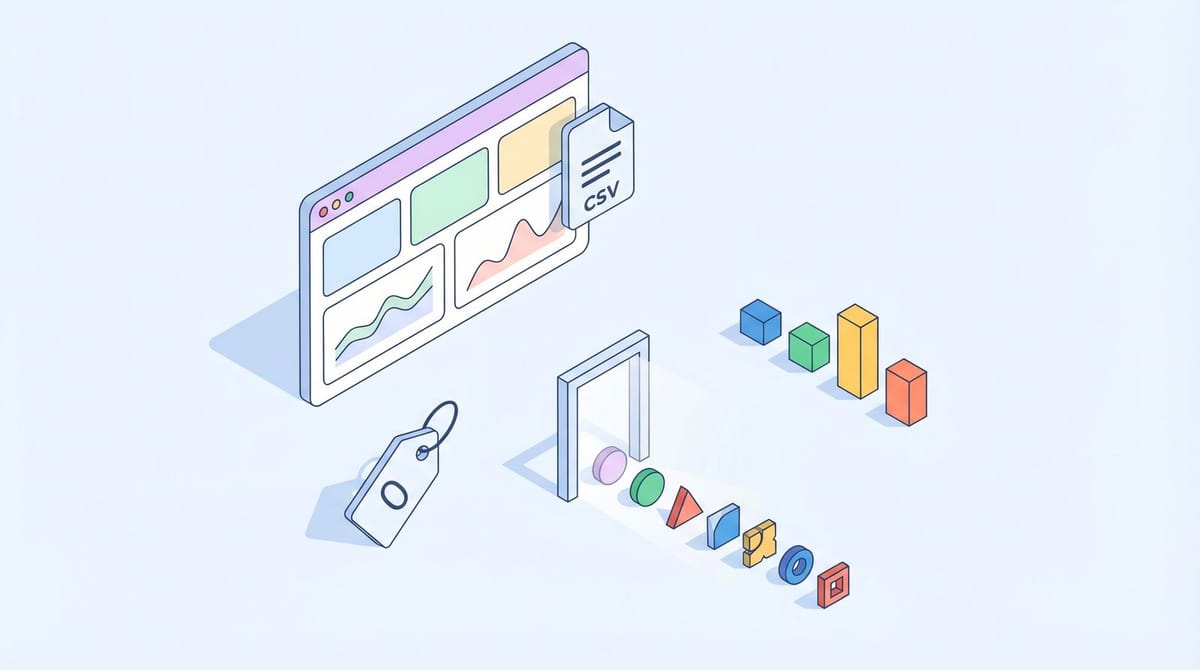
OpenAI quietly launched a self-serve ads manager this week, and the product is, if I am being generous, rudimentary. The platform offers real-time performance monitoring, the ability to optimize against impressions or clicks, and weekly CSV reports sent by email. There is no real-time bidding, no granular audience targeting, and no attribution stack. Digiday described the layout as similar to Google Ads in appearance, though without most of what makes Google Ads useful.
I think most ad teams will look at this and dismiss it. And I think that is probably the wrong call.
$100 Million in Six Weeks, on a Platform That Emails Weekly CSVs
The timeline tells you what OpenAI is actually optimizing for. They launched ads on February 9 at a $200,000 minimum buy-in. Within six weeks, they hit $100 million in annualized revenue with over 600 advertisers. Then last week, they dropped the minimum to $50,000 and opened self-serve access.
A 75% cut in minimum commitment after just two months is not a response to demand. It is a deliberate push to grow the advertiser base as fast as possible. The pilot that was supposed to end March 31 got extended through April, and agency buyers Digiday spoke with suspect it will keep extending beyond that.
OpenAI is projected to lose $14 billion this year and is planning an IPO for later in 2026. The company needs the pitch deck slide that says "600+ advertisers, self-serve live, $100M annualized" more than it needs a polished ad platform. The product is secondary to the story right now.
The Click-Through Looks Rough Until You Check What Happens After
The headline performance numbers are, honestly, not great. Independent research from Ahrefs and ppc.land pegs ChatGPT ad CTR at roughly 1.3%. Google Search averages about 29.2%. You are paying a $60 CPM, roughly 3x Meta average, for a fraction of the engagement a search ad delivers.
But there is a conversion wrinkle that changes the math for certain advertisers. Criteo data, drawn from the approximately 17,000 advertisers it connected to ChatGPT since March 2, shows that LLM-referred users convert at 1.5x the rate of other referral channels. Fewer clicks, but the people behind those clicks seem to know what they want before they arrive.
For e-commerce brands with an average order value above roughly $80, a $60 CPM at 1.5x conversion starts to compete with mid-funnel Meta on a cost-per-acquisition basis. I want to be careful here because I have not verified that math across enough verticals to state it as a rule. But the directional signal from Criteo is interesting enough that I would at least model it for my own campaigns. If your margins support a $40 to $50 CPA, run the numbers.
Criteo Has 17,000 Advertisers Connected. Smartly Is Building the Real Ad Format.
The self-serve manager is the front door. The infrastructure being assembled behind it matters more. Criteo integrated 17,000 advertisers in about five weeks. Smartly, which manages about $6 billion in annual ad spend for around 800 brands, is now OpenAI's first creative partner. There are reported talks with The Trade Desk for programmatic distribution.
What OpenAI seems to be building is an advertiser rolodex and a set of distribution pipes. The self-serve dashboard is basic because it does not need to be sophisticated yet. When ChatGPT inventory becomes accessible through Criteo, The Trade Desk, and eventually the DSPs that media buyers already use, most advertisers will not touch the self-serve dashboard at all.
The Smartly partnership is the tell. They previously ran a chatbot-style ad for UK retailer Boots on Meta that drove nearly 5x more conversions than standard ads. Now they are developing what they call "conversational ads" for ChatGPT, ads that respond to user queries in real time and adjust messaging based on context. The static text links OpenAI is selling right now are a placeholder format. The ad product they actually want to sell does not exist yet.
95% of Users Are on Ad-Eligible Tiers, and Most Still Do Not See Ads
One detail that keeps getting buried in the coverage. Only Free and Go ($8/month) users see ads. Plus, Pro, Business, Enterprise, and Education subscribers remain ad-free. But roughly 95% of ChatGPT's 800 million monthly users are on those free and Go tiers, and fewer than 20% of eligible users currently see ads on any given day.
That is a massive amount of unsold inventory. And it seems intentional. OpenAI is keeping the volume low while the ad quality scoring gets calibrated. Fewer than 7% of ads shown have been rated "low relevance" by users. That is a better brand safety signal than most programmatic display, and they appear to want to hold that line before scaling delivery.
How I Would Actually Approach Testing This
If someone on your media team brings up ChatGPT ads next week (and they will), here is my honest take. The self-serve platform right now is more useful as a research investment than a revenue channel. The reporting is minimal (weekly CSVs, remember), the targeting is conversation-contextual rather than audience-based, and the attribution will frustrate anyone used to Meta pixel infrastructure.
But.
If your average order value is above $80, you sell a product or service that people naturally ask ChatGPT about (software, education, e-commerce in specific niches), and you have $50K to allocate to a test, I think there is a case for getting in now. Run a product-focused campaign for 30 days. Compare the cost-per-acquisition against your next-worst-performing Meta campaign, not your best one. If ChatGPT CPA lands within 30% of that benchmark, keep the campaign live and scale cautiously. If it is worse, revisit in Q3 when programmatic access should be more widely available and inventory will probably be cheaper.
The comparison worth keeping in mind: Facebook launched self-serve ads in 2007. The advertisers who showed up early got years of underpriced inventory and direct lines to Facebook's ad team. OpenAI has been reshuffling its ad leadership to staff up for exactly this kind of relationship-building phase. By 2010, most of Facebook's early-mover advantage had been arbitraged away. OpenAI's timeline will compress faster, but the pattern is the same.
The $14 Billion Pressure Behind the Primitive Dashboard
OpenAI is losing money at a rate that makes the ads manager look like what it probably is: the minimum product needed to build the investor and advertiser narrative simultaneously. The $102 billion ad revenue forecast for 2030 that The Information reported should probably be treated as aspirational. But the trajectory from $100 million annualized in week six to something meaningful is not pure fiction if the user base holds and the conversational ad formats land.
The more practical question for media buyers: do you want your own data on whether this channel works for your brand before everyone else figures it out, or do you want to pay the education premium later when CPMs inevitably rise?
I do not know if the $60 CPM holds. I am not sure the conversational ad formats Smartly is building will actually convert better than static placements. And I genuinely cannot predict whether ChatGPT users will tolerate advertising at full scale the way search users do. But a company that controls the interface where millions of people ask buying questions every day will, eventually, figure out how to monetize those conversations. The app directory is already taking shape without an ad auction. The ad manager is now live. Whether the pieces come together into something transformative or something expensive and mediocre, the only way to know is to have a campaign running when the answer becomes clear.