Trade Desk's First Revenue Drop Since IPO Came With Discounts You May Not Get

The Trade Desk reported Q3 2026 revenue of $736 million on November 9, down 0.5% from $739 million a year earlier and its first year-over-year decline since the 2016 IPO. Its own 10-Q blames lower gross spend, lower data utilization, and bigger discounts tied to joint business plans. If you buy without a JBP, those discounts went to somebody else.
That last part is the bit I'd pay attention to. The headline number is almost boring: half a percent, and it actually beat the company's own August floor of $650 million by a wide margin. Wall Street will spend the week arguing about whether that's a bottom. For a buyer, the more useful document is the quarterly filing, because it explains where the money went.
The 10-Q quietly says who's getting the price cuts
According to The Trade Desk's Q3 10-Q, revenue fell "primarily due to an overall decrease in gross spend on our platform," and the company also points to "lower utilization of certain data offerings and an increase in discounts associated with joint business plans and other strategic partnerships."
Read that again with a buyer's eyes. Two of the three reasons revenue fell are things buyers did on purpose: they used less third-party data, and the biggest ones negotiated better rates.
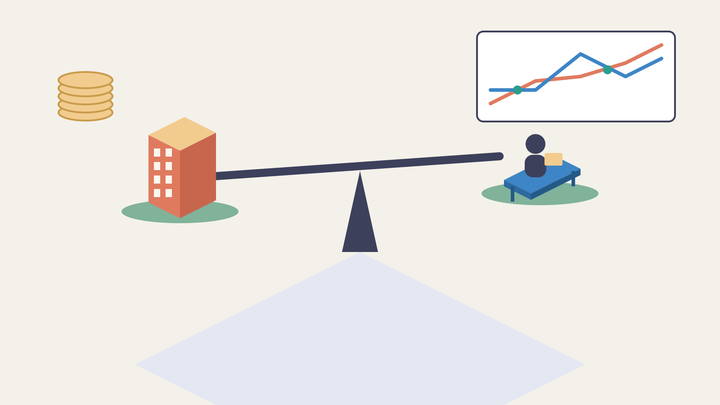
JBPs are the volume commitment deals The Trade Desk signs with large advertisers and agencies. When it guided Q3 back in August, management said it had 217 clients on JBPs, up 38%, with JBP revenue growing six times faster than the overall business, as PPC Land reported from that call. On paper that sounds like a growth story. In practice, a chunk of that "growth" is a pricing concession, and the 10-Q now confirms those concessions got larger this quarter.
The same filing says two holding companies would each have represented more than 10% of the company's gross billings for 2025. So the shape of the market is pretty clear. A small number of very large buyers have bargaining power, they used it, and the discount line grew.
Meanwhile, the smaller buyers are paying two tolls
This is where it gets a bit uncomfortable. Digiday talked to independent agencies in October and found a 15-person New York shop that cleared The Trade Desk's $100,000 monthly spend threshold and still pays 17% to the DSP plus 12% to a reseller. "They won't let us go direct and they won't change the fees," one exec told Digiday. That agency has since cut its spend on the platform.
So the holdcos are getting bigger JBP discounts, and indie agencies are stacking a reseller margin on top of a platform fee. If you're somewhere in the middle (a brand spending low six figures a month, or a mid-size agency), you're probably closer to the second group than the first, and nobody is going to call you to fix that.
Honestly, this part surprised me a little. I'd assumed a company in a revenue slump would be discounting broadly to protect gross spend. The filing reads more like it's discounting selectively to protect the accounts it can't afford to lose.
Amazon is why the bargaining power is real this time
None of this would matter much if buyers had nowhere else to go. They do now. Guideline data cited by PPC Land in August showed Amazon's share of tracked programmatic spend rising from under 10% to just under 20% in roughly 15 months. And Amazon's own ad business grew 11% to $19.64 billion in Q3, while The Trade Desk went slightly backwards.
Think of it like a gym that spent a decade as the only one in town. It didn't need to negotiate memberships. Then a cheaper chain opened across the street, and suddenly the front desk has "corporate rates" for anyone who asks with a competing quote in hand. The trick is that you have to ask.
To be fair to The Trade Desk, cheap isn't the same as good, and Jeff Green has made that argument on every call this year. The company claims its Kokai Zuma optimization model cut cost per acquisition by an average of 32% across 62 campaigns. That's a self-reported number from a vendor, with no independent audit that I've seen, so I'd treat it as a claim to test in your own account rather than a benchmark.
Green's own framing in the Q3 earnings release is that results were "well ahead of our expectations entering the quarter" but that "we are still operating below the level of growth we expect from ourselves." That's a fairly candid line for a CEO. It's also, if you're on the other side of the table, a pretty good description of a vendor who wants your 2027 budget badly.
The Q4 guide is the number to bring to your renewal
The company guided Q4 revenue to at least $755 million. PPC Land notes that's roughly 11% below the $847 million it booked in Q4 2025. Q4 is the biggest quarter of the year in ad tech, so a guide that sits double digits below last year tells you management doesn't expect holiday spend to bail them out.
Meanwhile, the company cut about 575 jobs in September, roughly 15% of its workforce, and adjusted EBITDA margin dropped to 36% from 43% a year ago. A business with falling margin and a soft Q4 guide is a business that wants committed spend more than it wants to defend list price. That seems like the most useful thing to know going into planning season.
We covered the first round of this back in September, when The Trade Desk lost its S&P 500 seat and the layoffs hit. What's different now is that the 10-Q puts discounts in writing. You're no longer guessing that terms are flexible. The company is telling investors it gave them away.
How I'd use this before signing anything for 2027
Here's roughly what I'd do this week, assuming you buy on The Trade Desk directly or through an agency or reseller:
- Pull your effective take rate. Total fees paid (platform fee plus data plus any reseller margin) divided by total media spend for Q3. If it's north of 25% all in, you're in the territory Digiday's indie agencies described, and that's the number to anchor on.
- Ask, in writing, whether you qualify for a JBP or JBP-equivalent pricing. The 10-Q confirms the discount tier exists and expanded. If your agency is a holdco shop, ask whether those terms are being passed through to you or kept at the agency level. Those are different answers.
- Audit your data line. The filing says buyers are using fewer data offerings. Check which third-party segments actually moved CPA in Q3 and cut the rest. Data fees are usually the easiest few points to recover.
- Get a real Amazon DSP quote. Not to switch necessarily. A written competing proposal is what turns "can we revisit pricing" into an actual negotiation.
- Test the Kokai claim instead of trusting it. If they pitch Zuma's 32% CPA improvement, ask for a holdout test on your own campaigns before it becomes part of the renewal justification.
A reasonable benchmark: if you spend more than $100,000 a month and can't get a reseller fee removed or a platform fee reduced by at least a couple of points this cycle, I'd move 15 to 20% of programmatic budget to a second DSP for Q1 and compare CPA on matched audiences. That's enough spend to produce a usable read in about six weeks, and enough to be noticed at renewal time.
The discounts already exist. The 10-Q just told you who's been getting them.
A slower Trade Desk might be a fairer one
I'll make a prediction with some stakes: by the Q4 report in February, I think The Trade Desk will announce a formal pricing tier or program aimed at mid-market agencies and direct brands, something below the holdco JBP threshold. The indie agency complaints, the Amazon share gain, and a 15% headcount cut all point the same way. If it doesn't, I'd expect Amazon's share of tracked programmatic spend to clear 25% within the next year, mostly at those smaller buyers' expense.
One caveat worth holding onto: customer retention is still above 95%, per the company, a level it says has held for over a decade. Buyers aren't leaving. They're negotiating harder, and some of them are doing it far more successfully than others, which is kind of the whole story here.
Anyway, I don't think the takeaway is "abandon The Trade Desk." It's more that the platform you've been paying list price on spent the last quarter discounting for people who asked, and it would be a bit odd not to ask too.
By Notice Me Senpai Editorial